The Digital Cinema Society (DCS)
 hosted an exclusive preview of the latest
ARRI technology including the next generation of
ARRI digital cameras with a hands-on demonstration of the prototype code named
ALEXA and their innovative
post-production software, Relativity and new lighting fixtures such as the redesigned lens-less
daylight 1.8K/1.2K watt HMI and the cooler and output efficient
Ceramic 3200K 250 watts studio spotlight.
 Cinematographer James Mathers, co-founder of DCSintroducing the event
 Mike Jones, ARRI Lighting Division, Bill Russell, ARRI V.P Western Operations, James Mathers,
The evening event called "Everything ARRI" was held on the campus of California State University Northridge and it was initiated with the introduction of the ARRI representatives by James Mathers, co-founder of the Digital Cinema Society and host of the event.
 Mike Jones describing the features of an ARRI lighting fixture
Showing above, the
ARRI LoCaster LED fixture (left) features an easy to use onboard controller with a choice of
six color temperature settings, continuous dimming and ON/OFF switch. Weighing 2 lbs it is an ideal companion for mobile applications. To the right shown, is the
Studio Ceramic 250. User benefits include lamp performance equal to a 1kW halogen lamp, cooler housing temperatures, low power consumption, long lamp life, hot restrike, integrated ballast, 3200K color temperature and a Color Rendering Index >90.
The first presentation of the evening was by
Mike Jones, Lighting Division Representative, who introduced some of the
TrueBlue line of studio fresnels, the new
Broadcaster and
Lowcaster handy
LED fixtures, the
1.8/1.2K watt daylight HMI with a redesigned
lens-less reflector and housing, capable of being plugged into a 20Amp household circuit and the
ARRI Studio Ceramic 250 Spotlight, to a mixed and eager audience of cinematographers, camera operators, producers, directors and film school students.
 Robert Primes, ASC and Bill Russell, Bill Russell, ARRI V.P Western Operations
 Cinematographers Rudy Harbon & Ronald Vidor, SOC
  Three cinematographers framed in an animated conversation,John Newby ASC, Bonnie Blake, SOC & Dianne Farrington, SOC
One of the highlights of the exclusive preview was a the show-reel projection of the images captured with the ALEV III CMOS 4:3 sensor, a 35 mm format single sensor with a spectacular base sensitivity of 800+ EI and equivalent wide exposure latitude. The video presented was shot mostly in low ambient light situations and presented no apparent signal-to-noise ratio and a very accurate color reproduction. The AlevIII sensor footage was plain amazing.
The Alexa prototype is designed around the AlevIII CMOS sensor, offering an unsurpassed sensitivity and dynamic range at 800 ASA plus offering more tha n two stops faster than its popular predecessor, the reliable D-21 used by top cinematographers as their feature film camera set-up of choice.
The Alexa comes in three camera models with an estimated price range of
$69.510 to
$180.700 depending of the models. The two entry level models
(A-EV/A-EV Plus) utilize a
16:9 area from the sensor and are complemented by the
ARRI EVF, the most advanced electronic viewfinder on the market. The high-end model
(A-OV-Plus) offers a
4:3 sensor and a rotating mirror shutter linked to an optical viewfinder, ready to support anamorphic PL mount lenses.
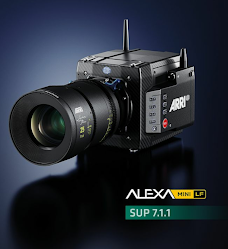
 The ARRI Alexa
At the heart of the three models is the AlevIII sensor with a Bayer color filter array and optical low pass filter with a 800+ Exposure Index and a full 35mm frame size with a maximum usable area to support 4:3 anamorphic PL mount lenses or 16:9 aspect ratio with a 3.5K pixel count to provide optimum oversampling for HD Video and 2K DI. The frame rate of the three models runs from 1-60 fps.
 The ARRI Alexa
I had a hand-held test run with the Alexa on my shoulders, the camera was fitted with a prime lens, a follow focus and a matte box. The still crude ergonomic but balanced weight design of the prototype felt comfortable as an ENG news gathering camera or a hand-held feature film camera. The viewfinder is a large state-of-the-art F-LCOS array with auto-calibrating LED illumination and a sharp and clear 1280 x 720 display.
Alexa also features several output signals and methods, including
T-Link certified on-board recording options, including multiple live HD and
Data Mode Stream to
ARRIRAW files output supported by
ARRIRAW Converter, Digital Vision Nucoda, DVS Clipster, Filmlight Baselight, Glue Tools, Iridas, Avid, and other participants to the
ARRIRAW Partner Program. The ARRIRAW workflow is Windows and MacOS platform compatible, allowing the users to choose the best workflow to fit their post-production needs.

Richard Antley, Director of Digital Imaging
describing features of ARRI Relativity software

Attendees to the event "Everything ARRI"

ARRI Relativity software, showing Texture Control

Another component of the
ARRI workflow package is the
ARRI Relativity software, a powerful suite of post-production tools that offer versatile control to your workflow. Using sophisticated motion estimation and spatial-temporal image filtering, ARRI Relativity software offers T
exture Control, (such as adding or subtracting grain),
Film Simulation, and
Space Time Converter (spatial resampling and frame rate conversion). ARRI Relativity™ software is powered by Pixel Strings™, developed and licensed from Cinnafilm.
Arri Relativity allows users to alter images in ways that appear as though they were achieved in-camera. Digital images can take the look of film while film images can be selectively degrained; scenes filmed at particular frame rate can be expanded or contracted to other frame rates, giving to cinematographers a broader range of flexibility while in post-production.
For more information about events and workshops held by the DCS
click here. For more information about ARRI products
click here.Read here the past posting
ARRIFLEX unveils Alexa.Watch
New Digital ARRI-ALEXA-IBC 2009 video ON-DEMAND Playlist above.


 The designers participating in in the Oscars Designers Challenger 2010 are Fernanda Carneiro with a black chiffon mermaid gown with lace insets; Elda De La Rosa with a blue-and-gold iridescent silk taffeta gown with hand pleated folds; Ivy Higa with a Apricot silk chiffon asymmetrical pleated Grecian gown; Phong Hong, with a gold silk charmeuse hand braided asymmetrical goddess gown; Raina Salibi with a black laser cut leather gown with bubble drape skirt; Oday Shakar with a metallic french lace one shoulder gown with Swarosky crystals; Ari Sheumelian with a black ombre tulle strapples twisters gown; Oliver Tolentino with an Ivory pineapple and abaca fiber mermaid gown with freshwater pearl detai and Kelsy Zimba with a silver-blue duchess satin gown with pleated bodice.