REMEMBERING BILLY

by Bob Fisher
William A. Fraker, ASC, BSC passed last year at the age of 86, following a long and courageous battle with cancer. Here Bob Fisher lovingly remembers his longtime friend and colleague. The Houston Film Festival had a tribute to the man everyone called “Billy” some three to four years ago. Billy had asked me to fly to Texas with him and moderate a post-screening Q and A with the audience. When the festival director asked Billy what film he wanted them to show, he chose Rosemary’s Baby.
I have an indelible memory of that discussion with Billy after the lights came back on. The theater was filled with 300 to 400 filmmakers, fans and students. One student said she was amazed he had shot that classic movie with a 50-speed color film before there was video assist. She asked how Billy knew what he was getting on film.He answered her question by pointing to his eyes.
Then, he put his right hand over his heart and advised her to learn to trust her eyes and what her heart tells her is right. Later during our discussion, I asked Billy if he could make one wish, what would it be. Without pausing, he replied that it would be making another film with Roman Polanski, who directed Rosemary’s Baby.

First Impressions
I met Billy for the first time in the late 1970s. It was a time in my life when I carried a Nikon SLR camera and took snapshots of the people I was interviewing to help illustrate articles. My film was processed and printed at a still film laboratory on the Paramount Pictures lot that was run by Bud Fraker. Bud was Billy’s uncle and a still photographer for the studio for decades. He introduced me to Mr. Fraker … that’s how journalists addressed cinematographers during those days. But I remember at that first meeting how Bud told me to call his nephew Billy, and to put my camera on the shelf and concentrate on writing! “Leave the picture taking to photographers,” he said.

William Fraker, Owen Roizman and David Walsh at the 
Q &A "The Western Genre". Moderated by Bob Fisher
CineGear 2008, Universal Studios,CA

Billy, who belonged to both the American Society of Cinematographers and the British Society of Cinematographers, was a uniquely talented human being. He compiled more than 50 narrative film credits as a cinematographer. There were Oscar® nominations for Looking for Mr. Goodbar (1978), Heaven Can Wait
(1979), 1941 (1980), WarGames (1984) and Murphy’s Romance (1986). He also earned an Oscar nomination for visual effects on 1941, which were created in-camera. You only need one hand to count the number of cinematographers who have earned more than one Oscar nomination for a single film.

  William Fraker sets up a shot for 
Warren Beatty on “Heaven Can Wait.”
William Fraker at work on the 1995 
film Father of the Bride Part II.

 There are more than a few other memorable films in his body of work, including The President’s Analyst, Bullitt, The Day of the Dolphin, The Best Little Whorehouse in Texas, Spacecamp and The Island of Dr. Moreau. Billy also directed episodic TV shows and a few movies, including The Legend of the Lone Ranger and Monte Walsh in addition to shooting countless commercials.

The story of his life and career is like a script for a feel-good Hollywood movie. His grandmother was a teacher in Mexico when a brutal revolution brought Pancho Villa to power in 1910. Employees of the former government, including teachers, were on the “enemies list” and were targets for arrest and assassination. Billy’s grandmother left Mazatlan on foot with two mules carrying her two children. They made a long and dangerous journey to the border, and entered California as illegal immigrants. Fortunately this was not the Arizona of 2010!

William Fraker gives his impressions about creativity to 
Steven Fischer on his documentary "Old School, New School".

Billy’s grandmother made a new life for herself and her children in the U.S. They lived in a cottage near the corner of Santa Monica Boulevard and Vermont Avenue in Hollywood. His grandmother supported her family by working as a portrait photographer in downtown Los Angeles. Billy’s mother was 16 and his father was 18 when they met and married. His grandmother taught Billy’s father (who later became a publicity photographer for Columbia Pictures) the art and craft of photography. Billy had vivid memories of seeing portraits that his father took of Golden Era Hollywood stars like Anna May Wong, John Wayne and Barbara Stanwyck.

Read more...part 2

BLACK SWAN, A TRIUMPH FOR 16MM FORMAT

The decision to shoot the opening film of Camerimage 2010, Black Swan, on Super 16mm was the result of collaboration between the recipients of the Director Duo Award at the Festival, the cinematographer Mathew Libatique ASC and Director Darren Aronofsky.

Vincent Cassel and Natalie Portman in Black Swan
 Vincent Cassell and Natalie Portman

The latest edition of British Cinematographer features this recent co-venture in the series of four films they have made together. The BC quotes Mathew as saying, “ Darren has liked the Super 16mm format as long as I’ve known him. “The Wrestler” which Aronofsky produced in Super 16 earned two Oscar nominations. Libatique says that the decision to shoot Black Swan on this format enabled them to cover scenes with a handheld camera that moved in tune with the ballet dancers while capturing an organic film look, including visual nuances in contrast and colors.

BLACK SWAN FILM

The winners of this year’s Duo Award met and first collaborated on two short films during the dawn of their careers as students at the American Film Institute during the early 1990’s. Black Swan follows in the wake of Pi (1998) Requiem for a Dream (2004) and The Fountain (2006).Although written for the stage originally Black Swan was primarily produced at practical locations in and around New York City. Libatique estimates that they spent 75 per cent of the 42 day production schedule on locations such as the Lincoln Centre and an apartment in Brooklyn.

Mathew Libatique, ASC

Darren Aronofsky and Natalie Portman 


After Theresa DePrez, the Production Designer, had met with the lead characters to discuss the colours they felt right for their scenes in the apartment, says Libatique,” Darren also made his intentions clear about the atmosphere he envisaged. Libatique went to rehearsals of dance scenes and recorded every move with a Canon 5D DSLR camera. 

That gave him both mental and physical pictures of what to anticipate. While shooting, with the exception of one scene, he covered everything from the ballet rehearsals and performances with a single Arri 416 camera mounted with Cooke prime lenses then was processed at 2K for the DI. The film stock was Fuji Eterna Vivid 160T 8643. The budget was around 13 million dollars.

 Mila Kunis and Natalie Portman

 Aronofsky setting up  a shot


 “Darren likes to be close to where the action in going to end. Our approach was to keep the film look as naturalistic and atmospheric as possible. We used soft light including a lot of practicals,” says Libatique. There was only one 100 foot dolly shot, at the end of which the leading actress Natalie Portman falls on a mattress in slow motion, a shot described by the New York Times critic Robert Allen as “a mystical touch.” 

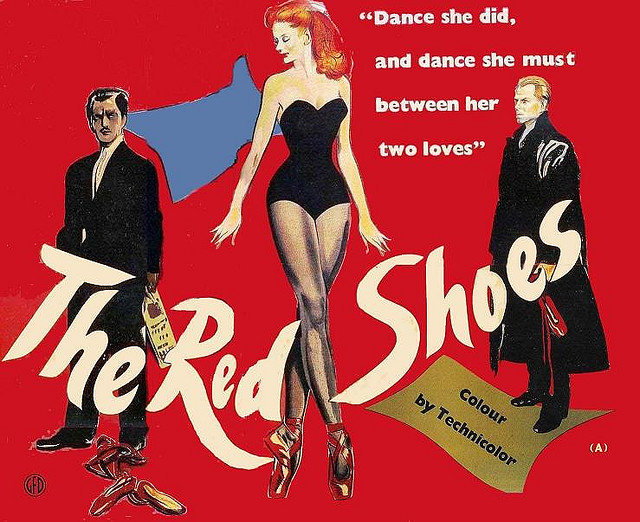
He continued to describe Black Swan as a supernatural thriller filmed against a balletworld backdrop which could also be thought of as a cross between “The Red Shoes” for which Jack Cardiff BSC created visual magic in 1948 and a dark, character driven mystery directed by Alfred Hitchcock.


Photos courtesy of Ray Lewis

Back to main page 

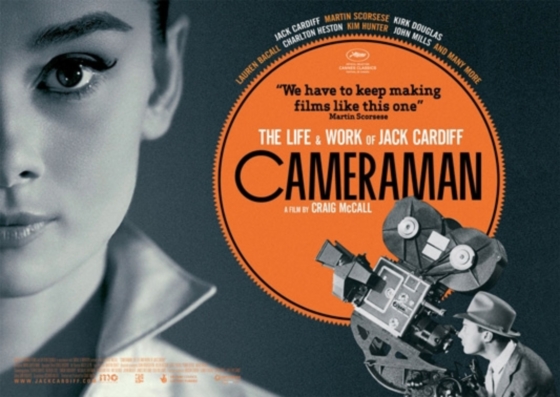
CAMERAMAN. THE LIFE AND WORK OF JACK CARDIFF

 
by Ceri Levy

Standing in at 13 years in the making, Craig McCall’s film about Jack Cardiff, probably England’s finest cinematographer and Oscar winner (Black Narcissus), is finally available for public consumption and about time too. This has been a labor of love but we are rewarded with a fitting and engaging tribute to Jack. The sad point is that Jack never lived to see this well crafted documentary. And unfortunately death is probably the reason why the funding fell into place to get the film finished and why the BFI (British Film Institute) ran a season of his films in May. Death has always been the greatest career invigorator. 


Cameraman is a mix of classic film clips, Jack’s home movies, both on and off set, documentary footage and interviews with his associates, ranging from Kirk Douglas, Lauren Bacall and Charlton Heston through to Martin Scorsese, who proves to be deeply knowledgeable about Jack’s work but first and foremost a fan. Jack himself, is hugely engaging and relates anecdotes as if they were being told for the very first time. Relaxed and erudite, it is easy to feel warmed by his presence on screen. I am saddened to say that I don’t think they make them like him anymore.

Marilyn Monroe photographed by Jack Cardiff

His visual influences included great painters, from Vermeer to the Impressionists, and his ability to paint with light and create sumptuous looks with techniques such as his use of chiaroscuro, was extraordinary. Cameraman enables us to look back in time, view his art and see that without pioneers of visual beauty and cinematic artistry such as Jack, we may not have the modern cinematic world as we now have it.

Director Michael Powell , Jack Cardiff and crew.

Red Shoes

Red Shoes

There is a scene where Jack is at home pointing at portraits on the wall of some of his co-workers, including Audrey Hepburn, Marilyn Monroe, and Humphrey Bogart, ”She’s dead, she’s dead, he’s dead… and I’m just alive.” And in that moment you realize that you are in the presence of the last vestiges of a disappearing age. Many people never realize the importance of a cameraman, for often it is the director that gets all the plaudits but behind every great director there is often an equally great cameraman. His roll call of who he has worked with is extraordinary, Hitchcock, Powell and Pressburger, Dietrich, Ava Gardner. The list is an endless catalog of the greats and his films include, A Matter of Life and Death, The Red Shoes, The African Queen and he even shot Rambo. He has straddled film time like no other.

Oscar winner for Best Cinematography, Black Narcissus

Oscar winner for Best Cinematography, Black Narcissus

A Matter of Life and Death.

A still of the documentary. Jack talking about his portraits


Jack Cardiff  was awarded in 2001 an honorary Oscar by the the Academy of Motion Pictures Arts and Sciences (AMPAS)  for his services to film-making  "Simplicity," he once reflected, "that's the secret of good lighting and good cinematography. Always keep it simple."

Martin Scorsese says, “ We have to keep making films like this,” and he’s right, and you can help by seeing the movie anywhere you are. The more people that see it there then the more chance it will get to play in cinemas across the country. That’s how distribution works these days. No gambles, no risks, no emotion, just bums on seats. So do your bit and go and see it and let your presence help form a future for this tribute to one of England’s finest. The film is now available on Netflix.

Cameraman – The Life and Work of Jack Cardiff. Directed by Craig McCall and produced by Craig McCall and Richard McGill. You can see videos about Jack Cardiff  in our On Demand video playlist above.

SUNDANCE LINE UP ANNOUNCED

Sundance Institute announced today the lineup of films selected to screen in the U.S. and World Cinema Dramatic and Documentary Competitions for the 2011 Sundance Film Festival. In addition to the four Competition Categories, the Festival presents films in six out-of-competition sections to be announced on December 2. The 2011 Sundance Film Festival runs January 20-30 in Park City, Salt Lake City, Ogden and Sundance, Utah. For the completed list click here.

 Michael McDonough on set shooting the 3D 
film The Mortician. He is also a Gotham and Spirit
Awards nominee for best cinematography.

  Jody Lee Lipes.  Spirit Award Nominee Best 
Cinematography for Tiny Furniture

This year line-up includes Vera Farmiga's directorial debut "Higher Ground" lensed by "Winter's Bone" cinematographer Matthew Mc Donough and T.S Durkin's "Martha Marcy May Marlene" lensed by "Tiny Furniture" cinematographer Jody Lee Lipes.

 On Day One, the Festival will forego the convention of one opening night film and instead screen one narrative film and one documentary from both the U.S. and World Cinema competitions, as well as one shorts program.

John Cooper, Director of the Sundance Film Festival said, “The Festival is a challenge to narrowly define. It is all at once exciting, fun, crazy, engaging, visceral, and sometimes even painful. We can explain storylines, we can share what we know of each artist’s unique journey, but ultimately what we will experience for 10 days in January is different for each of us. It’s the spark from the filmmakers – their passion – that brings 200 unique worlds to life and, in turn, ignites the audience. The films, conversations, encounters are there to experience. And that’s what makes Sundance so magical.”

 Director of the Sundance Film Festival John Cooper (L) 
and Sundance Institute President and Founder Robert Redford 
speak onstage during the Opening Day Press Conference 
at the Egyptian Theatre during the 2010 Sundance Film 
Festival on January 21, 2010 in Park City, Utah.

Trevor Groth, Director of Programming,  “Knowing how difficult it is to get a film made anywhere, and given that  the number of submissions was higher than ever, it is a testament to the passion and creativity of filmmakers everywhere  that they are able to preserve and stay true to their vision. The caliber of films submitted this year was exceptional and made for exhilarating discussion among the programmers. Now that discussion gets turned over to the audience.”

For the 2011 Sundance Film Festival, 115 feature-length films were selected, representing 28 countries by 40 first-time filmmakers, including 25 in competition. These films were selected from 3,812 feature-length film submissions composed of 1,943 U.S. and 1,869 international feature-length films. 92 films at the Festival will be world premieres. In a break with tradition, Festival Director John Cooper will Live-Chat with filmmakers, fans and press and answer questions about the announcement on Weds. Dec 1 at 1:00 PM PDT / 4:00 PM EDT exclusively at http://www.sundance.org/live/.

Click here for a completed list of films selected for competition.

FILM INDEPENDENT SPIRIT AWARDS NOMINATIONS

FILM INDEPENDENT SPIRIT AWARDS NOMINEES
 “Winter’s Bone,” directed by Debra Granik, won both Best Feature and Best Ensemble at last night’s Gotham Independent Film Awards, and the Ozarks-set drama scored seven Independent Spirit Award nominations including nods for best feature, best director and best actress for star Jennifer Lawrence.

Other best feature nominees include Danny Boyle’s “127 Hours,” Darren Aronofsky’s “Black Swan,” Noah Baumbach’s “Greenberg” and Lisa Cholodenko’s “The Kids Are All Right.” 


Actors Eva Mendes and Jeremy Renner speak onstage during the 2011 Film Independent Spirit Award nominations press conference at The London West Hollywood on November 30, 2010 in West Hollywood, California.
Best Cinematography


Best Director
 
John Cameron Mitchell   Rabbit Hole

 Best Feature

 For more Spirit Awards nominees click here
The 2011 Spirit Awards will take place on Saturday, February 26, 2011. The 2011 Spirit Awards will be telecast uncut on IFC at 10 PM ET/PST Saturday, February 26, 2011.  Film Independent was created 29 years ago as an inclusive, non-profit membership organization—any independent filmmaker or film lover can join. Our dues are only $95 annually. Please visit our website at FilmIndependent.org if you want to join today. 

GOVERNORS AWARDS 2010. THE ACADEMY AWARDS.


 Honorary Award recipient Eli Wallach, Irving G. Thalberg Memorial Award recipient Francis Ford Coppola (center) and Honorary Award recipient Kevin Brownlow at the 2010 Governors Awards in the Grand Ballroom at Hollywood & Highland in Hollywood®, CA, Saturday, November 13.

The Academy of Motion Picture Arts and Sciences presented the 2010 Governors Awards in the Grand Ballroom at Hollywood & Highland in Hollywood®, CA, Saturday, November 13. Pictured here at the event (left to right): Oscar®-winning producer Albert S. Ruddy, Oscar-winning actor Robert Duvall, Honorary Award recipient Eli Wallach, Irving G. Thalberg Memorial Award recipient Francis Ford Coppola, Previous Oscar-nominee Talia Shire, Previous Oscar-nominee James Caan, Oscar-winning director Sofia Coppola and Two time Oscar®-winning actor Robert DeNiro.

 Four-time Oscar-winner Clint Eastwood (left), Honorary Award recipient Eli Wallach (center) and Two-time Oscar-winning actor Robert De Niro at the 2010 Governors Awards in the Grand Ballroom at Hollywood & Highland Center in Hollywood, CA, Saturday, November 13.

Academy President Tom Sherak asks the audience at the 2010 Governors Awards to remember past Thalberg recipient Dino De Laurentiis, who recently died.

Actor Vincent Cassel speaks as part of the award presentation to Honorary Award recipient Jean-Luc Godard during the 2010 Governors Awards in the Grand Ballroom at Hollywood & Highland Center in Hollywood, CA, Saturday, November 13.

ABOUT THE ACADEMY
The Academy of Motion Picture Arts and Sciences is the world’s preeminent movie-related organization, with a membership of more than 6,000 of the most accomplished men and women working in cinema. In addition to the annual Academy Awards – in which the members vote to select the nominees and winners – the Academy presents a diverse year-round slate of public programs, exhibitions and events; provides financial support to a wide range of other movie-related organizations and endeavors; acts as a neutral advocate in the advancement of motion picture technology; and, through its Margaret Herrick Library and Academy Film Archive, collects, preserves, restores and provides access to movies and items related to their history. Through these and other activities the Academy serves students, historians, the entertainment industry and people everywhere who love movies.