SUNDANCE 2012 LIVE STREAMING


 LIVE (RECORDED) STREAMING SCHEDULE FROM PARK CITY, UTAH

Day One Press Conference
3:00 PM – 4:00 PM EST on Jan 19th, 2012

Time Warner Panel: The Power of Story- How Documentaries Changed Time
5:00 PM – 6:00 PM EST on Jan 21st, 2012
 The power of a story begins with the vision of a writer, a blank page, and a world of limitless possibility. Join Stephen Gaghan, Anna Deavere Smith, Andrew Stanton, and Terence Winter as they explore the mystique of the creative process and how ideas travel from the brain to the page, and to share some of the work they admire.

Celebration of Music and Film Concert with Ice-T, Mos Def, Chuck D, KRS-One, and More
10:00 PM EST on Jan 21st,2012 – 2:00 AM EST Jan 22nd, 2012
Watch the most anticipated music event at the Festival. Join us for a special evening to celebrate the art and imagination of film music.

Times Talks: Spike Lee (Red Hook Summer) and Dee Rees (Pariah)
12:00 PM – 1:30 PM EST on Jan 22nd, 2012
A conversation with the veteran Oscar-nominated director-producer-writer Spike Lee (“Red Hook Summer,” premiering at the festival) and the winner of the 2011 Gotham Award for breakthrough director, DeeRees (“Pariah”), moderated by David Carr of The New York Times.

Skoll Foundation Panel- Stories of Change
5:00 PM – 6:30 PM EST on Jan 24th, 2012
Live discussion celebrating the five-year partnership between Sundance Institute Documentary Film Program and the Skoll Foundation, Skoll President and CEO Sally Osberg moderates a thought-provoking dialogue among award-winning filmmakers—Joia Mukherjee, Kief Davidson, Jehane Noujaim, and Bunker Roy.

Shorts Awards and Party
11:00 PM EST on Jan 24th,2012 – 12:00 AM EST Jan 25th, 2012

Times Talks: Julie Delpy (2 Days in New York) and Parker Posey (Price Check)
12:00 PM – 1:30 PM EST on Jan 25th, 2012
A conversation with director-screenwriter-actress Julie Delpy (“2 Days in New York”) and actress and former Sundance juror Parker Posey (“Price Check”), moderated by Melena Ryzik of The New York Times.

Hit RECord
11:45 PM EST on Jan 26th,2012 – 1:45 AM EST Jan 27th, 2012
Joseph Gordon-Levitt has built a production company around a beautiful idea.  hitRECord.org is an online community that brings artists from around the world together to work on each other’s projects. Join a new wave of filmmaking by creating art that will live and grow beyond this extraordinary evening at the Festival.

Time Warner Panel: The Power of Story
5:00 PM – 6:30 PM EST on Jan 27th, 2012
The power of a story begins with the vision of a writer, a blank page, and a world of limitless possibility. Join Stephen Gaghan , Caryn James, Anna Deavere Smith, Andrew Stanton, and Terence Winter  to explore the mystique of the creative process and how ideas travel from the brain to the page, and to share some of the work they admire.

Awards Night Ceremony
9:00 PM – 10:30 PM EST on Jan 28th, 2012

NIKON UNVEILS THE LONG AWAITED D4

Nikon Corporation announced the release of their new flagship camera, the Nikon D4.  The camera will be exhibited for first time at the 2012 International CES, in Las Vegas.


The D4 is equipped with a new Nikon FX-format CMOS image sensor (imaging size of 36.0 x 23.9 mm) and EXPEED 3, the latest image-processing engine specifically optimized for digital-SLR cameras, making it the next-generation flagship Nikon digital-SLR camera with the ultimate in versatility and functionality that offers superior image quality rich in detail along with excellent high-speed performance. It has an effective pixel count of 16.2-million pixels, and offers superior image quality under a broad range of lighting conditions with its image sensor supporting an incredible range of sensitivities from ISO 50 to ISO 204800.


The new 91K-pixel (approximately 91,000 pixels) RGB sensor supports the Advanced Scene Recognition System, which is able to recognize human faces even when images are framed using the optical viewfinder. In addition, the Advanced Scene Recognition System offers significant improvements in AF, AE, i-TTL flash control, and auto white balance (AWB) control accuracy. The 51 focus point AF system has been improved with faster initiation of auto-focusing and the ability to detect and focus on subjects with less lighting. In addition, 11 focus points are fully functional when lenses with a maximum aperture of f/8 are used. All of this means more precise autofocusing when super-telephoto NIKKOR lenses are used with teleconverters (2.0x). The Multi-area Mode Full HD D-movie movie recording function is capable of recording full-HD movies at 30 fps, and offers three movie recording formats for selection according to recording conditions or creative intent. 

What's more, the D4 records images to memory cards faster with built-in support for high-speed, UDMA 7-compatible CompactFlash memory cards and next-generation, high-speed XQD memory cards. In addition to built-in wired LAN features, the D4 also supports high-speed image transfer via wireless LAN when the new, compact, easy-to-use Wireless Transmitter WT-5 (available separately) is connected to the camera. The D4 is also equipped with a number of new functions that support a more efficient workflow for professional photographers, including one that allows users to add IPTC (International Press Telecommunications Council) information to images. 

Full HD Video

A dedicated movie-record button has been positioned near the shutter-release button for smooth starting and stopping of movie recording with a feel similar to that of still-image shooting. Full-HD movie recording at a frame size of 1920 x 1080 and frame rate of 30 fps is supported, and the H.264/MPEG-4 AVC video compression method has been adopted. Movies up to 29 minutes 59 seconds 1 can be recorded. Image sensor sensitivity begins at ISO 200 and can be expanded to the same ISO 204800 equivalent possible with still-image shooting.Full-HD movies can be recorded with the D4 using one of three image areas: FX-based movie format 2, DX-based movie format, or 1920 x 1080; 30 fps/25 fps/24 fps crop. 

SMPTE 2011. BEST OF 2011

The Large-Sensor Imaging Revolution Symposium was held on October 24 2011 at the Renaissance Hotel in Hollywood. The symposium  was developed in collaboration with the American Society of Cinematographers (ASC).
A quiet revolution is underway in electronic imaging for cinema and broadcast. For years, professional camera design was almost exclusively component tri-stimulus, with separate image sensors and processing channels for the red, green and blue primaries. The legacy of camera pick-up tubes from the 1970, along with CCD manufacturing limitations resulted in smaller image formats, such as 2/3-inch, the defacto benchmark. Now, the rules have changed. Advances in semiconductor fabrication techniques have made large high-performance CMOS sensors readily available.

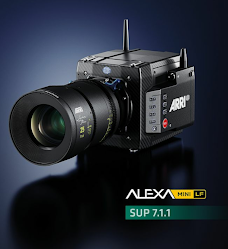
Arri ALEXA'S CMOS  sensor. Although the science behind the 
breakthrough performance of ALEXA’s custom designed 
CMOS sensor is complex, the use of large pixels and
a Dual Gain Architecture (DGA) are its two main principles.

This has had a dramatic impact affecting all aspects of motion imaging: now, single-sensor cameras using Bayer pattern spatial multiplexing RGB channels, can replace the complex optical block and dichroic mirrors of three-sensor cameras. The large image format, similar or larger in size than a 35mm film frame, allows for shooting with narrow depth of field a technique that until now has been mostly limited to film cinematography or still cameras. Capturing raw single-sensor image files has now fundamentally altering the traditional workflow for signal processing and color management. Large Format single sensor cameras have now been introduced by Red, Arri, Sony, Canon and others, with more variations on the way.


 The SMPTE Symposium explained  the fundamental difference in three-sensor and single-sensor systems with emphasis on the practical implications, benefits and limitations of the two approaches. The symposium started with  "Overview of Large-Sensor Imaging" presented by Michael Guncheon from HD Video Pro. Guncheon gave a comprehensive overview of the large sensor cameras, including sensor specifications and the important difference between "sensor pixel count" and output resolution.

Larry Thorpe, Canon USA

 "Understanding Imaging Science" was presented by Larry Thorpe from Canon, USA.  Thorpe spoke about optics and de-bayering image processing. He also included different considerations of lens characteristics between 3-sensor and single large-sensor formats, including MTF and depth of focus. 

David Leitner, Cinematographer

 David Leitner, a veteran producer/Director/DP presented "Large-Sensor Motion Picture Cameras: How We Got Here and Where We're Going" the topic was  an overview of current large-sensor motion picture cameras with an eye towards user trends and future developments.


 A short historical overview of early cameras and formats was his introduction leading to the topic at hand.  Leitner said, the first big-selling 35 mm still camera in USA was the American Tourist Multiple, it which appeared in 1913,  Then, referring to the term "Full Frame" he described  the Simplex, the first camera to take full frame 24x36 mm exposures  introduced in the U.S. in 1914. It took either 800 half frame or 400 full frame shots on 50 ft (15.2 m) rolls. Examining the past he made a bridge connecting it to today's lenses, sensors, and workflows associated with the new digital still and motion large sensor cameras, including those with full frame and factor cropped sensors.  An in-depth consideration was given to both, the advantages and disadvantages of shooting  with large-sensor  motion picture cameras and DSRL cameras.


 Leitner also talked about of what he called the "Sunset of Photochemical Processing" and  his experiences  while working at Du Art Film Laboratories in New York City, the oldest film lab in the nation, when on his presence about a year ago, Du Art Film Labs management switched-off their 35mm negative stock developing machines and operations after 88 years.  The switch-off was presided by Irving Young, Du Art's Film Labs chairman of the board, a familiar name and face to many members of the SMPTE. On the photo above,  is Bob Smith, a past Du Art Film Laboratories president, holding the final processing lab report after of 88 years of uninterrupted service.

Leitner went on describing non-anamorphic film formats currently in use such as 16x9 and 1.85:1, both very similar, being 16x9 slightly larger. The 1.85:1 aspect ratio was 35 mm US and UK widescreen standard for theatrical film, introduced by Universal Pictures in May, 1953 and the 1.37:1 Academy Aperture, a 35 mm full-screen sound film image and a legacy of the sound era adopted after the "talkies" arrived in in Hollywood in 1932, but this format is rather disappearing. The Super 35mm was re-introduced in the early 80's when Joe Dunton was preparing to shoot Dance Craze in 1982, and he chose to reclaim the Super-scope format by using a Silent Aperture. This is achieved by putting a larger image frame on the stock by using the negative space normally  reserved for the optical analog sound track.  These explanations were his  preamble to clarify what is going-on on the world of large scale sensor imaging.  With a sensor chart at hand, overlaid with a 16x9 frame, Leitner  described the different sizes of current  sensors.


On the chart above are the different sizes of sensors from full-frame with sensor dimensions nearly equal to those of 35 mm film (36 × 24 mm) to Canon's APS-H format for high-speed pro-level DSLRs (crop factor 1.3) to Leica's M8 and M8.2 sensor (crop factor 1.33) to APS-C that refers to a range of similarly-sized formats, including Nikon DX format, Pentax, Konica Minolta, Sony Alpha, Fuji (crop factor 1.5) and Canon entry-level DSLR formats (crop factor 1.6). Others are Foveon X3 format used in Sigma SD-series DSLRs (crop factor 1.7) and the ubiquitous Four Thirds System format (crop factor 2.0) found in Panasonic Lumix and some Panasonic camcorders.

   a Hurlbut Visuals helmet cam

Shane Hurlbut, ASC presented Case Study Part 1: DSLR Workflow and Shooting with a DSLR. He described the advantages of shooting a feature film, episodic TV or Television spot cost efficiently using the Canon 5D Mark II and Canon 7D as A-production camera.  "When I stumbled onto this HDSLR technology, I realized within minutes of using the technology that it was a “game changer” and the rulebook had to be thrown out and a new one created". The HDSLR technology recycles, it is small, it requires less space, less crew, less light, less power, less fuel, and less food." The most important point is that with less waste also comes the power for infinite creativity. I have coined the phrase “small footprint, big vision.” By the way, this HDSLR technology saves loads of money also", Hurlbut added.

 
Shane Hurlbut, ASC  presented Case Study Part 1: 
Shooting and Workflow with a DSLR.

Hurbult acquired experience using DSRL cameras while lensing a webisode for "Teminator Salvation" marketing campaign, some shorts, TV spots and while going through the completion of his feature film for theatrical release "Act of Valor" (currently on theaters) compelling him to incorporated his own equipment rental house to provide pre-rigged, PL mounted, firmware updated and HV picture styles loaded Canon's 5D Mark IV and 7D to market. Regardng workflow he addded "In the world of HDSLR technology, media management is a very important position. Every elite team member of my crew has held this position at some point during the making of Act of Valor to gain an understanding of HD image capture in a small footprint work-flow system and they all have jumped in head first!"


 During the slide presentation of of his multi-body and cinema lenses simplified set-ups, Hurbult continued saying "The unique skill set that my elite team brings is that they all have a film background and are comfortable with certain rituals that accompany being a motion picture film loader and 2nd assistant cameraman. These include: managing the truck; keeping track of the gear and specialty pieces of equipment; creating an inventory and log; assessing how many magazines you have to load and color coding it according to the stock; labeling the magazines with the date, job, film stock and amount loaded on the magazine itself; and writing a camera report with the same information".

 The system  designed for Act of Valor was a mixture of the traditional film loader combined with the DIT job in the digital world.   The Media Manager station was very simple and compact.  Sticking with the small footprint approach we employ a Mac Book Pro Laptop, a 24” HD Cinema Display monitor, and 4 External 500GB hard drives. "We shot it at  10 to 15 minutes on a 8GB card.  I like using the 8GB cards the best because the counter on the top of the camera kicks in depending on jpeg settings at approximately 15 minutes of media recorded.  This is a great gauge.  Once the counter starts to come off of 999 we re-load the card.  Just like a 1000 foot magazine on a film camera.


There are three important reasons to do it this way: "We can get that to the media manager and he can check the focus on his big monitor.  We all know how critical the focus is with these cameras. The cards tend to heat up and when that happens the noise factor goes up.  So keeping a fresh card in there is very good way to keep the image as clean as possible.  It promotes a steady pace of backing up cards, so if for any reason something happened to the camera or the card you are not losing a whole day worth of footage".

"In our work-flow system, the 8GB card from the 5D camera goes to the media manager. He downloads the media into the computer and simultaneously sends it to the 4 external hard drives.  After the download is complete, he checks for focus and exposure and labels each set-up for the assistant editor with as much detail and description as possible.  Next, one hard drive is shipped to the editor to start logging the footage; one is a back up if the original one gets lost in shipping.  A third  is for the director to view on his laptop. The last one is a “cloned master “of what we sent to the editor, which is held in post.  This system has been successful in delivering the entire equivalent of 1.8 million feet of film safely into the edit room".

Larry Clark and Moderator David Stump, ASC

Curts Clark, ASC  presented Case Study Part 2: Shooting with Large Format Cinema Cameras. Shooting with the Sony F65.  The Sony F65 represents the most recent development in the arena of 4K acquisition. Clark recently produced a short film called "The Arrival". shot on a variety of lighting  situations on different locations around Los Angeles.  The film was part of a lengthy testing process for the camera involving Clark on behalf of Sony prior to its debut at NAB 2010. There, the short film premiered at the DCS 2011 (co-produced by SMPTE).  In the photo above, Clark was on hand to discuss production of the short, his tests with the camera, and also to moderate a panel examining some of the subjective and artistic impact issues that result from acquiring imagery in 4K.

The "Arrival" shot on a Sony F65. 
(image distortion due to my seating position during presentation)

Clark's use of the F65 leads him to personally believe the camera's sensor is "a game-changer" in terms of capturing and outputting true 4K data. But regardless of what approach one prefers, Clark emphasizes that the arrival of 4K-capable cameras generally illustrates the advent of a clear new industry trend on the image capture side. That trend is the fact that digital image capture for high-end motion picture work is clearly moving inexorably beyond what Clark calls "the previous fundamental threshold" of 1920 x 1080, 10-bit, 4:4:4 HD imagery in Rec. 709 color space. In other words, digital cinematography has finally surpassed HD capture, and that reality offers new creative opportunities for movie-makers and new viewing experiences.

"So all of these developments mean the industry is reaching a new plateau, where the benchmark is raised and it is possible to digitally capture at true 4K, which has long been associated with the highest film imaging quality generally available in the digital intermediate environment. We can now get there—we can make 4K the primary target going forward for digital image capture. What changed was the realization that the technology behind these cameras could move beyond the restraints of the (original) HD broadcast parameters (for which they were originally developed)."

 The "Arrival" shot on a Sony F65.
(image distortion due to  my seating position during presentation)

"4K," technically refers to 4,000 pixels of horizontal resolution in a digital image capture format or in scanning 35mm film frames. In practical terms, however, "4K" is a far more complicated question. Until recent years, the notion of image capture at 4K in a digital camera system was more of a comparison concept—a way of evaluating just how close digitally acquired imagery could get to emulating the spatial resolution and certain other properties of a 35mm film image. Then, the industry started exploring ways to build image sensors that could actually record 4K imagery comparable to film imagery. 


Curtis Clark, ASC continued the case study Case Study Part 2: Shooting with Large Format Cinema Cameras presenting a new Q& A panel moderated by David Stump, ASC that included cinematographers Jeff Cronenweth, ASC, Claudio Miranda and Curtis himself.  Cronenweth presented footage of the Swedish remake directed by David Fincher, "The Girl with the Dragon Tattoo" and Miranda talked a bit about his lensing of  "The Life of Pi". Miranda couldn't present any footage due his film was still under DI process.

 Daniel Craig - "The Girl with the Dragon Tattoo" 
(image distortion due to my seating position during presentation)

Cronenweth, fresh off Fincher’s Oscar-winning The Social Network, says the third most essential presence in front of the camera (behind stars Rooney Mara and Daniel Craig) was Sweden’s frigid landscape, where most of the film was shot last winter and spring. “Weather plays a big part as the texture of the film,” he explains. “It actually helps you get a sense of what the characters are feeling.”

Jeff Cronenweth ASC, Claudio Miranda, ASC and Curtis Clark, ASC.

Cronenweth shot about 80 percent of the movie with the RED ONE and its Mysterium chip. When the workflow became refined (Red Rocket compatible) and datacards readily available, he shot the remaining 20 percent with the RED Epic. He used ARRI master primes throughout, and because of the chip sensitivity variables between the two cameras, used an 80D filter in front of the lens when shooting with the RED ONE, with the lights gelled to 4000 degrees Kelvin. “The Mysterium sensor is more blue sensitive and it gave us more to grab onto and more latitude,” he explained

Rooney Mara - "The Girl with the Dragon Tattoo" 
(image distortion due to my seating position during presentation)

That texture was much more stylized than their last film, and, as Cronenweth notes, the cool, blue Nordic light was a perfect match to the story. “Because this is a serial killer murder mystery,” he continues, “we had more leeway to stylize the lighting. That was different than The Social Network, where we were going more for the reality of the Harvard environment.”

Light Iron colorist Ian Vertovec, who also graded The Social Network, agrees, noting that The Girl with the Dragon Tattoo was about 1,000 degrees Kelvin cooler than Fincher and Cronenweth’s last film. “Because they wanted this very unique ‘Swedish’ feel,” Vertovec describes, “It seems the moon and sky acted like a [cooling] filter. It’s an amazing nighttime look.” In fact, Vertovec says Fincher and Cronenweth’s pre-planning paid off with a much simpler DI. “David and Jeff have already planned where they want the highlights and shadows to live,” he says. “We’re mainly adjusting contrast levels and setting the right quality of light. In other words, we’re not fixing ‘sins.’ We’re enhancing what’s there and taking it to the next level.” as reported in ICG Magazine article, December 2011.

For more information about SMPTE

84TH OSCAR POSTER - CELEBRATE THE MOVIES

 The Academy of Motion Picture Arts and Sciences has unveiled the poster for the 84th Academy Awards®. The art features the iconic Oscar statuette alongside memorable images from eight films spanning eight decades: "Gone with the Wind" (1939), "Casablanca" (1943), "Giant" (1956), "The Sound of Music" (1965), "The Godfather" (1972), "Driving Miss Daisy" (1989), "Forrest Gump" (1994) and "Gladiator" (2000). All the films featured on the poster won the Academy Award® for Best Picture, except "Giant," for which George Stevens won the Oscar for Directing.

Supported by the tagline "Celebrate the movies in all of us," the design is meant to evoke the emotional connections we all have with the movies. "Whether it's a first date or a holiday gathering with friends or family, movies are a big part of our memory," said Academy President Tom Sherak. "The Academy Awards not only honor the excellence of these movies, but also celebrate what they mean to us as a culture and to each of us individually."

The artwork was created by award-winning graphic designer Anthony Goldschmidt, and Mark and Karen Crawford of the design firm Blood & Chocolate. Posters will be available to theaters in the U.S. and internationally, along with a theatrical trailer, which will begin screening on January 6.

The 84th Academy Awards nominations will be announced live on Tuesday, January 24, 2012, at 5:30 a.m. PST in the Academy's Samuel Goldwyn Theater. Watch it here, live streamed on FILMCAST Live! 

Academy Awards for outstanding film achievements of 2011 will be presented on Sunday, February 26, 2012, at the Kodak Theater at Hollywood & Highland Center®, and televised live at 7 p.m. EST/4 p.m. PST by the ABC Television Network. The Oscar presentation also will be televised live in more than 225 countries worldwide.

CREATEASPHERE BURBANK. BEST OF 2011


By George Leon

On November 2011 and for two consecutive days, Createasphere hosted their Entertainment Technology Expo at their regular venue in Burbank, assembling top media professionals, production and post-production companies, manufacturers, and content creators. Among the companies exhibiting their latest innovation or qualified service at the Expo floor were, Airstar Space Lighting, Anton/ Bauer, Azden, Canon, Carl Zeiss, G- Technology,  Leader Instruments, Fujinon, Meduza Systems, Panasonic, ProMax Systems, Schneider Optics, Sony Electronics,  Swit Electronics, and Thales Angenieux.

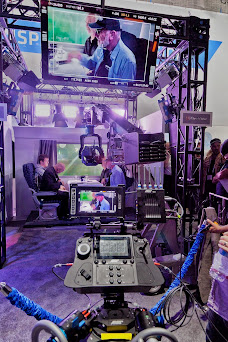
 Gear Alley,  the exterior "On-Location" portion of the venue presented 
hands-on workshops and showcased exhibitors.

The two days were filled with intensive workshops and technology panels, such as the AJA Intensive, the ASSlMILATE Intensive, the Sony Super 35 Intensive and the Adobe C5 Suite Intensive. The Keynote Conversation of the expo was with Salvatore Totino, ASC, AIC sponsored by American Cinematographer Magazine. Other sold-out  Q & A panels included, the Pro Video Coalition Panel, But Really, and How'd You Get that Shot?? sponsored by the Society of Camera Operators. 

A highlight of the show was the International Cinematographers Guild Local 600/Still Photographers presentation of a photo gallery display of their Nominees from ICG's 48th Annual Publicist Awards for Excellence in Unit Still Photography for Motion Pictures and Television Awards.  In Motion pictures category are: Frank Masi, Jamie Trueblood, Darren Michaels, Barry Wetche and Stephen Vaughan. In the Television category: Michael Desmond, Danny Feld, Ron Jaffe, Robert Voets and  Michael Yarish.

Createasphere was founded in 2001 as HD EXPO, and over the past decade has grown into a global company that develops and presents influential events for the content creation community, online and face to face. Founded by Kristin Petrovich Kennedy in Los Angeles, Createasphere became part of Diversified Business Communications in 2009, now driving their entertainment strategies and properties division.

Currently Createasphere is presenting the Entertainment Technology Expos in New York and LA; the Digital Asset Management Conference in New York, Los Angeles, and Europe; The DAMMY Awards in New York; Cinema India Expo in Mumbai; the online news and content portal Creative Pro Coalition; 3D Road Shows; and Post Production Master Classes.

 "Shoulder to Shoulder" with Rodney Taylor, ASC
Rodney described his experiences with the new Sony F65.

Satoshi Kanemura, Sony's V.P of Marketing talked about
the advantages of shooting with the F65.

 But Really, How'd You Get that Shot!??
After the "How'd You Get that Shot!??" panel presented by the SOC,
 the attendees went outside to Gear Alley to get a hands-on test
run at the tools the panelists have used to capture moving images.

Dan Kneece, SOC and David Frederick, SOC moderated the
hands-on session emphasizing on camera movement, framing and
focus, using a camera on a fluid head mounted on Fisher 10 dolly and
a second camera mounted on a jib arm

Vitruvian Entertainment showcased their daylight 
green screen capture system

A  partial view of the exhibiting floor.

At the Sony booth checking a Super 35mm XDCAM EX camera
 with an Angenieux Optimo DP lens.

Carl Zeiss showcasing their Compact Primes CP.2 P lenses line.


Nikon booth showcasing their D700, D5100 and entry level D3100.
All three cameras are full HD 1080 x 1920 @ 24/30fps.
It is nice to see Nikon in a motion picture geared expo.

Canon Intensive with award-winning producer and cinematographer
Joe Pontecorvo (PBS's "Nature" series). Here he demonstrated his
technique to work outdoors under inclement weather shooting on a
Canon 5D/7D and the workflow used from acquisition to screen.

 Salvatore Totino,!20ASC, AIC in a conversation with Jon Witmer,
American Cinematographer Magazine Editor.

 Salvatore Totino, ASC, AIC has shot hundreds of music videos and
commercials. His narrative film credits include Any Given Sunday,
Changing Lanes, The Missing, Cinderella Man, Welcome to People,
and The Da Vinci Code.


Litepanels New LED Sola 6 with a beam control of 10° to 70°, the revolutionary
new Sola 6 provides the control and single-shadow properties inherent of a
Fresnel fixture but utilizes just a fraction the power of conventional fixtures.


At the Scheneider Optics booth with a Cine-Xenar II 25mm lens.
The Cine -Xenar comes in 25mm/T2.2,  35mm/T2.1, 50mm/T2.0,
75mm/T2.0 and 95mm/T2.0. Comes with PL mount for digital and 35mm
film cameras and Canon EF and Nikon F mount are available.

 Sponsored by the Society of Camera Operators,  "How'd You Get that Shot?!"
Moderator: David Frederick, SOC, President Emeritus of SOC
Panelists: Stephen S. Campanelli, SOC Larry McConkey, SOC,
Dan Kneece, SOC  Ron Vidor, SOC and  Aiken Weiss, SOC

Tony Cacciarelli  describes a range of NLE and VFX  workflow 
solutions at  the AJA intensive: AJA and file-based workflows.

Sony Intensive: Sony's World of Super35 with Peter Crithary.
Exploring the Sony Super35mnn family of cameras and solutions featuring
the F65/ SRMaster products, PMWF3, and new powerful options
like SLOG/RGB444.  Get a sneak preview of 14x Servo high powered zoom lens,
wide zoom lens, and open strategy on 422/444 recording choices.

3ality Technica booth 3ality Digital acquired Element Technica this year. With the 
acquisition of Element Technica, 3ality Technica now provides all of the control, 
accuracy, breadth, automation, modularity, accessories, and design of both existing 
product lines. For further reading, click here

Canon booth. A crowd favorite on the eve of the C300  unveiling at Paramount Studios. 
Still it was a trade secret.

 The retrofitted Cameron Pace Sony CineAlta with a Fujinon lens.

Click here for more information about Createasphere

FILM INDEPENDENT SPIRIT AWARDS 2012: CINEMATOGRAPHY NOMINEES


Anthony Mackie, Kate Beckinsale and Film Independent Senior Director Sean Mc Manus
announce the nominees for the 2012 awards


BEST CINEMATOGRAPHY
Joel Hodge  - Bellflower
Benjamin Kasulke  - The Off Hours
Darius Khondji  - Midnight in Paris
Guillaume Schiffman -  The Artist
Jeffrey Waldron -  The Dynamiter 

    BEST DIRECTOR
Michel Hazanavicius -  The Artist
Mike Mills -  Beginner
Jeff Nichols -  Take Shelter
Alexander Payne -  The Descendants
 Nicolas Winding -  Refn Drive

ABOUT FILM INDEPENDENT
Film Independent is a 501 (c)(3) non-profit arts organization that champions independent film and supports a community of artists who embody diversity, innovation, and uniqueness of vision. Film Independent helps filmmakers make their movies, builds an audience for their projects, and works to diversify the film industry. Film Independent’s Board of Directors, filmmakers, staff, and constituents, are comprised of an inclusive community of individuals across ability, age, ethnicity, gender, race, and sexual orientation. Anyone passionate about film can become a member, whether you are a filmmaker, industry leader, or a film lover.

With over 250 annual screenings and events, Film Independent provides access to a network of like-minded artists who are driving creativity in the film industry. Film Independent offers free Filmmaker Labs for selected writers, directors, and producers; provides cut-rate services for filmmakers; and presents year-round networking opportunities. Film Independent’s mentorship and job placement program, Project:Involve, pairs emerging culturally diverse filmmakers with film industry professionals.

Film Independent produces the Los Angeles Film Festival, celebrating the best of American and international cinema and the Spirit Awards, a celebration honoring films and filmmakers that embody independence and originality. For more information or to become a member, visit FilmIndependent.org.

AMERICAN SOCIETY OF CINEMATOGRAPHERS AWARDS 2012


American Society of Cinematographers to honor Dante Spinotti with Lifetime Achievement Award. William Wages, Francis Kenny and Fred Godfrey also to receive tributes. Dante Spinotti, ASC, AIC, William Wages, ASC, Francis Kenny, ASC, and Fred Godfrey will be honored by their peers during the 26th American Society of Cinematographers (ASC) Outstanding Achievement Awards celebration here on February 12 at the Hollywood & Highland Grand Ballroom.

Spinotti will receive the 2012 ASC Lifetime Achievement Award, with additional ASC honors going to Wages for the Career Achievement in Television Award, Kenny with the Presidents Award, and Godfrey with the ASC Bud Stone Award of Distinction.

 Dante Spinotti, ASC,AIC

Spinotti’s U.S. career began in 1986 with his breakthrough visuals on Manhunter with director Michael Mann, and continues today with his current release, Tower Heist with Brett Ratner. He has compiled more than 60 venerable credits to date, collaborating with such ground-breaking directors as Bruce Beresford, Garry Marshall, and Michael Apted. His work with Curtis Hanson on L.A. Confidential in 1997 led to his first Oscar nomination, followed by a second nomination for The Insider in 2000, on which he re-teamed with Mann. Both films also earned Spinotti ASC Award nominations, with an additional nod from ASC for The Last of the Mohicans. His body of work includes such memorable films as Crimes of the Heart, Beaches, Frankie and Johnny, Heat, Wonder Boys, Red Dragon, Pinocchio, X-Men: The Last Stand, Public Enemies, The Chronicles of Narnia: The Voyage of the Dawn Treader, The Berlin Affair, Fotografando Patrizia, Il segreto del bosco vecchio, The Legend of the Holy Drinker, and The Star Maker.

“What Dante Spinotti brings to every movie he photographs is youthful exuberance mixed with the wisdom of experience,” says ASC President Michael Goi. “His visual style is infused with the kind of playful experimentation and consummate craft that results in iconic imagery. He is a model for why great cinematographers are truly timeless."

 William Wages, ASC

Wages has been nominated for two Emmy Awards and eight ASC Awards, winning twice. One of his first major narrative credits was Resting Place, the first of many Hallmark Hall of Fame productions Wages would photograph. In 1988, Gore Vidal’s Lincoln was nominated for an ASC Award, with additional nods for Caroline?, Voices Within: The Lives of Truddi Chase, I’ll Fly Away (pilot), The Moving of Sophia Myles, and Miss Lettie and Me. Wages won consecutive ASC Awards in 1997 and 1998 for Riders of the Purple Sage and Buffalo Soldiers. The latter also earned an Emmy nomination, as did Into the West, in 2006. Wages became a member of the ASC in 1992, and counts more than 50 narrative television projects, commercials and documentaries among his credits.
  Francis Kenny, ASC

Kenny began his career as a documentary filmmaker. His 50 credits as a cinematographer include the feature films Heathers, New Jack City, She’s All That, and Jason's Lyric. His documentary credits include films shot throughout the world ranging from Afghanistan to the North Sea. Kenny is currently the director of photography on the FX television series Justified. He became a member of the ASC in 1998. He has been the ASC Membership Chairman for the past 10 years, and is also serving his second term on the ASC Board of Directors. 

"Bill and Francis are fabulously talented cinematographers who also happen to be terrific human beings,” says ASC Awards Committee Chairman Richard Crudo. “Their work in features and television speaks for itself but perhaps more importantly, they're treasured members of our organization."

Godfrey is the first recipient of the ASC Bud Stone Award of Distinction, which will be presented to individuals who have made significant contributions to advancing the art of filmmaking. Burton “Bud” Stone was president of Deluxe laboratories in Hollywood from 1976 until 1994. He was a founding member of the ASC Outstanding Achievement Awards and served as chairman for 17 years. Godfrey’s career in the film industry began in a Hollywood warehouse, where Kodak motion picture film was stored. Within a few years that led to an opportunity for Godfrey to become a customer service representative at the Kodak motion picture office in Hollywood. He served as a liaison between cinematographers and the film manufacturer until he retired in 1986. He is an associate member of ASC, and was also on the committee that planned the first and subsequent ASC Outstanding Achievement Awards.

Click here for more info about the ASC

Related Posts Plugin for WordPress, Blogger...