FROM A BIRD'S EYE POINT OF VIEW

By George Leon
Aerial cinematography often encompasses more than air-to-air photography of other aircraft. Sometimes the aerial cinematographer is called upon to facilitate photography from the ground and within the aircraft itself. Aircraft used in aerial cinematography are designated by the Aerial Cinematographer and Aerial Coordinator as either a camera ship or story ship.

Many types of fixed-wing and rotorcraft aircraft are utilized with helicopters being the most versatile for most camera ship duties. The choice and use of camera ship aircraft should be decided upon by the aerial cinematographer working closely with the aerial coordinator and camera ship pilot. However, the aerial coordinator is the first and last word on all matters regarding the acquisition, permitting and use of all aircraft on a motion picture aerial unit production.
Eclipse Camera System

Helicopters
are the aircraft of choice for the majority of aerial cinematography duties as they offer the most in versatility. The ability for multidirectional flight gives the aerial cinematographer control and finesse over the movement of the camera much like the director of photography would do with any ground-based camera dolly.

Choosing a suitable rotor craft camera ship is predicated on the demands of the shot and the camera mounting system to be used. The ones shown here are the most utilized with the majority of commercially available filming systems having been designed and/or certificated for installation. Equally important to consider are the many variables affecting the inflight performance characteristics of the helicopter, the most significant being air temperature, pressure & density altitude, moisture content of the air, gross weight, external stores (ball mounts in particular fall under this heading) and wind.
In addition, each helicopter has its own maximum airspeed limitations (expressed as VNE - velocity never to exceed) which will be further reduced by the installation of any camera mounting system. There are definite reasons for these limitations and under no circumstances should they ever be exceeded. Number of people on board factors into the aircraft gross weight which will affect performance, particularly at altitude or during hover. Increased weight aside, with certain camera mounts there quite frankly will not be enough room left, beyond the pilot and operator, to accommodate any more passengers other than maybe the director.

Consult all aspects of the shot with the Aerial Cinematographer, Aerial Coordinator and Camera Ship Pilot will ensure a safe and intelligent choice of helicopter for all camera ship duties on the production. Safety for all cast and crew members actively involved in the film production is the number one priority for the aerial cinematographer, aerial coordinator and the aerial filming unit. Working around aircraft can prove to be hazardous if sufficient care is not taken to ensure personal safety. Those individuals who make their primary living in aerial cinematography know all too well the dangers involved and strive to maintain a safe working environment in the air and on the ground for themselves and their colleagues.

Camera mounts are the essential tool of the aerial cinematographer, linking camera to aircraft. There are many from which to choose and generally fall into the following categories: Gyro Stabilized Ball Mounts, simply referred to as ball mounts due to the spherical wind shroud. Utilized for highly stable, plate-quality images. Door Mounts Also known as side mounts. Mainly designed for helicopter usage. Some fixed-wing available. Nose Mounts Also known as belly mounts. Can be an articulated system, however, some are fixed position (hard) mounts.

Helicopter or Fixed-Wing

Choice of system depends entirely on the nature of the shot. No one filming system is superior over another. Rather it boils down to suitability to task. It's common to employ any combination of these mounts during a film production. For budgetary reasons, consult the aerial cinematographer on the demands of the shot to ensure the correct choice of mount.

As a cross section example of the aerial cinematography technology, I will describe the services of a well known helicopter aerial cinematography company and some the features they offer to the rotor, fixed wing and telescopic crane market for air, dry land and maritime uses.

Pictorvision is the first aerial equipment stabilization rental company to provide customers with an entire spectrum of stabilized camera product solutions for capturing aerial images. Pictorvision provides choice: matching the right system to any budget, removing single system and rigid price point constraints. Whether your production calls for high-end 4K digital, 35mm, cost effective SD, Super 16mm, or anything in between, Pictorvision's product suite covers the entire range of output options, offering you the flexibility to pick and choose as you see fit.

Pictorvision offers "choice" - a revolutionary concept in the aerial camera system rental market through a product suite of aerial systems: eclipse, Cineflex Wescam, RED One, Wescam 35mm, Wescam HD and Wescam SD

The Originator of the Gyro-Stabilized Camera
The same people who brought you the pioneering stabilization work at Wescam stand behind Pictorvision today. As Wescam, we originated the gyro-stabilized aerial camera platform – an innovation that won us an Academy Award for widening the entertainment industry’s creative possibilities. As Pictorvision, we evolved to become the industry leader not only in stabilized technology, but also in service. We take a strong customer-centric approach as your stabilized equipment solution partner. Our highly responsive and knowledgeable team is committed to ensuring that Pictorvision exceeds your expectations – every time! eclipse - A Helicopter Camera Mount with Unrivalled Stability Pictorvision is proud to introduce the eclipse - the first truly revolutionary advancement in aerial camera systems in a generation.

Designed by the team who invented aerial stabilization over 35 years ago, and in partnership with cinematographers, the eclipse embodies a commitment, focus and passion for aerial cinematography. At the core of the eclipse's superior stability is the patented XR Motion Management technology, enabling the most advanced steering, stability and pointing capabilities available on the market. Pictorvision's engineering group - the team behind every major advancement in aerial stabilization - partnered with the world's most creative DP's to develop the eclipse, ushering in a new dawn in cinematography.

The Pictorvision eclipse features XR Motion Management technology that enables the highest level of stability, unmatched precise and responsive steering, Geo steering, will not topple, absolute level horizon and faster start-ups and resets.

Wescam RED One
A First for Aerial Cinematography Pictorvision is the first aerial stabilization company to use the revolutionary RED ONE digital cinema camera in aerial shooting. Capitalizing on their expertise in camera stabilization technology, the team at Pictorvision can quickly make modifications necessary to successfully stabilize and accurately integrate the RED ONE camera package into our Wescam Film/HD System. The modular design of the Wescam Film System makes the integration very simple. Our multi-format, HD ready operator’s monitor (standard equipment with the system) makes monitoring the HD-SDI output from the camera effortless for our technicians. Pictorvision customers can immediately make reservations for the company’s proprietary RED ONE aerial stabilization and precision control turnkey package or integrate their own RED ONE camera.

The Pictorvision XR
The Most Stable Ground Camera System for the Most Challenging Environments Pictorvision provides customers with the most stable and versatile gyro-stabilized remote head in the industry. The XR has exceeded expectations on some of the largest productions and is recognized for its stabilization performance and reliability in the most challenging of environments.The XR was the first system to utilize Pictorvision's patented XR Motion Management technology, setting new industry standards for pushing creative limits.

The Pictorvision XR, is an advanced open mount, digitally controlled and gyro-stabilized camera platform capable of supporting and stabilizing film and video camera packages up to 70Kg at film camera focal lengths of 3000mm or more. The system is extremely flexible and can be mounted in hanging or sitting mode on camera cars, boats, cranes as well as rail camera and flown wire systems. The XR can be either configured for 2 axis operation or in 3 axis where it is capable of maintaining a level horizon regardless of the angular changes encountered by the mount. From simple shots to demanding VFX plates, the Pictorvision XR is able to meet your requirement for stabilized images on set or location and provides rock solid performance in the most demanding of environments.


LATEST TECHNOLOGY IN AERIAL PHOTOGRAPHY

Tom Hallman , Pictorvision and CINNERS President along with
Dave Arms, Aerial Operator and Technician showcasing at
CINEGEAR 2009 the new PictorFX 3D scanning and modeling system.

What is the PictorFX
The PictorFx enables set designers, special effects teams and production crews to create high-quality, accurate D models – this creative, innovative system helps to solve some of the tough technical challenges associated with the creation, coordination and management of digital information in both pre and post production.

Set Design Visualization
The PictorFx enables users to plan, track and digitally construct and reconstruct production-sets. Information Modeling PictorFx enables production teams to obtain structural and spatial information, from the air or ground providing users with a 3-D view of every shot, from every camera, at every angle.
Visual Effects
Using the PictorFx system, image data can easily be integrated with CG objects a creative and cost effective approach in generating digital 3-D images and graphics.

PictorFX Capabilities
Background 3-D plate shots, set documentation & 3-D blue prints,
pre-visualization with virtualsets: Plan and test camera and lighting angles, plan and test camera moves, pre-plan shooting and equipment logistics, set extensions , composites, topography to ground characters feet, accurate shadow casting, match moving virtual camera to live-action camera

For more info:
Courtesy of Aerial Cinematography
(Aerial Cinematography does not endorses any aerial company but its own and kindly offers information to the benefit of all operators). Courtesy of Laurie K. Gilbert S.O.C. of L'Image Cinematography, an aerial and marine cinematographer who operates globally from an operational base in South East Asia.
Courtesy of Pictorvision
Photo courtesy of Airborne Images and Aaron Fitzgerald
Watch a video clip, click -ON DEMAND- and choose Pictorvision

CINE LENSES FOR DIGITAL SRL CAMERAS AT DV EXPO 2009

by George Leon
After visiting some of the annual video and film industry shows happening this year in other venues, I decided to stop by the DV Expo 2009 held at the Pasadena Convention Center and attend to one or two of the many seminars offered at the expo to report my findings and to keep abreast with the latest. The impression I had from my last year visit, was that the DV Expo was rather a small show with limited attendance, but then I was immediately proved wrong upon my arrival. I was pleasantly surprised to see a high turn out of attendees mingling around in he already crowded floor.
I spent a great day at the Digital Video Expo 2009. The exhibit floor was packed with attendees asking all kind of technical questions to the participating vendors. The variety of vendors spanned the wide gamut of video services and video manufacturers of pro-sumer and broadcast equipment, ranging from lighting to work-flow management to the latest in high definition video camcorders, to lens makers and much more.. To name a few with innovative products offering discount prices at the floor were Carl Zeiss Lenses, Azden Corp (audio), Lensbaby, Libtec Tripods, Dana Dollies, Zacuto, Sonnet, Sony, JVC, Panasonic, Litepanels, and others...

The Panasonic booth attracted many visitors
The seminars were popular and well attended

Footage Firm booth

Jessica Sitomer, The Greenlight Coach offering career
advancement advice

Brady Harris and Robert Orlando at the Tiffen booth
presenting the Dfx software, the IR filters, the Pilot
Steadicam and the Merlin handheld stabilizer

Answering technical inquiries at the Libtec booth

A new vendor I met in the Expo with a solid product was
Michael and Dana Hall, introducing their Dana Dolly,
a portable camera dolly system at an affordable price
Click here for more info, price and specs

The seminars were to down to the point. The two ASC Master Lighting seminars I went on Wednesday were inspirational and educative to the budding filmmaker and the seasoned cameraman as well. The panel was moderated by George Spiro Dibie ASC, and the guests speakers were Isadore Mankofsky ASC, David Darby ASC, Daryn Okada ASC, Johnny Jensen ASC, Donald Morgan ASC, and Robert Primes, ASC. After presenting a clip or two of one of their films, the panelists elaborated on their experience creating the lighting schemes seen on the screen, on set or on location and their collaborative process with the director along with other tips and tricks of the trade. The session culminated with a Q&A round in between the attendees and the panelists.

ASC Master Lighting Seminar, George Spiro-Dibie ASC ,
Daryn Okada ASC, David Darby ASC
and Robert Primes ASC.

Isadore Mankosfky, ASC was also part of the Master Lighting
Seminar
and shared with the audience his experience about
the making of
the cult masterpiece "Somewhere in Time"
photographed by
Mankosfky, and directed by Jeanot Swarc.
Starred by
Jane Seymour and Christopher Reeves. Pictured
above
with Martha Winterhalter, Publisher of American
Cinematography magazine.

Another seminar that was very informative was "Digital Still Camera as a Tool for the Cinematographer" presented by the Digital Cinema Society. The panel was composed by leading cinematographers, digital SLR experts and industry representatives as they elaborated in the technical pros and cons (read prior posting CMOS VS CCD) of this new variant of the CMOS video chip technology encased in a SLR still camera, specifically the Panasonic Lumix GH1 featuring full HD movie recording in AVCHD and using ν (nu) Maicovicon technologies. The 4/3-type 12.1-megapixel Live MOS sensor featured in the DMC-GH1 is able to offer the best of both worlds — the superior image quality of a full-frame CCD sensor, and the lower power consumption of a CMOS sensor.

A rigged Canon Eos D5 with a matte box and follow
focus and a daylight Marshall monitor

The other SLR camera presented by the panelists was the Cannon EOS D5, featuring full-frame 12.8 Megapixel CMOS sensor combined with Canon's DIGIC II Image Processor, and a high-precision 9-point AF system with 6 assist points, and a "Picture Style" color control to deliver images of superior quality with enough resolution for any application. The EOS 5D's full-frame CMOS sensor records 4,368 x 2,912 pixels-that's 12.8 Megapixels, larger than many other companies' top-of-the-line sensors. The same size as a 35mm image on a traditional camera, the sensor operates without a conversion factor.
Richard Scheluning from Carl Zeiss,
explains the advantages of the new
Compact Prime Lenses

Zeiss Distagon Compact Set of Primes
T3,6/18 -T2,9/21 mm - T2,9/25 mm - T2,1/28 mm
T2,1/35 mm - T1,5/50 mm - T1,5/85 mm, ready for
SLR digital cameras with calibrated
T-stops markings

At the session, the new Zeiss Compact Prime set of lenses was introduced, a new proper Cinema lens for SLR cameras, featuring a PL mount, cine style housing, high optical performance and 14 precision iris blades for pleasing focus transition and rounded smooth bokeh. The session was visually demonstrated with outstanding footage shot by various of the participating cinematographers who are proponents of shooting SRL digital video for TV spots, music videos and even features on ergonomically rigged still SLR digital video cameras such as the Panasonic Lumix and the Canon D5.

I should point out that other companies such as Nikon offers digital video SLRs cameras , as well with outstanding quality at affordable price, like the D90, the world’s first D-SLR with an HD movie mode, recording cinematic-quality 24fps movie clips with sound at up to 720p HD (1280 x 720 pixels) in Motion JPEG format and the larger and more capable, D300S and D5000 with D-Movie HD Video capturing cinematic 24 fps, 720p HD movie clips, enhanced by NIKKOR interchangeable lenses and featuring external stereo Mic input and AF operation. One drawback heard from the shooters of any digital SLR video camera is the poor sound recoding quality and the lack of in and out audio connectors and no timecode feature of any kind.

DLSR Nikon D5000 with HD movie mode,
recording cinematic-quality 24fps movie clips with
sound at up to 720p HD (1280 x 720 pixels) in
Motion JPEG
format, shown above with a swivel screen

I would like to recommend to any videographer or digital cinematographer to mark their calendars every year for this gathering of gear heads, creatives types, producers, camera operators, editors, Dit's and vendors under one roof. It is a bit smaller than other industry shows but allows you, the visitor, to spend more time learning about the latest of the digital video technology.

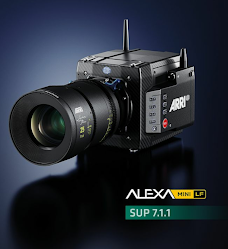
ARRIFLEX UNVEILS NEW ARRI DIGITAL CAMERA "THE ALEXA" AT IBC 2009

The next generation of ARRI digital cameras-
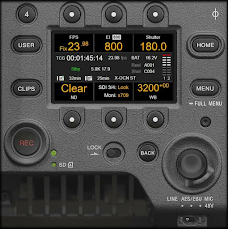
ARRI announced a new range of 35mm-format digital cameras at IBC 2009 - codenamed Alexa - that will redefine the limits of digital motion capture. Based around a newly developed CMOS sensor with unsurpassed sensitivity and dynamic range, the cameras will couple exceptional image quality with flexible, integrated workflows designed to meet the needs of modern postproduction. The Alexa product line-up, priced in the range €50k to €130k, will be available for sale commencing the second quarter of 2010.

Superior sensitivity & dynamic range 35mm size format
sensor Film look New Electronic or Optical Viewfinder
Early adopter plan for ARRIFLEX D-21 customers. Prices
begin at 50K Euro, resetting the bar for cost & performance

Compact and lightweight, the new range of cameras will provide an affordable toolset to address every level of the broadcast and feature film markets. The planned entry level model utilizes a 16:9 sensor and the most advanced electronic viewfinder on the market. A more fully-featured version continues ARRI's tradition of offering a 4:3 sensor and a rotating mirror shutter linked to an optical viewfinder as the optimum choice for cinematographers. A number of recording options, including several innovative on-board solutions, have been designed specifically with modern workflows in mind to provide the greatest versatility both on the set and in postproduction.

ARRI managing directors Dr. Martin Prillmann and Franz Kraus
discuss and display the new ARRI digital camera system at the
IBC booth in Amsterdam. Click ON DEMAND in the video window
above to watch the introduction

By combining 90 years of mechanical and optical expertise with state-of-the-art digital technology, ARRI products continue to offer features that other manufacturers cannot equal. Incorporating the key attributes of design and build quality on which ARRI's worldwide reputation is based, the new camera range will uphold the highest standards of reliability, precision and usability.

For more info, ARRI Digital

FILM FORMATS AT THE ACADEMY OF MOTION PICTURE ARTS AND SCIENCES

Presented by the Academy’s Science
and Technology Council

Hosted by Rob Hummel. Continuing with screenings of “Manhattan” and “The Black Stallion” on September 10 and 11 at the Samuel Goldwyn Theater in Beverly Hills. “Cinema is a matter of what’s in the frame and what’s out.”Martin Scorsese

The motion picture aspect ratio isn’t just a frame for the picture; in the hands of an accomplished filmmaker, the aspect ratio can have a significant influence on the storytelling process. Join Science and Technology Council member Rob Hummel for an illustrated lecture that traces the history of motion picture formats from the silent era through the 21st century. “Behind the Motion Picture Canvas” examined the role that emerging technology has played in the evolution of film formats, and how the technical choices made by Thomas Edison and William Dickson at the dawn of the film era continue to influence the way we look at movies today.

The Wednesday evening showcase was a success filling the Samuel Goldwyn Theater in Beverly Hills almost to capacity with over 800 filmmakers, cinematographers, producers, students, members of A.M.P.A.S and film buffs of all ages.

The Adventures of Robin Hood. Directed by Michael Curtiz
Photographed by Tony Gaudio and Sol Polito 1938,
Academy aperture 1.37:1 -Technicolor 3 strip process

Technicolor 3 strip camera. Technicolor became known
and celebrated for its hyper-realistic, saturated
levels of color, and was used for filming
The Wizard of Oz and Singin' in the Rain,
The Adventures of Robin Hood and Joan of Arc,
Snow White and the Seven Dwarfs and Fantasia

The program included outstanding clips from such films as “The Great Train Robbery” (1903, full aperture 1.33:1), “The Adventures of Robin Hood” (1938, Academy aperture 1.37:1), “White Christmas” (1954, VistaVision 1.85:1), “Lady and the Tramp” (1955, CinemaScope 2.55:1), “Sleeping Beauty” (1959, Technirama 70 2.2:1, Composed for 2.55:1), “The Sound of Music” (1965, Todd-AO 65mm 2.2:1), “Ryan’s Daughter” (1970, Super Panavision 65mm 2.2:1), “Silverado” (1985, Super 35 2.40:1), and “The Accidental Tourist” (1988, Panavision 2.40:1).

Gone with Wind, 1939 Academy aperture 1.37:1 with a
visible optical sound strip

Casablanca, 1.37:1 aspect ratio with an optical sound
strip compared with a wide screen format

The Sound of Music, 1965, Todd-AO 65mm 2.2:1
Directed by Robert Wise and photographed by Ted D. McCord

Sergio Leone's, Once Upon a Time in the West shot by
Tonino Delli Colli on Techniscope 235: 1
Techniscope or 2-Perf is a 35mm motion
picture camera film format introduced by
Technicolor Italia in 1963.

Cinematographers Allen Daviau, ASC, Caleb Deschanel, ASC, Stephen Burum, ASC and John Bailey, ASC, composed the panel moderated by Hummel and discussed the role of film formats in shaping their creative decisions, including the technical constraints and the creative opportunities that the choice of a film format brings to a motion picture.

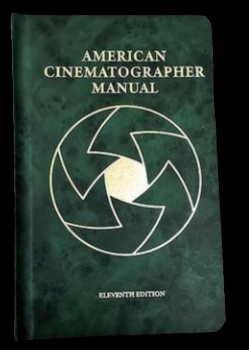
Hummel has served on the Scientific and Technical Awards Committee and edited the 8th edition of the American Cinematographer Manual. During Hummel’s tenure at Technicolor, he worked closely with over 70 cinematographers ranging from John Alonzo to Vilmos Zsigmond, giving him a unique perspective on the creative process of working with film formats. “Behind the Motion Picture Canvas: Film Formats through the 21st Century” continues with two nights of screenings hosted by Rob Hummel. Both screenings will be held at the Samuel Goldwyn Theater.

Click link for more information about the ACADEMY OF MOTION PICTURE ARTS AND SCIENCES

REST IN PEACE, POLAROID FILM 1928-2009

By George Leon
Another of my favorite products has passed away to the annals of photographic history this month. Polaroid, the instant camera outfit with the ubiquitous instant self-developing film packaged in a blue box or a rainbow wrapped box, lost the battle against the gratifying immediacy of digital photography. The company which stopped making instant cameras for consumers a year ago and for commercial use a year before that, said that as soon as it had enough instant film manufactured to last it through 2009, it would stop making that, too. Three plants that make large-format instant film will close by the end of the quarter, and two that make consumer film packets will be shut by the end of the year.

Polaroid® (a trademark of the Polaroid Corporation) is the name of a type of synthetic plastic sheet which is used to polarize light. The original material, patented in 1929 and further developed in 1932 by Edwin H. Land, consists of many microscopic crystals of iodoquinine - sulphate herapathite embedded in a transparent nitrocellulose polymer film. The needle-like crystals are aligned during manufacture of the film by stretching or by applying electric or magnetic fields. With the crystals aligned, the sheet tends to absorb light, which is polarized parallel to the direction of the crystal alignment, but transmits light, which is polarized perpendicularly to it. This allows the material to be used as a light polarizer. Its crystalline structure also blocks the transmission of non-perpendicular light. Not only did Polaroid’s techniques work in film, but they also work in sunglasses, window coatings, liquid crystal displays and microscopes.

Limited edition of 4x5 Alpenhause Polaroid with a 127mm,
f/4.7, 4-element Rodenstock Ysarex and double-window
viewfinder/rangefinder on top of the camera and
automatic parallax compensation


Polaroid Land 180 with a 114mm, f/3.8 4-element
Tominon lens. Separate-window range/viewfinder
assembly. Built-in mechanical development timer

Among other photographic products of my choice that had come to a rather inglorious end is the Agfa-Gevaert XT series of motion picture camera negative stock, an emulsion that rendered beautiful subtle pastels and warm earthy tones and a first choice of many cinematographers around the world. I was fortunate enough to shoot many cans of Afga XTR250 and XTS400 and also compare its characteristics against Kodak and Fujifilm stocks in different workshops and presentations held in a short-lived cine club for professional cinematographers underwritten by Carol Dean of now defunct Studio Film and Tape and members of the old IATSE local 644 in New York City. Until not long ago, I had in my possession 1,200 feet (6 cans) of AgfaXT320 in my fridge.

But the saddest of all losses, is the retirement of the 35mm Eastman Kodak Kodachrome transparency film, with its durable polyester base and the sharpest dye couplers emulsion of the any era. Kodachrome was processed exclusively using its proprietary K-14, a predecessor of the common slide E-6 process, yielding a unique look, deep contrast and rich vibrant lasting colors. I was also lucky to shoot hundred of rolls of Kodachrome 25 ASA, 64ASA or 200ASA film, my favorite emulsion for corporate portraiture and fashion shoots. It was always a hit, if printed in Cibachrome. Fantastic looking prints! For more information about cibachrome prints, visit the website of a master printer and friend of mine at http://www.cloneachrome.com/

Kodachrome 64

In 1947, with World War II over and government contracts drying up, Edwin H. Land rushed his instant camera into production, with spectacular success. Consumers bought millions of Polaroid cameras and hundreds of millions of Polaroid film packs, establishing the company as one of Massachusetts' biggest manufacturers, with as many as 15,000 employees, and revenue that peaked at $2.31 billion in 1994.

According to the Photo Marketing Association, Americans bought 4.2 million instant cameras in 2000, nearly all of them Polaroid. However, they bought 4.5 million digital cameras that same year. It was a harbinger of hard times for Polaroid; digital cameras steadily got cheaper and better, and users became accustomed to sharing snapshots over the Internet. Last year, Americans bought 28.2 million digital cameras, and just 240,000 instant cameras.

But also, Polaroid had other problems: Its successful fight against a hostile takeover bid in the late 1980s left the company swamped with debt. It filed for bankruptcy protection in 2001, and is now owned by privately-held Petters Group Worldwide, of Minnetonka, Minn. “We’re trying to reinvent Polaroid so it lives on for the next thirty to forty years,” said Tom Beaudin, Polaroid’s President, COO and CFO in an interview to the Boston Globe. Petters changed its direction from instant cameras and instant film to digital cameras, flat-panel TV sets, DVD players and computer monitors under the Polaroid brand.

Polaroid’s decision to halt film production of their cameras and instant film distressed photo professionals and photo amateurs around the globe. Polaroid pack or sheet film is a very important tool for the non-digital professional, commercial and art photographer, allowing us to evaluate lighting, exposure and composition prior shooting our chosen emulsion in 35mm 120, 4x5, 5x7 or 8x10 formats. Every medium and large format camera maker offered a Polaroid back or facilitated the way for other aftermarket companies to adjust a Polaroid back in their cameras.

Prior every still shooting I did, regardless of the format, (except 35mm) and client, from corporate, to fashion to tabletop (2 1/4x 2 1/4 Hasselblad, 6x7 Mamiya or 4x5 Linhof/ Sinar) at my New York City/Hoboken studio or anywhere on location, I always used Polaroid pack or sheet film to evaluate lighting, exposure and composition. It was beautiful. It created a sense of anticipation, crew-client collaboration and sometimes worked as currency to pay agency “go-see” models, makeup artists or lunch. It was the proof of proofs of a successful shoot.

Polaroid 669 film is balanced for average
daylight (5500K) at 1/125 of a second,
as well as for electronic flash units

Polaroid 57 4 x 5 Black and White Sheet
film is a high speed, panchromatic general
purpose black and white print film.
Ultra high-speed Medium contrast,
medium grain

The ritual to time the processing of a Polaroid sheet or pack film coming out the rollers of a Polaroid back was sometimes a comical or a dramatic event among professional photographers. Usually, only assistants that had gained enough trust from the photographer could peel apart the Polaroid film. Timing and correct peeling apart of the film was key to offer a perfect proof to the client. The pungent smell of the gooey chemical left in my fingers after every peeling apart is a smell I will never forget.

A Polaroid 4x5 sheet holder, standard
for every 4x5 view camera

A Polaroid holder for pack film 6x 7 RZ Mamiya

The beauty of the subtle image etched into the negative of the Polaroid film is an object of admiration and manipulation by creative photographers and artists. A favored Polaroid camera by many artists, law enforcement, insurance companies and Polaroid aficionados was the high-end SX-70 because it’s many features as a reflex camera using integral print film.

Polaroid SX-70 the first foldable "reflex" instant
camera with integral film and coated 4-element
116mm f/8 coated glass lens and electronic shutter.
The SX-70 film was the favorite of artists for
creative manipulation (read more)

Time is changing everything rapidly; a new camera or new photographic technology could become obsolete faster than ever. Film and analog video is being replaced by HD video. High-speed film cinematography is being replaced by super high-speed video. 2D imagery acquisition is being fiercely courted by 3D acquisition, postproduction and distribution. (see Avatar, James Cameron's new movie)

An example in how fast a new technology becomes obsolete faster than ever, dwells in two little wonder cameras of early 2000, the Cannon XL and the Panasonic DVX100A/B, now dwarfed to say the least, by their HDV updated versions. It is technology-eating technology. The gratifying immediacy of a beautiful and grain less high-definition image is the incentive, is the Holy Grail, is the raison d’être.

As many other people, I will miss the different cheap Polaroid cameras I have owned through the years, spitting integral film with a toying sound and seeing the ethereal images forming in front of my eyes. Also, will miss a retrofitted 185 Land with a Copal leaf shutter I sold not too long ago and the screw-ups that happened every time I pulled wrongly the protective tab of a 669 or a 667-pack film. But overall, what I will miss the most is the wonderment offered by a technology that lasted over eighty years. A longevity record now days, that’s for sure.

VIDEO ASSIST PREDATES JERRY LEWIS "PATENT"

by George Leon
It is said that necessity is the mother of invention and Jerry Lewis, the director and actor of The Bellboy (1960) said these words about his invention of the "Video Assist " in a conversation in 2008
with Peter Bogdanovich


Peter: Well, it is incredible. I don't know how the hell you did it. That was your first movie as a director for a commercial release. And then you made five or six pictures right one after the other...

Jerry: Yep.

Jerry: Is that when you invented the video assist?

Jerry: 1956. I had already invented the video assist.

Jerry: The video assist is a closed-circuit monitor that enables you to see while you're shooting—it enables you to see what you're shooting on a TV monitor. Jerry invented that and for years was the only person using it. Now everybody in the industry uses it on every picture.

Peter: How did you come...how did that happen?

Jerry: Because nobody was doing it. I just thought, if I was going to direct a film of myself, I'm going to have to have that information. I'm not going to direct a film and say to someone, "Bernie, how was it?" "It was funny!" "Print it!" No way, no, sorry. So before I would take the directorial reins, knowing what that meant, I figured I'm going to have a tool that's going to help me that I could trust. I went to see Mr. Morita of Sony. I flew to Japan about 35 times in the next four years and I was working with Hideo, his son, who helped me tremendously in getting the beam splitter, getting the electronic code and making what I had to have to do what I wanted to do. So I put it together, made it work, and the first time I had a chance to work with it was on The Bellboy.

Jerry: So you can see yourself.

Peter: Yeah. Of course.

Peter: Amazing.

Jerry: I used only video monitors. I‘d use 30 or 35 of them on the set. Everywhere I was, I could see where we were when I was shooting and I would either make the entrance or cut it. If it was fine, I'd continue. I'd have all that information wherever I looked. No one could understand how I would know what that meant. Well, you work it out.

My interest into the matter is that grew up admiring and laughing at the nutty slapstick screwball comedy of Jerry Lewis and I still remember seen him directing Smorgasbord back in 1982 on location. Also, I have many years of experience using video assist or video taps as they are commonly known. I used them for music videos and television commercials. But, I never was a fan of the gizmo. It was blessed curse. It was the choice of directors or producers , but not necessarily mine as a cinematographer or camera operator for many obvious reasons.

In light of the conversation between Jerry and Peter and other claims of such technical achievement, Peter Glaskowsky, writer of Speeds and Feeds and technology analyst of CNET News decided to investigate the movie star patent registration.

A few weeks ago, he wrote about Jerry Lewis' role in the development of "video assist" technology, the use of video technology to support film making (see "Jerry Lewis and the elusive Video Assist patent"). Lewis was credited as the inventor of video assist during the Academy Awards telecast in February, and more specifically, was said to hold a patent on the technology. He looked for this patent because he thought it would be interesting to write about it here, but didn't find it. After he contacted the U.S. Patent and Trademark Office for help with the story, it looked too. The bottom line is that there is no such patent.


This illustration from an article written
by Jim Songer for American Cinematographer
magazine, shows a Panavision camera with the
video assist subsystem integrated into the loading door.
(Credit: Jim Songer and Video West)

It turns out that video assist goes back to well before 1956, when Lewis claims to have invented it--as he did in a 2008 interview with Peter Bogdanovich. Thanks to a commenter on my original post, plus some long discussions with Jim Songer, an engineer who made substantial contributions to video assist in the 1960s, I have tracked down what may be the earliest patents on video-assist technology. But before I get into those patents, let me describe the elements of video assist technology in a little more detail. First, video assist relates primarily to motion picture production. As the name suggests, the purpose of the video is to assist the production by allowing the director, actors, and other crew members to review what's being filmed. This can be done live, or if video recording is used, the video can be reviewed after the shot.

The ultimate implementation of video assist requires simultaneous film and video recording of the same scene with the greatest possible quality and convenience. Accordingly, both film and video recording should be accomplished with what amounts to one camera, which should meet all the other requirements for motion-picture principal photography, use the same viewfinder and all of the same controls, and work with the same lenses and lighting. There can still be considerable value to a system that doesn't meet all these requirements. Indeed, the earliest video-assist systems were very simple. US Patent 2,420,197 by Adolph H. Rosenthal, issued in 1947 with a 1944 filing date, describes combining film and video cameras on a common chassis. Each camera used its own lens, which means they couldn't record exactly the same view (a condition known as parallax). Parallax can be a problem, especially for a tightly framed shot. Sometimes it isn't a problem. Lewis, for example, used video assist to help set up the timing of his scenes, so precise framing wasn't essential. From what I've been able to learn, Lewis' original video-assist system used separate video and film cameras, possibly mechanically attached for convenience, and so may have been unpatentable in light of the the 1947 patent.

Jerry Lewis Video Assist console with a scope,
monitor and reel-to- reel tape playback

The next major step was to combine the two optical systems to eliminate the parallax error. This combination was described in U.S. Patent 2,698,356 by Paul Roos, issued 1954 with a 1951 filing date, which describes the combination of a movie camera with a TV camera recording the image through the same lens using a beamsplitter. It appears that the Roos adapted an existing camera design that used the beamsplitter to provide an optical viewfinder; Roos realized he could put a video camera in the viewfinder path. This development earned Roos a 1988 Technical Achievement Award from the Academy of Motion Picture Arts and Sciences (AMPAS) "for the invention of a method known as Video Assist."

A 1955 patent filed in 1953 by Arthur E. Reeves and Robert Gordon Nichols (U.S. 2,709,391) goes one more essential step by adding a second beamsplitter so that both an optical viewfinder and a video camera could be used simultaneously. Songer explained to me a limitation of the Reeves/Nichols design: the three optical paths in this system, each with a different length, would cause undesirable variations in image size. For one lens, the film might see a wider view than the video camera; for another, the image on the film might be larger and thus have a narrower view. Solving this problem would require making significant adjustments to the camera when changing lenses.

Also, since the video camera is so far from the lens, with so many optical elements in between, it would not receive very much light. The video cameras of those days were not extremely sensitive, so to make them work, more light had to be diverted from the film. There are a couple of patents from 1960 and 1965 describing the attachment of a 16mm film camera to a studio-style TV camera, but as far as I can tell, there were no further advances in video assist technology for motion-picture use until Jim Songer integrated a video camera into a Panavision film camera and solved these problems. Songer was hired by Gordon Sawyer of Samuel Goldwyn Studios in 1962 to work on video-assist technology, which he called "Instant Replay" at the time. Over the next several years the path of his developments echoed that of previous efforts, solving each problem in turn. Along the way,

Songer's project was spun out to create a company called "Video West," and Songer was kind enough to send me copies of articles from American Cinematographer magazine describing the "Video West Instant Replay System." Ultimately, Songer designed his own video camera using a high-resolution Saticon tube in which the video image was scanned from only a small portion of the tube face. This made it possible to divert a smaller portion of the light away from the film, so the combined camera system could work with standard studio lighting.

Songer's design made the video camera work as an almost invisible element in the film camera, eliminating the need for adjustments when changing lenses and minimizing the light loss so the camera would still work in typical studio conditions. Songer's design was also more practical for use in the fast-paced motion picture industry than previous systems. It eliminated the need for adjustments when changing lenses, and was built into the loading door for a standard Panavision camera so that it could be moved from one camera to another.

Previous systems, including a competing design from the Mitchell Camera Company, were built into the camera chassis, but Hollywood producers found it more convenient to rent standard cameras and install the video-assist module only when needed. With just two of these video-assist systems, Video West supported the production of a large number of motion pictures starting with Blake Edwards' "The Party." Songer also made his system wireless: the video signal was transmitted by radio to the video-tape recorder and multiple video monitors, including battery-operated portable monitors that could be brought onto the set for review by actors.

Songer received his own Technical Achievement Award from AMPAS for 2002. The research report prepared by AMPAS to support the award states: "...it can be concluded that the development of Video Assist by Jim Songer has had one of the most significant impacts of any technical development in the history of the fim industry." Referring to the various technical requirements for video assist as part of principal cinematography, the report concludes: "Since Jim Songer's Video Assist system was built inside the first sound reflex camera to be accepted by the motion picture industry for a camera in the 'A' position, it would make it chronologically impossible for anyone else to have achieved video assist any earlier."

(Songer didn't apply for patents on this work, which would have belonged to Video West in any event. But later in his career, he earned 17 US patents between 1976 and 2003, plus many more international patents. Some were very significant. One anticipated the Macrovision copy-protection technology for video-cassette recorders, for example. Others related to 3D video display and high-definition TV.) All of this information seems to put an end to Lewis' claims. He was undoubtedly a pioneer in the application of video assist, but others made more significant contributions to the development of this important technology.
Read On the Set with Video Assist by Michael Frediani, SOC

PANAVISION'S FUTURE IS IN NEED OF FOCUS

By Richard Verrier

When producer John Wells was preparing to shoot his crime drama "Southland," he chose a digital camera that few had heard of a few years ago. The Red One was inexpensive, easy to use and enthusiastically endorsed by his friend and director Steven Soderbergh, who used it to film his two-part movie last year about Che Guevara. Wells was so taken with the Red camera that he even used it to film the final six episodes of "ER." That was a blow to Panavision Inc., the movie camera rental company whose roots go back more than half a century in Hollywood and which had provided cameras for hundreds of episodes during the hospital drama's 15-year run.

Panavision was completely in shock," recalled Arthur Albert, cinematographer for "ER." "It was like a slap in the face." Panavision's movie camera, with the director squinting into the eyepiece behind it to line up the shot, has been a ubiquitous presence on film sets. But now the company, beset by cheaper rivals moving into its turf, a sharp drop in film production and huge debt acquired in a 1998 takeover by investor Ronald O. Perelman, is struggling to hold on to its reputation as the industry's leading supplier of cameras and lenses.

Once known for its stable management, Panavision in recent years has more resembled the revolving executive suite door of a Hollywood studio, with four chief executives in the last six years. The most recent, William M. Campbell, lasted less than three months on the job. "Anybody who uses Panavision equipment has to be concerned," said Richard Crudo, past president of the American Society of Cinematographers. "Our biggest concern is that something disastrous might happen and suddenly they're not with us any longer. That would be a major blow to the industry."

Some of Panavision's problems parallel those facing other companies in the production industry. The company has been hit hard by the steep downturn that began last year during the Hollywood writers strike and the subsequent standoff between the major studios and the Screen Actors Guild. The economic recession also led studios to make fewer movies and advertisers to cut back on making commercials, further weakening demand for filmmaking equipment.

Panavision is a unit of Perelman's privately owned holding company, MacAndrews & Forbes Holdings Inc., which doesn't release the company's financial results. But people close to Panavision say camera and lens orders for feature films, which account for most of the company's revenue, are down 15% to 20% this year.

The company generated about $250 million in revenue in 2008, slightly below that of 2007. The company would not provide an estimate for total revenue in 2009. In response to the slowdown, Panavision laid off about 200 employees, reducing its total workforce to 1,200. It plans to consolidate offices, currently split between Woodland Hills and Hollywood, into a location in Burbank this year. The close-knit cinematography community first sensed things may not have been going well at Panavision in April, when Perelman ousted Bob Beitcher, who had been CEO since 2003, after the two sparred over how to turn the business around. The news surprised many in the industry, where Beitcher was respected for his efforts to improve Panavision's service and upgrade its products.

Beitcher declined to discuss his exit, but said, "Panavision is dealing with many of the same issues as all the other service providers in the industry are." Beitcher was succeeded by Campbell, a former president of Discovery Networks USA who also had been an executive at ABC, CBS and Warner Bros. Television. But Campbell barely had a chance to unpack his boxes before Perelman asked him to step aside in June, after other executives complained that Campbell lacked an understanding of the business and was not sufficiently engaged in the day-to-day affairs of the company, according to people familiar with the situation.

But one person close to Campbell disputed that account and said he stepped down because Perelman didn't share his strategy to rejuvenate the company, which included beefing up the company's website and more aggressively taking on rivals like Red Digital Cinema, the Lake Forest maker of the Red One camera. Campbell, who will continue to work for the company as a consultant, declined to comment for this article.

He was succeeded by William C. Bevins, a longtime Perelman associate who had worked as a top executive at the billionaire investor's other Hollywood companies, New World Communications Group Inc. and Marvel Entertainment Inc. Bevins declined to discuss the management upheaval but said that "the most important thing right now is to make sure that we manage through this recovery and that as the economy improves we have equipped ourselves to provide not just the service, but the gear that will allow us to maintain and possibly even improve our market share." Despite the drop in business, Panavision still generates an operating profit and has cash flow of about $70 million, said people familiar with the company. But much of that goes toward servicing its debt, which is held by a consortium of banks headed by Credit Suisse.

"We can very effectively manage the debt level that we have," Bevins said. "But if at any point in time we have capital needs that go beyond that, we can always look to our shareholder [Perelman], and he's been supportive of us." Aside from a production slowdown, Panavision is grappling with a more fundamental shift: Its business was built around manufacturing and leasing costly, high-end film cameras. It was a model that worked well for decades, when its cameras and lenses became a fixture in Hollywood and had little competition.

But demand for film cameras has steadily declined in recent years. Although filmmakers still debate the merits of shooting on 35-millimeter film versus shooting digitally, the switch to digital equipment has been dramatic, especially in television, where studios have been pressuring producers to cut costs. Virtually all the TV pilots were shot digitally this year. Panavision rents digital cameras, including its well-regarded Genesis, which it developed with Sony Electronics.

Panavision Genesis

But that camera is older and generally costlier to rent than rival digital models such as the Red One, which was developed by Jim Jannard, founder of eyewear and apparel company Oakley Inc. Interest in the Red camera soared after it caught the attention of filmmakers like Soderbergh and "The Lord of the Rings" director Peter Jackson, who used the camera to shoot a short war film, "Crossing the Line."

In addition to renting the camera, Red Digital Cinema sells its camera and accessories for about $30,000, making digital cameras affordable for filmmakers. By contrast, Panavision cameras aren't for sale and typically rent from $10,000 to $60,000 a week. "Suddenly the camera that nobody has access to, everybody has access to," said Brook Willard, a digital imaging technician who works with the Red camera and served as an advisor on "Southland" and "ER."

Bevins acknowledged that Panavision needs to more quickly adapt to the changing marketplace. To that end, the company recently acquired 15 Sony digital cameras for $35 million and is developing a new line of digital cameras. "We've decided to redouble our efforts to develop product for the digital marketplace," he said. "We can't rent what people don't want."

NEW! ROSCO iGOBO APPS FOR iPHONE AND iPOD TOUCH

By George Leon
Courtesy of Chris Alexander, Rosco Canada

The iPhone and iPod Touch shines again as a tool for the Cinematographer and the Lighting Designer.In past postings I called the iPhone and the iPod "The Swiss Army Knife for the Cinematographer" given to the many new apps available to the operating cameraman, director of photography and lighring designer. For the Camera Department, we count with the Depth of Field (DOF) Calculator, the Footage Calculator, the Aspect Ratio Calculator, the Lens Angle Calculator, and a gaffer's delight, the Power Load Calculator.

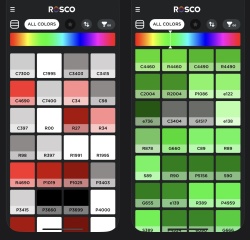
For the Lighting Department, the Rosco iGobo for iPhone and iPod Touch is the perfect tool for lighting designers, technicians and creative directors on the go. Containing the entire Rosco gobo library of more than 2300 images, iGobo makes it easy to browse, compare and select steel, glass or effects gobos, black and white or color, no matter where you are -- in your studio, at the tech table, in a design meeting or even in transit. iGobo uses the familiar look and feel found on the Rosco Gobo Website and printed catalog, with gobos sorted into helpful categories and shown along side similar, related images. The app defaults to the same order and layout found in the Rosco Gobo Catalog, but you can re sort by gobo code or name or by category
Your most recently browsed gobos are always available for review in case you want to go back to something you know you saw before. A comprehensive table of keywords helps you to zero in on the right gobo. Choose any 2 gobos to compare side by side, replacing one or both images quickly and easily. When you find something you like, add it to a Favorites list so you can recall it at another time. Make notes about how you might use it, or on what project. Finally the powerful search finds gobos by name, code, category, keyword, designer name or even the DHA gobo code familiar to many designers in Europe and Asia. And of course all of the iPhone’s magical gestures have been implemented allowing you to flick back and forth among gobos, rotate or reposition them with a simple twist of your finger and double tap into new screens.

FEATURES
More than 2300 gobo designs in steel and glass, b/w, full color and iPro images
Crisp clear thumbnails and brilliant full screen images
Arranged by category and easily sorted by code, name, category or catalog order
Search by name or code
Rotate or spin gobos with the flick of your finger
Compare any two designs
Store your selections as a Favorite’s list for easy recall later

Rosco iGobo for iPhone and iPod Touch is the perfect tool for lighting designers, technicians and creative directors on the go. Containing the entire Rosco gobo library of more than 2300 images, iGobo makes it easy to browse, compare and select steel, glass or effects gobos, black and white or color, no matter where you are -- in your studio, at the tech table, in a design meeting or even in transit. iGobo uses the familiar look and feel found on the Rosco Gobo Website and printed catalog, with gobos sorted into helpful categories and shown along side similar, related images.

The app defaults to the same order and layout found in the Rosco Gobo Catalog, but you can re sort by gobo code or name or by category Your most recently browsed gobos are always available for review in case you want to go back to something you know you saw before. A comprehensive table of keywords helps you to zero in on the right gobo. Choose any 2 gobos to compare side by side, replacing one or both images quickly and easily. When you find something you like, add it to a Favorites list so you can recall it at another time. Make notes about how you might use it, or on what project. Finally the powerful search finds gobos by name, code, category, keyword, designer name or even the DHA gobo code familiar to many designers in Europe and Asia. And of course all of the iPhone’s magical gestures have been implemented allowing you to flick back and forth among gobos, rotate or reposition them with a simple twist of your finger and double tap into new screens.

For other lighting control and lighting color changing applications for the iPhone and iPod read more "The Next Swiss Army Knife for the Cinematographer"
For more information about Rosco