CAPTURING ERAS THROUGH LENSES

Cinematographers invoke recent past with visual references

Evoking the mid- to late-20th century without stylizing to the point of viewer distraction is a tricky endeavor, but five cinematographers -- Dion Beebe ("Nine"), John de Borman ("An Education"), Roger Deakins ("A Serious Man"), Eduard Grau ("A Single Man") and Tom Stern ("Invictus") -- have managed to capture the essence of recent time periods without a hint of cliche.


A period movie doesn't (necessarily) need to look like that period so much as feel like that period," Grau says of capturing "Single Man's" L.A. imagery circa 1962. "The way you evoke time and place is by the way that time and place felt." Although Grau was only 27 during the film's production, he managed to re-create the era by exploring various cameras and lenses until ultimately deciding on the Panavision Primo line of lenses for their "sharpness and precision."


Instead of sharpness, de Borman went for a softer feel to capture the essence of 1961 London for "An Education." "Lenses were critical to this film," the d.p. says. "Along with an Arriflex camera, I used old-fashion Cooke S2 lenses, which have a softness to their focus that newer lenses just don't have. Now everything is incredibly sharp and very contrasting, while the Cooke S2s not only gives beautiful portraiture but also immediately gave the project a period feel."


Instead of focusing on camera equipment, Deakins used lighting to capture "A Serious Man's" Midwestern 1967 suburbia. "Photographically I don't really like doing anything that shouts period movie," says the d.p., who used an Arriflex 535 B. "I also don't want the photography to overcome the characters. So I approached this script in a very straightforward way (in order to) discover the mood of the story, which dictates how I shoot and light." It was through lighting and in collaboration with pic's directors Joel and Ethan Coen, as well as set and costume designers, that Deakins found ways to evoke the film's undercurrents of period psychedelia.

Joel and Ethan wanted an over-the-top, orange, '60s look for this one particular scene when Larry (the film's main character) goes to his neighbor's house," Deakins explains. "So the set designer created this very orange living room and the actress was put in a very orange dress, which was perfect because I was using an orange light to exaggerate the look and feel of the era even further."


While Beebe used theatrical lighting to achieve the contemporary fantasy sequences of "Nine," he avoided any tricky illumination when it came to creating the film's 1960s Rome sequences. Using a combination of Panavision and Arriflex cameras, Beebe made extensive use of black-and-white photography as a "nod to the period," but made sure to stay away from imitating Italian cinema from the era. I was looking for the spirit of 1960s Italy, but never wanted to replicate any classic cinema moments, including Fellini's (whose "8 ½" inspired "Nine). Instead I wanted the film to reference the '60s, but not feel like it was made in the '60s."


Also avoiding any tricks was Stern, who re-created South Africa circa 1990- 95 for "Invictus." There were subtle differences in the period that needed to be conveyed, so I, as always, tried to start from a point of simplicity and stay there throughout," says Stern, who stuck with the same equipment that he has been using for years -- Panaflex cameras and anamorphic lenses. "I tend to rely on books with images from the period that are not necessarily about the film, but are of the time."

Stern arrived on location two months prior to filming and was simultaneously guided during pre-production by looking at photographs from the era, but the d.p. admits, "Typically things sort of take care of themselves once the actors started working and everything comes together in terms of location and set design."

Courtesy of Addie Moorfot -Variety

ROGER DEAKINS, KEEPING AN EYE ON THE SMALL THINGS

Roger Deakins sat down with NPR's Melissa Block for an interview at his Santa Monica home. As twilight fell, they watched two of the cinematographer's favorite scenes — from No Country For Old Men and The Shawshank Redemption — and talked about how the play of light and shadow helped him shape each shot.

ROGER DEAKINS ON SET. COEN BROS. THE GREAT LEBOWSKI

Roger Deakins' least favorite phrase? "We'll fix it in post." "It's one of the worst expressions to come into the industry," says the veteran cinematographer, an eight-time Oscar nominee who shot The Shawshank Redemption, A Beautiful Mind and every Coen Brothers movie since Barton Fink. Digital post-production tweaks — everything from subtle cleanup to the deletion of geographical features and the insertion of thousands of computer-generated extras — are increasingly common in modern moviemaking. "If it's used correctly, it's a fantastic technique," Deakins tells NPR's Melissa Block. In fact, in Jarhead, which Deakins shot with handheld cameras in a California desert, director Sam Mendes wanted "this flat, surreal landscape, emptiness, the horizon going into nothing," Deakins remembers. So, in post-production, the mountains that had actually loomed on the horizon were digitally erased.

Better yet: In the Coens' O Brother, Where Art Thou?, there's a scene where a car full of convicts hits a cow in the road. The sequence was convincing enough, Deakins recalls, that animal-cruelty watchdogs cried foul. The filmmakers invited the activists to visit the Digital Domain special-effects lab, "and the effects guys had to show them through the stages of how they'd animated this cow so it looked like it had been run over by the car." Still, to a man like Deakins — an avid still photographer, and a connoisseur of "the little things" like the quality of light or the angle of a shadow — an over-reliance on post-production magic is anathema.

"There are certain things you can't fix in post, certain things that would no longer look organic if you did it in post, really," he says. "It's one thing removing a mountain in the background of a shot; it's another thing adding 15,000 people and changing somebody's face. That kind of manipulation, I think, gives itself away eventually. ... And that's when you lose an audience." Deakins says what's essential, at least in his filmmaking philosophy, is remembering that the big things and the little things alike — "the camera style and the lighting ... the imagery and the photography and the effects" — are there to serve the movie's characters and story. He cites The Shawshank Redemption* as a case in point.


NO COUNTRY FOR OLD MEN. ROGER DEAKINS

"A lot of people say it's nicely photographed, and I think it is," he says. "And I think it's the simplicity that makes it well photographed. ... It's not like these are necessarily fantastic images; it's really about the content. It's not about making great images." "I like simplicity," Deakins reiterates. When he's lighting a scene, especially, "I like using natural sources.

I like images to look natural — as though somebody sitting in a room by a lamp is being lit by that lamp." In a film framed by such a naturalistic vision, Deakins insists, attention-getting gestures have to be especially well thought out. "When you move the camera, or you do a shot like the crane down [in Shawshank] with them standing on the edge of the roof, then it's got to mean something," he says. "You've got to know why you're doing it; it's got to be for a reason within the story, and to further the story." "There's nothing worse than an ostentatious shot," Deakins argues. "Or some lighting that draws attention to itself, and you might go, 'Oh, wow, that's spectacular.' Or that spectacular shot, a big crane move, or something. But it's not necessarily right for the film — you jump out, you think about the surface, and you don't stay in there with the characters and the story."

GORDON WILLIS RECEIVES 2009 GOVERNORS AWARD

Cinematographer on some of the most acclaimed motion pictures of the 1970s and ’80s, two-time Oscar nominee Gordon Willis served as director of photography on three Best Picture winners in six years: “The Godfather” (1972), “The Godfather Part II” (1974) and “Annie Hall” (1977). Though his willingness to fly in the face of convention led him to break new ground with daring compositions, lighting schemes and lens choices, Willis’s iconoclastic ways were not fully appreciated until his influence on subsequent generations of cinematographers became undeniable. Now acknowledged as one of the form’s foremost stylists, Willis’s unwavering belief in what Longfellow called “the supreme excellence” in simplicity led him to employ surprisingly few lights and camera setups in creating his compelling visual storytelling. As a culmination of his fertile collaborations with Woody Allen and Francis Ford Coppola, Willis was Oscar-nominated for his work on “Zelig” (1983) and “The Godfather, Part III” (1990).

Born in Queens, Willis is a lifelong New Yorker and movie-lover who found his way to photography after an early stint in stage acting. In the 1950s, he cut his teeth as an assistant cameraman on documentaries and commercials but it took more than a decade to work his way up to shooting his first feature, “End of the Road” (1970), starring Stacy Keach and James Earl Jones. In the 1970s, working with filmmakers such as Allen, Coppola, Alan J. Pakula and Robert Benton, he defined the look of period films and perhaps the decade’s cinematic style as a whole. In films such as “The Paper Chase” (1973), “The Parallax View” (1974) and “All the President’s Men” (1976), he used new methods to convey mood, theme and emotion. To that end, his approach to a single place—New York City—varied immeasurably in its depictions in “Klute” (1971), “The Godfather,” “Annie Hall” and “Manhattan” (1979), among other films.

In subsequent years, Willis continued to garner wide acclaim for his artistry on films such as “Pennies from Heaven” (1981) and “The Purple Rose of Cairo” (1985), giving each the distinct and unified look that best served their individual stories. To this day, filmmakers send him scripts in hopes of having his unmatched eye behind the lens of their cameras.

Did You Know?

In the seven years from 1971 to 1977, six films shot by Willis accumulated 39 Oscar nominations with 19 wins, including three for Best Picture. For “All the President’s Men” (1976), he put a winch in the dome of the Library of Congress that enabled his remote-controlled camera to pull back from a desktop to a full view of the library floor, all in one shot. Willis enjoyed six cinematic collaborations with director Alan J. Pakula spanning 1971 (“Klute”) to 1997 (“The Devil’s Own”).

During the Korean War, he spent four years in the Air Force on a motion picture unit photographing instructional films. He has his own “theory of relativity,” which he explains as “I believe in the relativity of moviemaking, which includes a world of light and dark, big and small, high and low, good and evil.” Director Francis Ford Coppola, a collaborator on three films, once said of Willis, “He has a natural sense of structure and beauty, not unlike a Renaissance artist.”

Selected Filmography
  • The Devil’s Own (1997)
  • The Godfather, Part III (1990)
  • Presumed Innocent (1990)
  • Bright Lights, Big City (1988)
  • The Purple Rose of Cairo (1985)
  • Broadway Danny Rose (1984)
  • Zelig (1983)
  • A Midsummer Night's Sex Comedy (1982)
  • Pennies from Heaven (1981)
  • Stardust Memories (1980)
  • Manhattan (1979)
  • Comes A Horseman (1978)
  • Interiors (1978)
  • Annie Hall (1977)
  • All the President's Men (1976)
  • The Drowning Pool (1975)
  • The Godfather Part II (1974)
  • The Parallax View (1974)
  • The Paper Chase (1973)
  • Bad Company (1972)
  • The Godfather (1972)
  • Klute (1971)
  • The Landlord (1970)
WATCH VIDEO:
Jeff Bridhges present Oscar statuette to Gordon Willis


© Academy of Motion Picture Arts and Sciences ® "Oscar®," "Oscars®," "Academy Awards®," "Academy Award®," "A.M.P.A.S. ®" and "Oscar Night®" are the trademarks, and the ©Oscar® statuette is the registered design mark and copyrighted property, of the Academy of Motion Picture Arts and Sciences.
Courtesy of the Academy of Motion Picture Arts and Sciences ®
photo: Douglas Kirkland

NO SUBTITLES NECESSARY: LASZLO AND VILMOS

TO AIR NATIONALLY ON THE PBS SERIES INDEPENDENT LENS
ON THURSDAY, NOVEMBER 17, 2009

NO SUBTITLES NECESSARY: LASZLO AND VILMOS follows the lives of renowned cinematographers Laszlo Kovács and Vilmos Zsigmond from escaping the 1956 Soviet invasion of Hungary to present day. An Official Selection of the Cannes Film Festival, James Chressanthis’ NO SUBTITLES NECESSARY will air nationally on the Emmy and Peabody Award winning PBS series Independent Lens on Tuesday, November 17, 2009 at 10PM (check local listings.)

As film students in Hungary, Laszlo and Vilmos took to the war-torn streets of Budapest to shoot footage of the Russian invasion, and subsequently volunteered to smuggle it out of the country. Barely escaping with their lives, the two friends fled to America and settled in Hollywood, eventually saving enough money to buy their own 16mm camera.

After working on a string of low-budget horror and biker movies, both men soon rose to prominence in the late 60's and 70's, shooting the films that defined what came to be known as the American New Wave: Easy Rider, Five Easy Pieces, McCabe and Mrs. Miller, Deliverance, Paper Moon, Close Encounters of the Third Kind, and more. Working with directors including Robert Altman, Bob Rafelson, Peter Bogdanovich, and Martin Scorsese, they helped create a new American film aesthetic, and pioneered innovative, fearless ways to tell stories.

“When it comes to Laszlo Kovacs and Vilmos Zsigmond, it's clear that the American New Wave of the late 1960's and early '70s wouldn't have flowered as it did without them." Leonard Maltin

Told through interviews with Laszlo (who died in 2007) and Vilmos, as well as directors including Rafelson, Bogdanovich, John Boorman, Graeme Clifford, Richard Donner, William Richert, Mark Rydell, composer John Williams and actors such as Jon Voight, Peter Fonda, Sandra Bullock, Karen Black, Dennis Hopper and Sharon Stone, NO SUBTITLES NECESSARY is an intimate portrait of two giants of modern imagemaking and their deep bond of brotherhood that transcended every imaginable boundary. Two heroes. One road.

http://www.laszloandvilmos.com/
http://www.pbs.org/independentlens/
Find us in facebook http://zi.pe/bOy

FROM A BIRD'S EYE POINT OF VIEW

By George Leon
Aerial cinematography often encompasses more than air-to-air photography of other aircraft. Sometimes the aerial cinematographer is called upon to facilitate photography from the ground and within the aircraft itself. Aircraft used in aerial cinematography are designated by the Aerial Cinematographer and Aerial Coordinator as either a camera ship or story ship.

Many types of fixed-wing and rotorcraft aircraft are utilized with helicopters being the most versatile for most camera ship duties. The choice and use of camera ship aircraft should be decided upon by the aerial cinematographer working closely with the aerial coordinator and camera ship pilot. However, the aerial coordinator is the first and last word on all matters regarding the acquisition, permitting and use of all aircraft on a motion picture aerial unit production.
Eclipse Camera System

Helicopters
are the aircraft of choice for the majority of aerial cinematography duties as they offer the most in versatility. The ability for multidirectional flight gives the aerial cinematographer control and finesse over the movement of the camera much like the director of photography would do with any ground-based camera dolly.

Choosing a suitable rotor craft camera ship is predicated on the demands of the shot and the camera mounting system to be used. The ones shown here are the most utilized with the majority of commercially available filming systems having been designed and/or certificated for installation. Equally important to consider are the many variables affecting the inflight performance characteristics of the helicopter, the most significant being air temperature, pressure & density altitude, moisture content of the air, gross weight, external stores (ball mounts in particular fall under this heading) and wind.
In addition, each helicopter has its own maximum airspeed limitations (expressed as VNE - velocity never to exceed) which will be further reduced by the installation of any camera mounting system. There are definite reasons for these limitations and under no circumstances should they ever be exceeded. Number of people on board factors into the aircraft gross weight which will affect performance, particularly at altitude or during hover. Increased weight aside, with certain camera mounts there quite frankly will not be enough room left, beyond the pilot and operator, to accommodate any more passengers other than maybe the director.

Consult all aspects of the shot with the Aerial Cinematographer, Aerial Coordinator and Camera Ship Pilot will ensure a safe and intelligent choice of helicopter for all camera ship duties on the production. Safety for all cast and crew members actively involved in the film production is the number one priority for the aerial cinematographer, aerial coordinator and the aerial filming unit. Working around aircraft can prove to be hazardous if sufficient care is not taken to ensure personal safety. Those individuals who make their primary living in aerial cinematography know all too well the dangers involved and strive to maintain a safe working environment in the air and on the ground for themselves and their colleagues.

Camera mounts are the essential tool of the aerial cinematographer, linking camera to aircraft. There are many from which to choose and generally fall into the following categories: Gyro Stabilized Ball Mounts, simply referred to as ball mounts due to the spherical wind shroud. Utilized for highly stable, plate-quality images. Door Mounts Also known as side mounts. Mainly designed for helicopter usage. Some fixed-wing available. Nose Mounts Also known as belly mounts. Can be an articulated system, however, some are fixed position (hard) mounts.

Helicopter or Fixed-Wing

Choice of system depends entirely on the nature of the shot. No one filming system is superior over another. Rather it boils down to suitability to task. It's common to employ any combination of these mounts during a film production. For budgetary reasons, consult the aerial cinematographer on the demands of the shot to ensure the correct choice of mount.

As a cross section example of the aerial cinematography technology, I will describe the services of a well known helicopter aerial cinematography company and some the features they offer to the rotor, fixed wing and telescopic crane market for air, dry land and maritime uses.

Pictorvision is the first aerial equipment stabilization rental company to provide customers with an entire spectrum of stabilized camera product solutions for capturing aerial images. Pictorvision provides choice: matching the right system to any budget, removing single system and rigid price point constraints. Whether your production calls for high-end 4K digital, 35mm, cost effective SD, Super 16mm, or anything in between, Pictorvision's product suite covers the entire range of output options, offering you the flexibility to pick and choose as you see fit.

Pictorvision offers "choice" - a revolutionary concept in the aerial camera system rental market through a product suite of aerial systems: eclipse, Cineflex Wescam, RED One, Wescam 35mm, Wescam HD and Wescam SD

The Originator of the Gyro-Stabilized Camera
The same people who brought you the pioneering stabilization work at Wescam stand behind Pictorvision today. As Wescam, we originated the gyro-stabilized aerial camera platform – an innovation that won us an Academy Award for widening the entertainment industry’s creative possibilities. As Pictorvision, we evolved to become the industry leader not only in stabilized technology, but also in service. We take a strong customer-centric approach as your stabilized equipment solution partner. Our highly responsive and knowledgeable team is committed to ensuring that Pictorvision exceeds your expectations – every time! eclipse - A Helicopter Camera Mount with Unrivalled Stability Pictorvision is proud to introduce the eclipse - the first truly revolutionary advancement in aerial camera systems in a generation.

Designed by the team who invented aerial stabilization over 35 years ago, and in partnership with cinematographers, the eclipse embodies a commitment, focus and passion for aerial cinematography. At the core of the eclipse's superior stability is the patented XR Motion Management technology, enabling the most advanced steering, stability and pointing capabilities available on the market. Pictorvision's engineering group - the team behind every major advancement in aerial stabilization - partnered with the world's most creative DP's to develop the eclipse, ushering in a new dawn in cinematography.

The Pictorvision eclipse features XR Motion Management technology that enables the highest level of stability, unmatched precise and responsive steering, Geo steering, will not topple, absolute level horizon and faster start-ups and resets.

Wescam RED One
A First for Aerial Cinematography Pictorvision is the first aerial stabilization company to use the revolutionary RED ONE digital cinema camera in aerial shooting. Capitalizing on their expertise in camera stabilization technology, the team at Pictorvision can quickly make modifications necessary to successfully stabilize and accurately integrate the RED ONE camera package into our Wescam Film/HD System. The modular design of the Wescam Film System makes the integration very simple. Our multi-format, HD ready operator’s monitor (standard equipment with the system) makes monitoring the HD-SDI output from the camera effortless for our technicians. Pictorvision customers can immediately make reservations for the company’s proprietary RED ONE aerial stabilization and precision control turnkey package or integrate their own RED ONE camera.

The Pictorvision XR
The Most Stable Ground Camera System for the Most Challenging Environments Pictorvision provides customers with the most stable and versatile gyro-stabilized remote head in the industry. The XR has exceeded expectations on some of the largest productions and is recognized for its stabilization performance and reliability in the most challenging of environments.The XR was the first system to utilize Pictorvision's patented XR Motion Management technology, setting new industry standards for pushing creative limits.

The Pictorvision XR, is an advanced open mount, digitally controlled and gyro-stabilized camera platform capable of supporting and stabilizing film and video camera packages up to 70Kg at film camera focal lengths of 3000mm or more. The system is extremely flexible and can be mounted in hanging or sitting mode on camera cars, boats, cranes as well as rail camera and flown wire systems. The XR can be either configured for 2 axis operation or in 3 axis where it is capable of maintaining a level horizon regardless of the angular changes encountered by the mount. From simple shots to demanding VFX plates, the Pictorvision XR is able to meet your requirement for stabilized images on set or location and provides rock solid performance in the most demanding of environments.


LATEST TECHNOLOGY IN AERIAL PHOTOGRAPHY

Tom Hallman , Pictorvision and CINNERS President along with
Dave Arms, Aerial Operator and Technician showcasing at
CINEGEAR 2009 the new PictorFX 3D scanning and modeling system.

What is the PictorFX
The PictorFx enables set designers, special effects teams and production crews to create high-quality, accurate D models – this creative, innovative system helps to solve some of the tough technical challenges associated with the creation, coordination and management of digital information in both pre and post production.

Set Design Visualization
The PictorFx enables users to plan, track and digitally construct and reconstruct production-sets. Information Modeling PictorFx enables production teams to obtain structural and spatial information, from the air or ground providing users with a 3-D view of every shot, from every camera, at every angle.
Visual Effects
Using the PictorFx system, image data can easily be integrated with CG objects a creative and cost effective approach in generating digital 3-D images and graphics.

PictorFX Capabilities
Background 3-D plate shots, set documentation & 3-D blue prints,
pre-visualization with virtualsets: Plan and test camera and lighting angles, plan and test camera moves, pre-plan shooting and equipment logistics, set extensions , composites, topography to ground characters feet, accurate shadow casting, match moving virtual camera to live-action camera

For more info:
Courtesy of Aerial Cinematography
(Aerial Cinematography does not endorses any aerial company but its own and kindly offers information to the benefit of all operators). Courtesy of Laurie K. Gilbert S.O.C. of L'Image Cinematography, an aerial and marine cinematographer who operates globally from an operational base in South East Asia.
Courtesy of Pictorvision
Photo courtesy of Airborne Images and Aaron Fitzgerald
Watch a video clip, click -ON DEMAND- and choose Pictorvision

CINE LENSES FOR DIGITAL SRL CAMERAS AT DV EXPO 2009

by George Leon
After visiting some of the annual video and film industry shows happening this year in other venues, I decided to stop by the DV Expo 2009 held at the Pasadena Convention Center and attend to one or two of the many seminars offered at the expo to report my findings and to keep abreast with the latest. The impression I had from my last year visit, was that the DV Expo was rather a small show with limited attendance, but then I was immediately proved wrong upon my arrival. I was pleasantly surprised to see a high turn out of attendees mingling around in he already crowded floor.
I spent a great day at the Digital Video Expo 2009. The exhibit floor was packed with attendees asking all kind of technical questions to the participating vendors. The variety of vendors spanned the wide gamut of video services and video manufacturers of pro-sumer and broadcast equipment, ranging from lighting to work-flow management to the latest in high definition video camcorders, to lens makers and much more.. To name a few with innovative products offering discount prices at the floor were Carl Zeiss Lenses, Azden Corp (audio), Lensbaby, Libtec Tripods, Dana Dollies, Zacuto, Sonnet, Sony, JVC, Panasonic, Litepanels, and others...

The Panasonic booth attracted many visitors
The seminars were popular and well attended

Footage Firm booth

Jessica Sitomer, The Greenlight Coach offering career
advancement advice

Brady Harris and Robert Orlando at the Tiffen booth
presenting the Dfx software, the IR filters, the Pilot
Steadicam and the Merlin handheld stabilizer

Answering technical inquiries at the Libtec booth

A new vendor I met in the Expo with a solid product was
Michael and Dana Hall, introducing their Dana Dolly,
a portable camera dolly system at an affordable price
Click here for more info, price and specs

The seminars were to down to the point. The two ASC Master Lighting seminars I went on Wednesday were inspirational and educative to the budding filmmaker and the seasoned cameraman as well. The panel was moderated by George Spiro Dibie ASC, and the guests speakers were Isadore Mankofsky ASC, David Darby ASC, Daryn Okada ASC, Johnny Jensen ASC, Donald Morgan ASC, and Robert Primes, ASC. After presenting a clip or two of one of their films, the panelists elaborated on their experience creating the lighting schemes seen on the screen, on set or on location and their collaborative process with the director along with other tips and tricks of the trade. The session culminated with a Q&A round in between the attendees and the panelists.

ASC Master Lighting Seminar, George Spiro-Dibie ASC ,
Daryn Okada ASC, David Darby ASC
and Robert Primes ASC.

Isadore Mankosfky, ASC was also part of the Master Lighting
Seminar
and shared with the audience his experience about
the making of
the cult masterpiece "Somewhere in Time"
photographed by
Mankosfky, and directed by Jeanot Swarc.
Starred by
Jane Seymour and Christopher Reeves. Pictured
above
with Martha Winterhalter, Publisher of American
Cinematography magazine.

Another seminar that was very informative was "Digital Still Camera as a Tool for the Cinematographer" presented by the Digital Cinema Society. The panel was composed by leading cinematographers, digital SLR experts and industry representatives as they elaborated in the technical pros and cons (read prior posting CMOS VS CCD) of this new variant of the CMOS video chip technology encased in a SLR still camera, specifically the Panasonic Lumix GH1 featuring full HD movie recording in AVCHD and using ν (nu) Maicovicon technologies. The 4/3-type 12.1-megapixel Live MOS sensor featured in the DMC-GH1 is able to offer the best of both worlds — the superior image quality of a full-frame CCD sensor, and the lower power consumption of a CMOS sensor.

A rigged Canon Eos D5 with a matte box and follow
focus and a daylight Marshall monitor

The other SLR camera presented by the panelists was the Cannon EOS D5, featuring full-frame 12.8 Megapixel CMOS sensor combined with Canon's DIGIC II Image Processor, and a high-precision 9-point AF system with 6 assist points, and a "Picture Style" color control to deliver images of superior quality with enough resolution for any application. The EOS 5D's full-frame CMOS sensor records 4,368 x 2,912 pixels-that's 12.8 Megapixels, larger than many other companies' top-of-the-line sensors. The same size as a 35mm image on a traditional camera, the sensor operates without a conversion factor.
Richard Scheluning from Carl Zeiss,
explains the advantages of the new
Compact Prime Lenses

Zeiss Distagon Compact Set of Primes
T3,6/18 -T2,9/21 mm - T2,9/25 mm - T2,1/28 mm
T2,1/35 mm - T1,5/50 mm - T1,5/85 mm, ready for
SLR digital cameras with calibrated
T-stops markings

At the session, the new Zeiss Compact Prime set of lenses was introduced, a new proper Cinema lens for SLR cameras, featuring a PL mount, cine style housing, high optical performance and 14 precision iris blades for pleasing focus transition and rounded smooth bokeh. The session was visually demonstrated with outstanding footage shot by various of the participating cinematographers who are proponents of shooting SRL digital video for TV spots, music videos and even features on ergonomically rigged still SLR digital video cameras such as the Panasonic Lumix and the Canon D5.

I should point out that other companies such as Nikon offers digital video SLRs cameras , as well with outstanding quality at affordable price, like the D90, the world’s first D-SLR with an HD movie mode, recording cinematic-quality 24fps movie clips with sound at up to 720p HD (1280 x 720 pixels) in Motion JPEG format and the larger and more capable, D300S and D5000 with D-Movie HD Video capturing cinematic 24 fps, 720p HD movie clips, enhanced by NIKKOR interchangeable lenses and featuring external stereo Mic input and AF operation. One drawback heard from the shooters of any digital SLR video camera is the poor sound recoding quality and the lack of in and out audio connectors and no timecode feature of any kind.

DLSR Nikon D5000 with HD movie mode,
recording cinematic-quality 24fps movie clips with
sound at up to 720p HD (1280 x 720 pixels) in
Motion JPEG
format, shown above with a swivel screen

I would like to recommend to any videographer or digital cinematographer to mark their calendars every year for this gathering of gear heads, creatives types, producers, camera operators, editors, Dit's and vendors under one roof. It is a bit smaller than other industry shows but allows you, the visitor, to spend more time learning about the latest of the digital video technology.

ARRIFLEX UNVEILS NEW ARRI DIGITAL CAMERA "THE ALEXA" AT IBC 2009

The next generation of ARRI digital cameras-
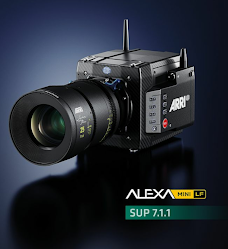
ARRI announced a new range of 35mm-format digital cameras at IBC 2009 - codenamed Alexa - that will redefine the limits of digital motion capture. Based around a newly developed CMOS sensor with unsurpassed sensitivity and dynamic range, the cameras will couple exceptional image quality with flexible, integrated workflows designed to meet the needs of modern postproduction. The Alexa product line-up, priced in the range €50k to €130k, will be available for sale commencing the second quarter of 2010.

Superior sensitivity & dynamic range 35mm size format
sensor Film look New Electronic or Optical Viewfinder
Early adopter plan for ARRIFLEX D-21 customers. Prices
begin at 50K Euro, resetting the bar for cost & performance

Compact and lightweight, the new range of cameras will provide an affordable toolset to address every level of the broadcast and feature film markets. The planned entry level model utilizes a 16:9 sensor and the most advanced electronic viewfinder on the market. A more fully-featured version continues ARRI's tradition of offering a 4:3 sensor and a rotating mirror shutter linked to an optical viewfinder as the optimum choice for cinematographers. A number of recording options, including several innovative on-board solutions, have been designed specifically with modern workflows in mind to provide the greatest versatility both on the set and in postproduction.

ARRI managing directors Dr. Martin Prillmann and Franz Kraus
discuss and display the new ARRI digital camera system at the
IBC booth in Amsterdam. Click ON DEMAND in the video window
above to watch the introduction

By combining 90 years of mechanical and optical expertise with state-of-the-art digital technology, ARRI products continue to offer features that other manufacturers cannot equal. Incorporating the key attributes of design and build quality on which ARRI's worldwide reputation is based, the new camera range will uphold the highest standards of reliability, precision and usability.

For more info, ARRI Digital

FILM FORMATS AT THE ACADEMY OF MOTION PICTURE ARTS AND SCIENCES

Presented by the Academy’s Science
and Technology Council

Hosted by Rob Hummel. Continuing with screenings of “Manhattan” and “The Black Stallion” on September 10 and 11 at the Samuel Goldwyn Theater in Beverly Hills. “Cinema is a matter of what’s in the frame and what’s out.”Martin Scorsese

The motion picture aspect ratio isn’t just a frame for the picture; in the hands of an accomplished filmmaker, the aspect ratio can have a significant influence on the storytelling process. Join Science and Technology Council member Rob Hummel for an illustrated lecture that traces the history of motion picture formats from the silent era through the 21st century. “Behind the Motion Picture Canvas” examined the role that emerging technology has played in the evolution of film formats, and how the technical choices made by Thomas Edison and William Dickson at the dawn of the film era continue to influence the way we look at movies today.

The Wednesday evening showcase was a success filling the Samuel Goldwyn Theater in Beverly Hills almost to capacity with over 800 filmmakers, cinematographers, producers, students, members of A.M.P.A.S and film buffs of all ages.

The Adventures of Robin Hood. Directed by Michael Curtiz
Photographed by Tony Gaudio and Sol Polito 1938,
Academy aperture 1.37:1 -Technicolor 3 strip process

Technicolor 3 strip camera. Technicolor became known
and celebrated for its hyper-realistic, saturated
levels of color, and was used for filming
The Wizard of Oz and Singin' in the Rain,
The Adventures of Robin Hood and Joan of Arc,
Snow White and the Seven Dwarfs and Fantasia

The program included outstanding clips from such films as “The Great Train Robbery” (1903, full aperture 1.33:1), “The Adventures of Robin Hood” (1938, Academy aperture 1.37:1), “White Christmas” (1954, VistaVision 1.85:1), “Lady and the Tramp” (1955, CinemaScope 2.55:1), “Sleeping Beauty” (1959, Technirama 70 2.2:1, Composed for 2.55:1), “The Sound of Music” (1965, Todd-AO 65mm 2.2:1), “Ryan’s Daughter” (1970, Super Panavision 65mm 2.2:1), “Silverado” (1985, Super 35 2.40:1), and “The Accidental Tourist” (1988, Panavision 2.40:1).

Gone with Wind, 1939 Academy aperture 1.37:1 with a
visible optical sound strip

Casablanca, 1.37:1 aspect ratio with an optical sound
strip compared with a wide screen format

The Sound of Music, 1965, Todd-AO 65mm 2.2:1
Directed by Robert Wise and photographed by Ted D. McCord

Sergio Leone's, Once Upon a Time in the West shot by
Tonino Delli Colli on Techniscope 235: 1
Techniscope or 2-Perf is a 35mm motion
picture camera film format introduced by
Technicolor Italia in 1963.

Cinematographers Allen Daviau, ASC, Caleb Deschanel, ASC, Stephen Burum, ASC and John Bailey, ASC, composed the panel moderated by Hummel and discussed the role of film formats in shaping their creative decisions, including the technical constraints and the creative opportunities that the choice of a film format brings to a motion picture.

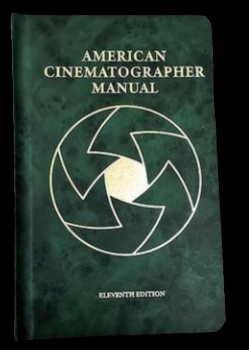
Hummel has served on the Scientific and Technical Awards Committee and edited the 8th edition of the American Cinematographer Manual. During Hummel’s tenure at Technicolor, he worked closely with over 70 cinematographers ranging from John Alonzo to Vilmos Zsigmond, giving him a unique perspective on the creative process of working with film formats. “Behind the Motion Picture Canvas: Film Formats through the 21st Century” continues with two nights of screenings hosted by Rob Hummel. Both screenings will be held at the Samuel Goldwyn Theater.

Click link for more information about the ACADEMY OF MOTION PICTURE ARTS AND SCIENCES