THE PRINCESS OF MONTPENSIER AT VIFF 2010


By John Phillip Jones

“Dealing with history teaches you to be analytical and teaches you to find out what's important. Not conventional history, but the history told by the new breed of historians that show that history is linked with fact, flesh, blood, passion. It's not just about remembering dates, but it's about making the history alive.” Bertrand Tavernier.

Although Bertrand Tavernier’s early work was dominated by mysteries, he has never shied away from social commentary as can be observed in “Ça commence aujourd'hui” (1998) and “Histoires de vies brisées” (2001). His advocacy of pacifism is evident in films such as “Life and Nothing But” (1989), “Capitaine Conan” (1998).Tavernier’s awards include a BAFTA for best film in a language other than English in 1990 for “Life and Nothing But” and four César Awards. “The Princess of Montpensier” competed for the Palme d'Or at the 2010 Cannes Film Festival.


“The Princess of Montpensier” is a costume drama set during the French Wars of Religion (1562-1598). The story, loosely adapted from Mme. De La Fayette’s eponymous novel, takes place between 1568 and 1571. The plot centers around the beautiful Marie de Mezieres (Mélanie Thierry), who in spite of being in love with her cousin Henri de Guise (Gaspard Ulliel), is forced into a more advantageous marriage by her father. Her husband to be is Philippe de Montpensier (Grégoire Leprince-Ringuet) who she has never met. The consummation of their marriage, with all the public in attendance, has more the character of a business transaction than romance.However Montpensier is unable to get acquainted with his new bride as he is called to the front. His young bride is left under the protection of Count de Chabannes (Lambert Wilson), an impoverished noble who had served as her husband’s tutor some time ago.


Marie cannot forget her first love, but finds a friend in Chabannes, her tutor. Chabannes unfortunately for him soon falls under her spell. The Duke of Anjou (Raphaël Personnaz) becomes the fourth in the list admirers. An imbroglio of epic proportions ensues as the couple is called to Court in Paris. Her husband becomes jealous on account of de Guise’s pursuit of Marie, who is initially hesitant, but soon gives in to his advances. The droll Duke d’Anjou, who is to inherit the throne from his soon to be departed brother Charles IX, pulls rank to put a stop to the affair. Chabannes, caring more for her happiness than his, nobly aids the Princess to spend a night with her forbidden love.

The film’s production is spectacular with sumptuous costumes and luxurious sets. The locations go from the rustic Château de Messilhac to the majestic Château de Blois. Tavernier possesses a painter’s eye for depicting both nature and architecture. Cinematographer Bruno de Keyzer’s mastery of light and shadow is worthy of a renaissance master. His camera work is nothing short of brilliant, depicting with equal talent the luxurious interiors of Blois or the wild beauty of Auvergne. Keyzer is able to capture the essence of diverse moments such as slaughter of battle or the intimacy of the bedroom with equal skill.

This is not his first collaboration with Tavernier, both having worked together in “In the Electric Mist”(2009), “Life and Nothing But” (2009), and “La Passion de Béatrice” (1987). De Keyzer won a César for best cinematography for his work in Tavernier’s “Life and Nothing But” . This is most certainly an art house film, especially since the history may be unfamiliar outside Francophone sphere. It does however serve as a useful antidote to Ridley Scott’s forgettable “Robin Hood”.

PLUS CAMERAIMAGE. MICHAEL BALLHAUS TOP HONORS

This year’s PLUS CAMERIMAGE Lifetime Achievement Award will be granted to Michael Ballhaus. A special retrospective review of his films will present some of his greatest achievements and the cinematographer himself will be a guest of the Festival. 18th edition of the International Film Festival of the Art of Cinematography Plus Camerimage will be held in the city of Bydgoszcz, Poland from the 27th November through 4th December 2010. 
 During the fifty-year career Michael Ballhaus worked on almost 120 movies (both feature films and documentaries). He was tree times nominated to the Oscar.Michael Ballhaus has worked for over nine years with Rainer Werner Fassbinder’s and worked steadily with Martin Scorsese on seven movies. He also collaborated with many other well-known directors such as Francis Ford Coppola, Mike Nichols, Volker Schlöndorff and Robert Redford.Michael Ballhaus was Born on 5th August 1935 into a German family actors. Max Ophüls was a friends to the family. He started his profession in television and by the late 1960´s he began to shoot feature films. From 1970 to 1979 he worked on 16 films directed by Rainer Werner Fassbinder including The Marriage of Maria Braun and Martha.

Ballhaus arrived in Hollywood in 1982 and his first American film was Baby It’s You, directed by John Sayles. Two years later his long-lasting cooperation with Martin Scorsese began. Together they made such films as After Hours, The Color of Money, The Last Temptation of Christ, Age of Innocence, Goodfellas, Gangs of New York and The Departed.

Ballhaus also worked on many other well-known movies, for example Working Girl, Postcards from the Edge, and Primary Colors by Mike Nichols, Bram Stoker’s Dracula by Francis Ford Coppola, Quiz Show and The Legend of Bagger Vance by Robert Redford, Death of a Salesman by Volker Schlöndorff, The Glass Menagerie by Paul Newman, Air Force One Wolfgang Petersen, and Sleepers by Barry Levinson. He was director of photography on music videos for example with Madonna and Bruce Springsteen.

Three times Michael Ballhaus was nominated to an Oscar: Broadcast News directed by James L.Brooks, The Fabulous Baker Boys directed by Steven Kloves, and Scorsese’s Gangs of New York. In 2007 M.Ballhaus received the International Achievement Award by the ASC, American Society of Cinematographers. It was the first time that a German Director of Photography was granted such an honor.

Plus Camerimage Festival Office
www.pluscamerimage.

THE ALEXA PLUS AT IBC 2010

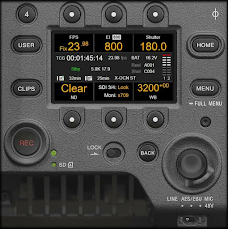
The Alexa Plus  is the newest addition to ARRI’s line of (digital) cameras. The PLUS provides built-in lens control and lens data, familiar to Arriflex 416 Plus users. Owners of “regular” Alexa EV models are offered an upgrade path to the Plus at a reduced rate.
An Alexa Plus with Codex On-board digital recorder, 
 with ARRI Fujinon  Allura 45-250mm zoom, OConnor 2575D head S.
ARRI also introduced the RCU-4 remote control panel, which is capable of controlling everything that can be controlled via the camera display. In addition, a new wireless network adapter WNA-1 can be attached to the camera to control the Alexa via an external device such as computers or smartphones.

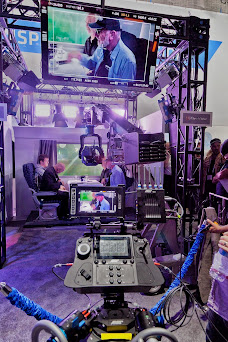
The Alexa is also 3D ready. ARRI showed (background in this picture) two Alexas on a Tango rig equipped with wireless lens, interaxial and convergence control, as well as an UDM distance meter.

Scroll up and visit  our Main Video Window and choose ON-DEMAND to see Product Manager Marc Shipman-Mueller talking  through the latest developments to the ALEXA digital camera system, including the new ALEXA Plus model, which incorporates wireless remote control, improved connectivity and the ARRI Lens Data System.

VANCOUVER INT. FILM FESTIVAL 2010 REPORT


Vancouver International Film Festival 2010 Report
by John Phillip Jones 
 
Rodrigo Prieto is one of the most sought after cinematographers in the industry today. Nominated for an Academy Award for his work in Ang Lee’s “Brokeback Mountain” (2005), he was also the cinematographer in Ang Lee’s 2007 film, “Lust, Caution”. He has also collaborated with Alejandro Inarritu on “Babel” (2006), “21 Grams” (2003), and “Amores Perros” (2000). He has also worked with Oliver Stone and for Spike Lee as the Director of Photography on “Alexander” (2004) and “25th Hour” (2002), respectively. He has collaborated with Julie Taymor in “Frida” (2002) and with Curtis Hanson on “8 Mile” (2002). “Original Sin” with Director Michael Cristofer (2001) was Rodrigo’s first big, American film, however he boasts an extensive list of credits in his native Mexico.
 Alejandro Inarritu and Rodrigo Prieto, AMC ASC

In “Biutiful” Prieto, who possesses a connoisseur’s eye for the rough quality of urban squalor, composes a dynamic vision of street life.  "Biutiful" means to offer a grimy antidote to the ubiquitous hedonistic representations of Barcelona. Seldom has the city been portrayed as a pit of crime and exploitation. Rodrigo Prieto's outstanding handheld camerawork enhances the tiny cramped interior spaces, and narrow streets of the Santa Coloma neighborhood to bring the viewer to an almost unbearable proximity with the characters and their surroundings.

Prieto offers a potent vision of street life with an eye for the textures of urban grime. The almost promiscuous closeness of the African immigrant’s digs, the prison barracks feel of the Chinese laborer’s accommodations and especially toilets are shot in heart breaking detail. The kinetic tour de force of the police crackdown of immigrant street vendors, provides a welcome respite to the to the film’s heaviness.  The film’s feel is overwhelmingly dark; the garish and libidinous nightclub scene only further accentuates the air of despair.


 Alejandro Inarritu setting up a shot using Rodrigo's Panavision
camera and lenses as a director's viewfinder.

 Javier Bardem under a gritty fluorescent illumination

 "Biutiful" resolves around Uxbal, played by Bardem in a performance worthy of at least an Oscar nomination. Uxbal, an underworld entrepreneur, seems to carry the weight of the world on his shoulders. He dabbles in many illicit activities, from importing illegal Chinese labor to supplying counterfeit goods to street vendors. He is also called upon by grieving relatives to communicate with their recently deceased loved ones to ease their way into the next world. He is a caring father who has custody of his two young children, as his estranged wife Marambra (Maricel Alvarez) is manic-depressive and promiscuous to the point of sleeping with his nightclub owner brother Tito (Eduard Fernandez). Apart from all the other hats he wears he also feels responsible for the welfare of his illegal wards. 


When Uxbal is told he has cancer and only months to live, he rushes to set his affairs in order. With the exception of Ige, a Senegalese woman (Diaryatou Daff) whom he hires to watch his children, the adults he deals with prove to be unreliable to an extreme. Even Uxbal's best intentions have fatal consequences. Bardem's physical and controlled performance makes clear it that first and foremost he is a loving parent.


 “Biutiful” is definitely destined for the art-film crowd; it is by no means fare for suburban multiplexes. It is far too emotional and raw. The hand that life deals Uxbal is far too harsh, and the downward spiral has almost no uplifting moments save his daughter’s birthday and Ige’s almost imperceptible return. Hopefully, Prieto will manage and/or allowed to work his magic in Oliver Stone’s sequel “Wall Street”.


The film is one of five productions in a $100 million deal between Gonzalez Inarritu, Alfonso Cuaron, Guillermo del Toro, and the film companies Cha Cha Cha, Universal Pictures, and Focus Features International. Soundtrack by Gustavo Santoalla.

CARL ZEISS CINE LENSES FOR HDSRL

Cine Lenses with Maximum Flexibility
In 4th quarter of 2010, ZEISS Compact Prime CP.2 lenses will be available with F-mount. The Compact Prime CP.2 series, presented last April, were the first lenses developed especially for shooting with HDSLR cameras. Since then, the lenses have been highly sought after by cinematographers and film photographers alike. In addition to the PL-, EF- and F-mount, Carl Zeiss will soon also be offering the Compact Prime CP.2 lenses with Micro 4/3 and A-mount.


Recognized widely as "the world’s first set of cine lenses designed especially for HDSLR cameras" (, the Carl Zeiss  Compact Prime CP.2 lenses feature interchangeable mounts, making it possible to upgrade to any existing or future cine or stills camera without the need to invest in a  new kit set if you migrate from Nikon to Canon, or vice-versa. These will be available in a choice of different focal lengths ranging from 18mm to 85mm.

The new Carl Zeiss Compact Primes CP.2. True cine lenses with changeable mounts between Canon EF and Arri PL.
21mm T2.9 Distagon T* 28mm T2.1 Distagon T* 35mm T2.1 Distagon T* 50mm T2.1 Planar T* 85mm T2.1 Planar T* Also,  Compact Prime CP.2 18mm/T3.6 Cine Lens (EF Mount ▪ Compact Prime CP.2 21mm/T2.9 Cine Lens (EF Mount ▪ Compact Prime CP.2 25mm/T2.9 Cine Lens (EF Mount) ▪ Compact Prime CP.2 28mm/T2.1 Cine Lens (EF Mount) ▪ Compact Prime CP.2 35mm/T2.1 Cine Lens (EF Mount) ▪ Compact Prime CP.2 50mm/T2.1 Cine Lens (EF Mount) ▪ Compact Prime CP.2 85mm/T2.1 Cine Lens (EF Mount).

 Covering a full-frame 24 x 36 image format with zero vignetting, the CP.2 range is based around a common aperture of T2.1. That’s a significant improvement on ZEISS’ first generation of lenses with a common T-Stop of T2.9. Build-wise there’s scope for manual focus and a consistently round iris should offer cinematographers nice out-of-focus highlights and pleasing bokeh.


Michael Schiehlen of Carl Zeiss talks from the IBC 2010 in
Amsterdam about the Compact Prime CP.2 and
Lightweight Zoom LWZ.2 lenses.

 Lightweight Zoom LWZ.2

The Compact Prime CP.2 lenses’ interchangeable mount means the lenses can be used for many purposes. The lenses have a compact and robust build so that they can handle any demand on the film set. “With the new enhancement of mounts we want to meet the needs of our customers”, says Michael Schiehlen, Head of Sales of Carl Zeiss AG Camera Lens Division. “The possibility of using our CP.2 lenses flexibly for three different camera systems is not only interesting for new customers. Stores that rent cameras and camera equipment also benefit from the lenses’ enhanced flexibility.”

The ZEISS lightweight zoom will also come in with interchangeable PL, EF and F mounts, covering all the obvious video-enabled DSLRs for Nikon and Canon. Because it only weighs around 2 kilograms this light lens should prove useful if you don’t have the scope to use a tripod and want to keep capture handheld. It would be equally convenient if you’re capturing Steadycam shots with a traditional cine camera.

Just in time for the IBC in Amsterdam, Carl Zeiss has announced two new focus lengths that will also be available with F-mount: Compact Prime CP.2 50 mm/T2.1 Makro and CP.2 100mm/ T2.1 CF. They complement the seven focal lengths from 18 to 85 millimeters that are already available.

Carl Zeiss is continuing to experience strong demand for its top-quality manual focus lenses for SLR cameras. The ZE series SLR lenses with an EF mount and its ZF.2 series lenses are proving to be particularly popular. The company’s SLR product family now offers focal lengths ranging from 18 to 100 mm. Speaking at pPhotokina 2010, the Senior Vice President of the Camera Lens Division at Carl Zeiss, Dr. Winfried Scherle, announced that more models are in the pipeline: “We intend to continue systematically expanding our portfolio of SLR camera lenses to provide our customers with an even greater range of options,” Scherle said.

.

The Carl Zeiss Camera Lens Division — currently celebrating its 120th anniversary year — is delighted with the interest generated so far at Photokina, IBC and Cinec.  Also, Carl Zeiss presented  its line of  lenses last weekend at  Photo Cine News 2010 Expo in Los Angeles and will have a booth at the DV Expo 2010  in Pasadena. Its efforts to create a memorable brand experience at any trade fair have met with an enthusiastic response, and it has been posting regular blog entries on events at Photokina and IBC  as well as Facebook and Twitter updates. Watch video from the IBC above, also available On Demand.  Click on our  main video window viewing.

Further information is available at: www.zeiss.de/en  and  www.zeiss.com/photo

THE TOLAND ASC DIGITAL ASSISTANT FOR THE iPHONE

Chemical Wedding, in partnership with the American Society of Cinematographers (ASC), announces the Toland ASC Digital Assistant for the iPhone or iPod Touch.

ASC President Michael Goi explains, "While researching the right tech company to partner with on this project, Chemical Wedding's intelligent design of Helios and Artemis resonated with our members as having the kind of quality and craft people have come to associate with the ASC. With this venture and more to follow, the ASC is expanding its outreach and influence to future cinematographers and working professionals by creating tools that reflect how we work today."
The Toland ASC Digital Assistant was named after renowned ASC member Gregg Toland, whose innovative use of lighting and techniques made him one of the true masters of the art form and a legend among cinematographers. Goi says, "It is entirely appropriate to name this application in honor of Gregg Toland, one of cinema's most groundbreaking artists." He is best known for his revolutionary cinematography in Citizen Kane, which has inspired filmmakers all over the world.

The Toland ASC Digital Assistant is an application that takes portions of the well-revered American Cinematographer Manual and provides instant solutions to the technical concerns of cinematography. The ASC Manual has been the key resource for cinematographers around the world for decades and serves as a technical guide, designed to work through the detailed process of cinematography.

Award-winning cinematographer Fred Elmes, ASC, whose work boasts over 50 films including Eraserhead, Blue Velvet and The Ice Storm, played an important role in testing the application and providing valuable feedback to developers, "Toland puts the American Cinematographer Manual into your pocket. When a shot gets complicated, and you need to make a quick change, it's wonderful to pull out Toland to be certain you're doing the right thing. Other programs do similar things, but Toland does it best because it's all under one roof."

Nic Sadler, cinematographer and lead product designer for Chemical Wedding explains, "Rather than having to enter specific data to answer questions, Toland is designed to track your choices as you make them. As you change the camera speed, you will instantly get feedback on how this affects running time and exposure. When you change lenses, you will see the Depth of Field and Field of View update in real time. Toland then allows you to log all this information to build comprehensive camera reports. Simply put, all of the information is in one place making the technical part of the job much easier."
Toland's integrated features include: a comprehensive database of cameras and lenses; exposure calculator covering camera speed, shutter angle and filter factor; running time and footage calculator; flicker free warning indicator; depth of field calculator with focus marks; angle of view indicator and full camera data logging which can be exported and emailed. The Toland ASC Digital Assistant is now available worldwide through iTunes.

About Chemical Wedding
Chemical Wedding is a developer of a number of technology platforms in multiple industry sectors with broad, sector-wide application. Current software releases include: Helios, Artemis, and Toland. Helios is an iPhone/iPod Touch application that graphically predicts the path of the sun from dusk to dawn, on any given day, in any given place. Artemis is a digital directors viewfinder for the iPhone and iPad. For more information, visit http://www.chemicalwedding.tv.

About The American Society of Cinematographers
The American Society of Cinematographers (ASC) is a non-profit association dedicated to advancing the art of filmmaking. Since its charter in 1919, the ASC has been committed to educating aspiring filmmakers and others about the art and craft of cinematography. For additional information about the ASC, visit www.theasc.com.

SONS OF ANARCHY


Sons of Anarchy is an American television drama series created by Kurt Sutter about the lives of a close-knit outlaw motorcycle club operating in Charming, a fictional town in Northern California. The show centers on protagonist Jackson "Jax" Teller (Charlie Hunnam), the Vice President of the club who begins questioning the club and himself. Sons of Anarchy premiered on September 3, 2008 on cable network FX. Its second season debuted on September 8, 2009, and its third season begun on September 7, 2010 at 10pm.


With the new season of 'Sons of Anarchy' fast approaching, cinematographer Paul Maibaum is starting to gear up for another round of the hit FX Network series. And at the top of the gear list are OConnor fluid heads.

“Sons of Anarchy is a drama about the lives and inner workings of a Hell’s Angels-type motorcycle club based in the fictitious town of Charming, somewhere in Central California,” he explains. “Each episode is shot in seven days, that’s one day shy of the norm for a one-hour episodic drama. Therefore, we have to work very fast and smart to get the work done in the allotted time. There is a certain improvisational style to the way we shoot the series. The actors often come up with their own staging for a scene and in many cases, do something subtlety different in each take.”
 Director of Photography Paul Maibaum

While much of the cinematography on this series is hand-held, during long scenes shot with lenses of 100mm or greater, Maibaum’s operators find it difficult to maintain the proper steadiness for a hand-held look take after take. “That’s where the OConnor head comes in handy,” he says. “We mount the camera(s) on the 2575 and let the operators add some ‘float’ to the shot. In other words, they create the feeling that the shot is hand-held, by gently panning and tilting the head in small increments in a random manner. By adjusting the drag this way, it gives them the exact amount they need to duplicate the ‘edginess’ that we are looking for when the camera is in hand-held operation.

“During the past season there were several episodes where much of the action followed the members of the SAMCRO (Sons of Anarchy Motorcycle Club Redwood Original) as they traveled on their Harleys,” Maibaum explains. “We employed a ‘camera bike’, a motorcycle with a steel platform much like a sidecar, where one or sometimes two cameras can be mounted and operated in order to move with the cast on their motorcycles.

“Often, we use very long lenses to capture the action off the back of this rig,” Maibaum adds. “And, the OConnor 2575 heads make the perfect platform to mount the large Panavision Genesis cameras on to insure that we will get the shot.

“For us, OConnor heads are one of the most trusted tools in our package,” he adds. “The tension and fluid drag can be set within a wide set of parameters, very easily. The head can be tipped just about straight down and, once the balance is properly set, it remains securely there. The weight of the camera has little to do with the performance of the head. In other words, one can utilize cameras from the smallest and lightest to the biggest and heaviest. “I would never do a show without a fluid head. And, my personal choice is the OConnor 2575.”

CANON 7D - A GAME CHANGER

A Whole New Class of EOS. With a host of brand new features designed to enhance every facet of the photographic process, from still images to video, the new EOS 7D represents a whole new class of camera.

Made to be the tool of choice for serious photographers and semi-professionals, the EOS 7D features an all-new 18.0 Megapixel APS-C size CMOS sensor and Dual DIGIC 4 Image Processors, capturing tremendous images at up to ISO 12800 and speeds of up to 8 fps. The EOS 7D has a new all cross-type 19-point AF system with improved AI Servo II AF subject tracking and user-selectable AF area selection modes for sharp focus no matter the situation.


 The EOS 7D's Intelligent Viewfinder, an entirely newly-designed technology, provides approximately 100% coverage and displays user-selected AF modes as well as a spot metering circle and on demand grid lines. New iFCL Metering with 63-zone dual-layer metering system uses both focus and color information to provide accurate exposure even in difficult lighting. The EOS 7D also captures Full HD video at 30p (29.97 fps), 24p (23.976 fps) and 25p with an array of manual controls, including manual exposure during movie shooting and ISO speed selection. The EOS 7D features a magnesium alloy body that is dust- and weather-resistant and shutter durability of up to 150,000 cycles. Compatible with over 60 EF and EF-S lenses as well as with EOS System accessories, the creative opportunities - not just with stills but also with video - are beyond amazement.

Features 
18.0 Megapixel CMOS Sensor and Dual DIGIC 4 Image Processors for high image quality and speed.ISO 100-6400 (expandable to 12,800) for shooting from bright to dim light. 8.0 fps continuous shooting up to 126 Large/JPEGs with UDMA CF card and 15 RAW.Advanced movie mode with manual exposure control and selectable frame rates: 1920 x 1080 (Full HD): 30p (29.97) / 24p (23.976) / 25p, 1280 x 720 (HD): 60p (59.94) / 50p, 640 x 480 (SD): 60p (59.94) / 50p.Intelligent Viewfinder with 100% field of view, wide viewing angle of 29.4°, high magnification of 1.0, intelligent viewfinder with glass pentaprism and an overlaid LCD display in viewfinder supports various shooting styles. New 19-point, all cross-type AF system equipped with dual diagonal cross-type sensors in center at f/2.8 and f/5.6 and AF area selection modes to match various shooting situations. iFCL Metering with 63 zone dual-layer metering sensor that utilizes AF and color information for optimizing exposure and image quality. Magnesium body with shutter durability up to 150,000 cycles and exclusive dust and weather resistance.

 Canon 7D FGV-PL mounted on a ARRIHEAD 2

The following review comes via my friends at Jon Fauer's Film & Digital  Times and they tested the new FGV PL-mounted Canon EOS 7D at ARRI/CSC  today. Solid as a block–which is how the mount is machined–from the same custom block of metal that holds the CMOS sensor. FGV removed the entire mirror and optical finder assembly, and replaced it with theirs. This saves weight, and as you can see, supports a big ZEISS Master Prime without sagging. The flange focal distance came up perfectly using test targets and tapes. (yes, you can have your favorite lens technician adjust its shims).


Be sure to get the custom riser plate made by FGV for the Canon 7D. The follow focus shown here is Arri’s MFF-1, part of the MMB-1 kit. Although it looks kind of impressive on an Arrihead, that’s sort of the digital equivalent of using an Eyemo on a geared head. How often would you do that? As Joe Longo used to say, “It’s like taking a bath with your socks on.” In other words, you probably wouldn’t do it too often. The point of the FGV-PL is to provide a solid grab camera, for POV shots, rigs, handheld, run ‘n gun, action, sports, adventure. This is the perfect Directors and Cinematographers Finder. It accepts all PL mounted lenses. It’s also a great B camera, or B through Z camera on multiple camera setups like stunts.

The first FGV-PL Canon 7D cameras are being delivered to ARRI/CSC in New York, ARRI Rental in Munich, and I heard Otto Nemenz is getting six.

for more info visit
ARRI/CSC 
Watch video ON-DEMAND on main video window
Choose Canon7D and Redrock Micro 

BOUND FOR SOUND

By Giovanni Di Simone

Recording sound for film or video has been challenging specially in the last few years. Indeed, there have been a multitude of great technological advances in our field of sound recording for film and video whether on location or studio.This is the first installment of a new series of articles dedicated to the craft of audio recording and it is designed to help you understand or at least make you aware of the proper ways to record sound. In doing these articles, I will quote often from my experience as location sound mixer for over 25 years in USA as well as   radio producer during my early days in Europe, as well as the experience of other award winning sound mixers friends of mine.

Before go any further, I would like to remind you of the old way of recording and archiving analog sound on tape, a technique that has been is almost been dismissed by our film industry, except for a very small elite of sound producers and engineers, that still are using 1/4 inch analog tape for recording and for music mastering . We will have the opportunity of expanding on these elite niche of professionals, later in subsequent articles.
The Tascam HS-82 Multitrack Recorder with 4  4Eleven A 
wireless microphones, complete with an  AFB and stereo wireless 
send. Finally after 25 years, a miracle of lightness and common 
sense and a full house sound card  in a production bag.

 Indeed, it has been already a few years since when we started recording sound on non-linear digital platforms, be on DVD RAM,DVD, and  recently on HD card, CF flash or the minuscule SD card. I have to admit that these two new recording mediums are a blessing and a solution, after so many many years of the unfortunate and very unreliable hybrid format, DAT tape. The new formats allow for an increased storage capacity, ruggedness, even in tropical conditions and providing a definite and almost imperceptible digital sonic quality even on high resolution sampling rate. Most importantly they have been widely accepted by our industry.

For the on-location and studio work that most of us will have to perform, daily  I shall say that the compactness and lightness of the new recording devices are a great advantage in comparison to the heavy and cumbersome recording equipment of the past. All these is great, in except for a couple drawbacks, High Power Consumption and Storage Capacity.

For any sound mixer, an eternal quest to keep his or her equipment running and recording on set has been access to a reliable source of either AC or DC power via different kinds of batteries. Such batteries are dependent on age, usage and charging conditions, making it challenging for the user to determine the usable amount of time before the batteries give up. I would recommend to carry many fresh batteries and always a back-up battery charger.
The remarkable touch screen of the Tascam HS-82 concentrates 
all the most important functions for 8 channels
recording at a fingertip range. No more finger 
contortions and no more dark or invisible screens.

Besides of the power dilemma, the sound mixer should ascertain the amount of storage space needed to complete the recording job, according to different variable sampling rates, number of recording channels used, style of the shoot. For example: for documentary work, I predominantly use two channels and for feature/narrative work , I use multiple tracks (up to 8)  stored on multiple CF cards or SD cards,. To perform better and effectively at a sound recording job, I usually like to spend time researching and collecting data and  regarding,  the acoustics at the location,  history of prior recordings, the features and the climatic conditions.at the same location Also, all the features and the handling of the equipment I have chosen as well the  sanitary conditions and health requirements are taken into consideration,  if I travel to a remote location.

A word of advice when doing research and consulting equipment instruction manuals, is to know beforehand how frustrating and poorly written they generally are. These manuals are commonly written by people who DO NOT use the device for a living and the the manuals are usually assembled in a counter intuitive manner, that make anyone scramble to find the right answer to a question at at that very moment. Usually, one ends up at the "ERROR MESSAGES PAGE"  never to find that valuable piece of information  needed , probably omitted due to incomplete or negligent technical knowledge of the writers. A solution to this lack of  information  is to visit and inquire with reputable distributors and retailers who have devoted so much of their time and resources to understand and sell such equipment and are able and willing to function as data banks on the use, history  and frequent updates  of their  products. I could recommend at least 3 places in USA , each one with with its own specialties and particularities and I will supply you their links at the bottom of this article. I also call and consult with the customer service line of some of the reputable manufacturers, when I cannot  find other reliable source of information.

I must admit I am a little skeptical of the many websites currently available on the web as I prefer direct  human contact . I personally value my direct relationship with the manufacturer representative, because  I can hold them  accountable  for the information received. What can I say, this is my way..!

I would like to advice you to spend your free time asking, calling, collecting specific information about the equipment you need to use, making sure you have all the necessary links of your recording chain assembled, all tested and working. For example, my living room floor is the the ground I practice this lovely and tedious operation, often a few days before I use the equipment I need.

 Sound Devices 552 in its natural element.
Simplicity is a virtue
Although many portable sound recorders today allow the ability to record multi track channels, my preference in the last year has been to revert to the use of a 2 track stereo recorder with a 5 channel mixer built-in that I have nicknamed  "ACTION RECORDER" finally available for our Film and Documentary industry. I am referring to the SOUND DEVICES 552, inappropriately marketed as a 5 channel portable mixer when in fact is a a 5 channel recorder/mixer with the added ability of recording  a 2 track stereo mix..

This unit makes it as making as uncomplicated and ready for action as no other previous recorder, I could dream of, and delivering always (so far) plenty of excellent sonic results on a flip of ONE switch , storing the files on a small SD card. Later at the end of the working day, I simply download the files to my lap top compute.r The task of downloading is slightly time consuming at wrap time, but it is necessary to insure to myself and to the producer, the quality of the work performed. 

Personally, I am not against MULTI TRACK RECORDERS although it has been a real hard and expensive struggle for manufacturers to come up with an accepted standard for the number of channels available and therefore very misleading to the user. I feel finally that any respectable MULTI TRACK RECORDER today ought to have at least 8 channels, plus 2 extra channels for the stereo mix (L&R) for the delivery of video dailies, a TC generator and the ability to accept External Time Code (EXT TC) as well, plus a reliable system of portable battery powering.  In summary, I wish the day will come when we see the creation of a generation of  Multi-track Recorders, awith uncomplicated, yet evolved user interfaces originated exclusively fand based on the tradition of location recording.
 
Here below find some of the companies I would like to recommend for you audio recording needs.

EXPOSURE: RIDLEY SCOTT

Ridley Scott’s extraordinary sense of visuals was clear from the start. In 1977, he made a big splash in the film industry with The Duellists. Based on a Joseph Conrad story and set in the Napoleonic era, the film was nominated for the Palme d’Or and earned Best First Work at the Cannes Film Festival, and BAFTA and BSC nominations for cinematographer Frank Tidy, BSC. For Scott, it was a case of an overnight sensation, a dozen years in the making: the filmmaker, who grew up in a military family and possessed an M.A. in graphic design from the Royal College of Art, had already revolutionized the advertising industry, having directed thousands of television commercials dating back to the early 1960s. 

Ridley Scott

 Scott brought an artist’s eye and a storyteller’s passion for detail to the craft of selling with images, and his first stab at the big screen turned out to be a harbinger; his next film, Alien, changed the sci-fi genre, if not the entire film industry, forever. Scott followed that up with Blade Runner, one of the most influential films in cinema history in so many areas, first and foremost its cinematography by Jordan Cronenweth, ASC. Right through to his newest work, Robin Hood, the director/producer’s work continually displays the scale and grandeur of epic cinema. David Heuring caught up with Scott to probe his thoughts about cinema lighting, his roots in commercials, and his feeling about new digital technologies. (Hint: if the term “old school master” comes to mind, Scott would brook no quarrel.)

Robin Hood is your fifth film with John Mathieson, BSC. What appeals to you about his work? Scott: John and I worked together for the first time on Gladiator. I had seen a film called Plunkett & Macleane, which John had done for my eldest son, Jake, and I thought it was beautifully done. Time literally is money in film, particularly today. I come on the set knowing exactly what I want to shoot. That comes from my experience in commercials. You have to hit the floor at 8 a.m., and you’d better know what you want by 8:30. You can’t stand there and talk about where to put the camera. That is true in features as well. No matter how big the budget is, it’s never big enough. The clock is always ticking. And John is fast, and artistic in a good way. He has got great taste.

You directed more than 2,000 commercials prior to your first feature film. How did that impact the way you see things? I learned everything from commercials. RSA (Ridley Scott Associates) is 41 years old this year, with many great directors and good talent. I was making commercials in New York in 1965 when they brought us in to get what was called the ‘English light.’ But when I was starting off with the BBC, I couldn’t ever get the bloody sets lit properly. I used to be very critical. I thought commercials looked awful. The interiors were always lighter than the exteriors. It looked completely ridiculous. When I was getting into commercials, some of the people I encountered did not take them seriously. They were taken as a drudge. And the difference was that I took commercials very seriously. I loved every moment of the 20 years I was passionately engaged in television commercials. 
Derek VanLint (CSC), who did my second film, Alien, must have done at least 100 commercials with me. Frank Tidy (BSC) did The Duellists, and probably 150 commercials with me. I think I can safely say that what we did (in commercials) has changed the way feature films look today. That includes lighting, as well as editing. Do I need to see the hand go on the door handle, the feet going up the stairs? No. Communication in television is a story in 30 seconds. That’s why it’s harder frequently for a feature film director to move back and try to do television commercials. It’s hard to grasp that language. For a television commercial director to suddenly be given two hours to tell and pace a story – that can be difficult as well.

How did you explain your vision for Robin Hood to Mathieson and your other collaborators? You start by going down to the root. With a legend like Robin Hood, you have to decide whether he was real or not. And in this instance, we’re making him a real guy. This is not Lord of the Rings. He is a shaker and a mover against the rights and wrongs of the Crown. And you must decide what time in history to pin it to, and I notched it down to the moment of the death of Richard Coeur de Lion (Richard I, a.k.a. Richard the Lionheart) who in 1199 is returning home after 10 years in the Crusades. He is bankrupt, collecting old debts as he travels through France. In the first eight minutes of the movie, we see Richard, the great man, die. In his army was a man called Robin Longstride, a yeoman bowman who becomes Robin of the Hood.

How did your aesthetic choices grow out of that story? It’s taste. It starts off with a rug on the floor, the food they eat, the furniture they sit on, or the illumination they are going to get through the windows. If you are in a beautiful 11th century room, you want to have that illumination. You stand in the location. We started shooting in January, so it was grim and beautiful. I knew the valley at Guilford like the back of my hand, because we’d shot there for Gladiator. After landing in the U.K., from that moment on the trees become deciduous, and we are going into spring. I managed to get all the forests within a 40-mile radius of London. Everyone is short of money, so forests that had never been filmed in, like Windsor Great Park, were opened to me. There are 800-year-old trees there. At first, we caught a bit of spring and the leaves hadn’t gone too thick, so we could use natural lighting, and the fast film stocks helped. Then, the leaves became way too thick and that was tough for John, requiring constant fill light. For the interiors, we had huge sets, many of which were built at Pinewood-Shepperton. I was very much leaning in the direction of the painter Pieter Bruegel. Ironically, Bruegel didn’t come along until about 300 years later, but when you look at his work, it looks like the Dark Ages.

Most of your films are framed in a widescreen 2.4:1 aspect ratio. I always feel that when a film opens up and it’s wide, it’s kind of nice. I don’t do anamorphic. Alien was anamorphic and it was a nightmare for focus. It was the relatively early days of the anamorphic zoom lens. My focus puller in those days was Adrian Biddle (BSC). He recalibrated the lenses one weekend because for some bizarre reason they were forward-focusing. We couldn’t work out why; it would look sharp through the camera. Today, we tend to use Super 35 spherical, which is faster and easier to keep sharp.

Have you tested any of the latest digital cameras? Not really. You have to watch that the tail of science shouldn’t wag the dog of creativity. You don’t have to consult with a science book simply because you have adjusted to digital or 3D. I know digital is not as straightforward as it sounds. I know it is not a case of ‘you don’t have to light anything’ - that is rubbish. You’ve got to pay as much attention to digital as you pay to film cinematography. With film space and digital space, the film will tend to be more subtle in certain areas. In a way, it’s more cosmetic without getting into what I call ‘the plastic zone.’ I appreciate the consistency that digital prints and projection bring, and I’ve embraced digital in the grading, because it means I can do it more swiftly.

How did you use DI tools on Robin Hood? I am a painter. Not first and foremost, but I had an elongated time - seven years – in art school, so I can draw, and I use my eye that was evolved and refined in art school. That’s true even more so today than ever before because I can literally go in and examine a frame and say, ‘In the middle ground, I want all the twigs on the ground to be sharp.’ You can assess it as an individual picture. We’ll do the first minute of a scene, and then I leave Stephen (Nakamura at Company 3 in L.A.) to do a lot of the work, and I come back and check. If you have a good grader, it means you can move faster. I probably graded Robin Hood in the space of two weeks. We worked on a large screen, and it’s beautiful and subtle. You can get a really great transfer off the film. I love the sharpness of 4K for this type of material. But half the time I’m trying to attain the beauty of that back in the digital space, and you can’t. It’s just different. For certain things it just will not go the whole nine yards.

What are your memories of working with Slawomir Idziak (PSC) on Black Hawk Down? I look at a lot of low-budget movies because they display emerging talents, which are always very interesting. I have a great admiration for (director) Michael Winterbottom, and he had done a very interesting film in England called I Want You, which Slawomir had photographed. We met, I asked if he wanted to do Black Hawk Down, and away we went. I remember him standing in Morocco and saying ‘God, I hate sunshine.’ I said, ‘Well, I’m afraid you are going to get a lot of sunshine here.’ When you’re in England or Ireland, there is fairly constant precipitation and water in the air. It’s misty more often than not, and there isn’t that harsh sunlight. So there is a beauty in the Irish and English weather and it’s the best thing for skin tones. Being Polish, Slawomir loved the Polish light, which is all bloody drizzly! But Black Hawk Down is a special-looking movie.

What are your recollections of working with Jordan Cronenweth (ASC) on one of the most influential films in cinema? Blade Runner was tough for Jordan because at that moment he was really quite ill. It was a chance I took because of the guys I’d seen in the U.S., he was the man. He’d done a film I really liked the look of called Cutter and Bone (U.S. title: Cutter’s Way). I met with him and just liked him. At the time, I had done 2,000 commercials and The Duellists, which got a prize at Cannes, and Alien, a pretty big blockbuster. So, I was probably the most experienced new kid on the block! Then there was a baby of mine called Blade Runner. I was 42 or 44 years old, and I was used to a certain kind of autonomy. To explain the world constantly started to get really annoying, and I must say that I became a bit of a beast because that was the only way to get it done. Jordan was great because he could argue. We had some really great, pretty fruity arguments. He was feisty and just fantastic.
International Cinematographers Guild

EOS MOVING IMAGE WORKSHOP


"Being able to use a still camera to make movies is the future." - Jared Abrams
The boundaries between motion and still photography no longer exist. Canon HD SLR technology empowers you to capture video and still photography with a single camera and a vast selection of accessory options. Find out how industry leaders are forging new creative territory when you go behind the lens at the Canon EOS Moving Image Workshop.
 What you will learn:
  • Camera set up
  • Camera support equipment and accessories 
  • Exposure, Lighting, Editing and Accessories Labs
  • Motion Lab: focusing and camera rigs 
  • Cinematographer's techniques
  • Hands on shooting assignments with instructors screening critique
  • Editing software, workflow, and hands-on demos
This hands-on workshop puts the equipment in your hands as you work on a soundstage with professional instructors and award-winning cinematographers for three days of collaborative, practical learning.  Starting with camera selection and fine-tuning your EOS HD SLR for optimum performance, you will then explore the functional and creative considerations of EOS DSLR-based HD video.

EOSscreeshot-notarile
Footage from the EOS Moving Image 
Workshop #1 - Los Angeles, CA - May 2010
WATCH HOW AND WHAT YOU WILL LEARN

More About the Workshop
In small teams, you will collaborate with your industry peers as you shoot scenes in a variety of lighting scenarios. Get tips for determining whether to create an in-camera or post-production style, and find out how to adjust your shoot to fit a range of budgets. Get a comprehensive overview of post-production and workflow, focusing closely on output, color correction, off-and on-line editing and backup strategies.

From scene matching to color editing; gray card exposures to external monitor setups; lighting hardware to lens selection; and hands-on applications of third-party hardware now available, this workshop will give you the knowledge and experience to create your own content at the highest professional level.

EOS Moving Image Workshops are produced by Canon, USA, Inc. in collaboration with Createasphere. Workshops are limited to 40 people. Participants are recommended to bring their own laptop (laptop loans are available), please see laptop requirements on registration confirmation.

Next Event: August 13-15, 2010 - San Francisco, CA 
( See full schedule here)
Register Now

WORLD CUP SOCCER 2010. 3D BROADCASTS EXCLUSIVELY WITH QUASAR 3D RIGS

Element Technica 3D Rigs at Soccer World Cup in South Africa. Element Technica Quasar 3D rigs are being used exclusively for the 3D broadcasts of the world championship soccer tournament from South Africa this summer. A total of 22 ET Quasar rigs are being used for 3D camera positions in the Ellis Park and Soccer City stadiums in Johannesburg, and at stadiums in Durban, Cape Town and Port Elizabeth. 25 soccer matches in all will be shot in 3D, using Sony HDC-1500 cameras with Canon HJ22EX7.6B zooms. The 3D production equipment must be moved between five soccer venues. The rigs have to be quickly and easily reassembled, and calibrated each time. The Quasar is set up in under/thru configuration so as not to block spectators.
Element Technica is supplying its Quasar rigs, which will be used mounting Sony HDC-1500 camcorders and Canon zoom lenses, for 3D capture at the World Cup in South Africa writes Carolyn Giardina. The Los Angeles-headquartered manufacturer has had a remarkable year. It shipped its Quasar 3D camera rigs last autumn, just after IBC. And this month, the technology will be a centrepiece of the world’s most anticipated 3D broadcast. “We are incredibly excited,” says Element Technica co-founder Stephen Pizzo. “We knew we had a great system for broadcast sports, but to have it recognised and adopted so quickly is fantastic.”

The first prototype of the Quasar was introduced just a little more than a year ago at NAB 2009. Additional demos followed, and the first production version was unveiled last September at IBC. Afterwards, that model was shipped to Panavision UK. The initial production run of 20 rigs followed, providing inventory for production companies including City Productions in Mexico City and Evergreen Films in Los Angeles, as well as rental houses such as Keslow Camera in LA and OffHollywood in New York.

The first live high profile application of the Quasar technology occurred in February, when the rigs were used by production company Inition for 3D coverage of the Six Nations rugby championship. “That was a great test for the system,” Pizzo relates. “It was in the UK and we were able to send one technician from LA, 10 days before the event. He worked with the local technicians – many of whom were seeing the rig for the first time -- to get the system prepped and running.”

The next event required only three prep days. “We were starting to realise that it was possible to do 3D with a lot less technical support than a lot of productions were used to, where traditionally you have two or three specialised technicians, per system,” Pizzo explains. “We’d also been trying to create a system that could be rented by a regular crew. For 3D to be adopted world-wide, the cost needs to come down and workflow needs to be close to a standard 2D workflow.”

Testing football
A few months earlier, last December, FIFA and Sony announced plans for 3D coverage of 25 FIFA World Cup matches. Integral in the selection and adoption of the technologies were HBS director of production & programming Peter Angell, who served as FIFA special 3D project leader; and Duncan Humphreys, partner in UK-based 3D production specialist Can Communicate and 3D consultant to HBS for the World Cup.

Both had an eye on Element Technica from the start, and Humphreys approached the rig maker to see if they might be able to support an event like the World Cup. Says Pizzo: “At that point we were well into our second production run of 40 units, so we knew that there was plenty of equipment.”

A key criteria in the selection was that major FIFA sponsor Sony was developing a stereo processor box to address 3D in the broadcast environment, and all technologies needed to fit that workflow. “That obviously eliminated some of the usual suspects,” Humphreys explains. “That might sound like a compromise, and it wasn’t in any way, shape or form. It just meant that we had to look for a product that in addition to satisfying all the opto-mechanical performance criteria could work with the Sony MPE200 box. Once you start doing that, in my opinion the choice narrows pretty quickly. The Quasar can be configured in a variety of modes, and at this scale, you want continuity. You want to look for a quality product with a commonality between the rigs. You want to be able to go to one supplier.”

Before awarded the contract to Element Technica, a series of tests at various Europe-based football matches were lensed. The first occurred in February with a French Ligue 1 match in Grenoble shot with one Element Technica Quasar rig and one Sony box. Says Pizzo: “For each test, they would add additional rigs, additional layers of complexity.

“We worked with Sony to integrate its box into our system,” he continues. “The Quasar is now controllable by the Sony box, and this project accelerated our work to open up our system. For instance, you can set interocular and convergence with the Sony box or locally at the rigs. And full metadata information is now available which the Sony box can use for analysis of the two images. With the level of integration through the Quasar and Sony, there is one fibre running from the truck to the rig, so all image data, communications, rig control — everything including power — is now going through a single SMPTE fibre. So required infrastructure is significantly less because of that.”


 South Africa blueprint
In South Africa, the Quasar rigs will be used with Sony’s HDC-1500 portable HD broadcast cameras and Canon zoom lenses. There will be 22 Quasar rigs in total, eight at each of the two filming locations — stadiums in Johannesburg and Durban.

Currently planned are four positions for Quasar side-by-side configurations: Main camera wide, main camera tight, and goal line left/right. Says Humphreys: “The side by sides are far enough away from the action that they are not likely to converge. There is nothing coming very close. Side by side is used when the position is high looking down, so there are no deep-background elements as opposed to the positions on the pitch where the action (subject) might be 5-20 metres away with deep background elements 50-100 metres. The latter situation needs a smaller IO to keep the divergence of the background from being too severe to watch.”

Four under/thru configurations — completed for use at the World Cup -- will be positioned at bench left/right; and behind the goal left/right. “These were always going to have to be a mirror rig because the action gets close to you,” Humphreys explains. “You have to get cameras closer together than you possibly could on a side by side. The under/thru configuration is also not as high — so you have to think about that for seat-kills [the necessity to remove spectator seats thereby lowering ticket revenue]. The under/thru also allowed us to have a full monitor and controls in the back as normal. Any camera operator could go to the back of the camera and know how it works.”

Adds Pizzo: “The more that we can make 3D rigs a familiar piece of equipment, the easier its adoption is going to be. So for under/thru, the operator is still holding onto the pan handles for the fluid head, and he has a regular camera in front of him.”