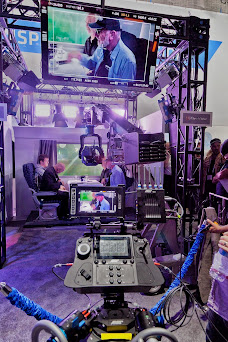
The highlight of Friday night at CINEGEAR was the VIP reception sponsored by Fujifilm and hosted by Ross Matthews from The Tonight Show, where the Life Time Achievement, Anniversary and Film Competition Awards were handed out to their deserving recipients namely, Ed Phillips, President and CEO of Matthews Studio Equipment, Band Pro, Yellow Jacket, Society of Camera Operators (SOC) and the winning filmmakers of the competition.
Riffing on the blues, awards, gourmet delicacies and choice of spirits kept all guests entertained. Karl Kresser and Juliane Grosso, CINEGEAR organizers, making sure that all is up to par.
Daryn Okada, ASC (Ghost of Girlfriend's Past) and Jeffrey Okun, VES Chair.(Last Samurai)
The activities started early on Saturday the 6th with several seminars, master classes, and presentations by key members of the industry. The vendor exhibit areas were crowded by the attending public inquiring about products and services. The site looked like a tribute to the choreography of a Busby Berkeley film with so much in-sync movement and functionality together under one roof. Sky high zooming towering cranes, moving dollies, up and down jibs, steadicams flying about, floating lighting balloons, camera cars, tingling lighting pattens and hundreds of people moving about sharing a common bond for motion picture production.
Two of the many outstanding seminars at CINEGEAR, I could attend were The Taking of Pelham 123, and A Dialogue with the BSC and ASC Cinematographers.
The Taking of Pelham 123 was moderated by BobFisher and presented a dissection of the anatomy of the remake of the original film and shooting styles of two directors of photography, the veteran master Owen Roizman, ASC and the younger and talented, Tobias Schliesser, ASC. Owen Roizman was the cinematographer of the original film directed by Joseph Sargent and Tobias Schliesser was the cinematographer of the remake helmed of Tony Scott.
I still remember the day when I saw the original film in a cramped Times Square theater, I was taken by the dynamic directorial pace, the motley crew cast of characters and the fluid cinematography that took place in such confining location. The action scenes inside New York City subway cars and tunnels of my neighborhood prompted to investigate how such action movies where made.
Tobias Schliesser ASC, Bob Fisher and Owen Roizman, ASC.
"It was a single Panavision camera shoot on Kodak 100 ASA negative stock on top of a dolly and I used anamorphic lenses. No storyboards, no special effects and I relied only on the available electrical power offered by the MTA (Manhattan Transit Authority). The film was pre-flashed at 20% with an optical printer and processed photochemically and I approved the dailies at the lab every day before coming to the underground set".
"I used the train overhead fluorescents and the tunnel tungsten illumination to my advantage coupled it with several inkys, tweenis, babys, juniors and 500 watts photofloods. Due to budget and insurance constraints, our electrical power was provided by the city and our lighting package was basic. For example, I used the car electrical out lets to fire our rigged 1oo watts inky fixtures bounced into dentist mirrors and the car available fluorescent overheads for the close ups and eye lighting".
In contrast, Tobias Schliesser ASC, lit the set for Tony Scott using the latest technology in fluorescent and tungsten lighting. The camera setup was a multi-camera setup or EFP style using Kodak 500T film stock on Panavision cameras tethered to a video village, covering every aspect of the performance while Tony Scott commanded the framing and moves via headset. Another big difference in the shooting style of the two films was the choice of lenses. Tobias Schliesser used Super 35 aspect ratio on faster Primo zooms and high speed primes lenses from his arsenal to capture the distinctive look that matches the fast pace of the edited storyline.
"I was there to make sure that the highly storyboarded and choreographed set was properly illuminated. We discussed every single move and lighting scheme prior our working day. Tony sketches very detailed storyboards and follow them as much as possible but I never stayed on the video village while the shooting, but in the middle of the action, close to the camera operators making constant lighting adjustments for such complicated coverage". The processing of the resulting exposed film was photochemical and scanned to a digital workflow for DI colorizing and other pertinent adjustments.
After the fantastic conversation with these three masters of their craft, I am looking forward again to sit in a dark theater to revisit the emotion I felt once for 90 minutes and watch the remake this classic New York City thriller.
The most significant seminar was A Dialogue with the BSC and ASC Cinematographers, given the importance of the two associations. The British cinematographers were visiting Hollywood and celebrating their 6oth years of service. Their motto is "Preserving the Vision" and once again they are in the task of rewriting a new set of guidelines for the fast evolving concept of digital cinematography.
Moreover, they already have successfully accomplished the preservation of many cinema masterpieces, making them available for future generations to come and witness the glorious past of outstanding film making. For many years, I have been a fan of British film making and their production techniques. Their ability to create a rich visual language that always has been distinctive and spectacular has made me a follower of every aspect of British cinema, including television production.
The event was hosted by the ASC, who was also celebrating 90 years of continuous service preserving the ethics and excellence of the craft of American cinematography and it was held at the massive Stage 12. It started with an exquisite edited video presentation of clips by the masters and artisans that integrate both associations. George Spiro Dibie ASC, and BSC President Sue Gibson, co-moderated the panel and introduced the topic for discussion, opening the floor for a series of questions and answers.
The panel was integrated by Owen Roizman ASC, John Daly BSC, ASC President Michael Goi, Daryn Okada ASC, Richard Crudo ASC, Oliver Curtis BSC, Dick Pope BSC, Allen Daviau ASC, Joe Dunton BSC, Phil Meheux BSC, Nancy Schreiber ASC, and Nic Morris, BSC. The event culminated with a traditional double birthday cake celebration provided by the CINEGEAR Expo organizers, Karl Kresser and Juliane Grosso. The general public mingled with the cinematographers who responded to candid questions and posed for photo opportunities.
Double click for enlargement and detail
ASC President, Michael Goi andBSC President, Sue Gibson cutting
their respective 90th anniversary and 60th anniversary cakeNancy Schreiber, ASC and John Daly, BSC
Phil Meheux BSC, Michael Goi ASC, Owen Roizman ASC, John Daly, BSC and George Spiro Dibie , ASC
Guillermo Navarro, ASC AMC (Pan's Labyrinth) Academy award nominated, Dick Pope, BSC (The Illusionist) & Phil Meheux, BSC (Casino Royale) enjoying the anniversary cake
Award winner and Academy nominated, Allen Daviau, ASC
Nic Morris BSC, George Spiro Dibie ASC, Sue Gibson BSC & George Leon
Up to 1052 fps at 1920 x 1080P resolution. Up to 555 fps at full 2048 x 2048 resolution uncompressed RAW data recording. Panavision lens mount - fits all Panavision 35mm spherical and anamorphic lenses. Hot-swappable Phantom CineMag 512GB memory magazines. Untethered shooting Real-time playback. 12.1 lbs / 5.5 kg. Panavision accessories.
DIGITAL HIGH SPEED WITH 35MM FILM SIZED IMAGER
The Phantom 35/HD CMOS sensor is 25.6mm square, or about the size of 35mm full aperture, and has a Panavision mount, so you can use any of our Panavision lenses. A 35mm sized sensor also means the familiar 35mm depth of field, for creative control of focus.
The CMOS sensor’s 14-bit depth provides wide dynamic range and color. High speed images are recorded to the internal 16GB memory buffer. At 1920 x 1080 resolution, the buffer holds 4385 frames, which is almost 4 1/2 seconds at 1000 fps. Once the buffer is full, the clip can be trimmed and then transferred to the CineMag. At speeds below 450 fps, images can be recorded directly to the CineMag, for longer takes. With 2 CineMags the camera is always ready to shoot, as one can be on the camera while the other is being downloaded to a hard drive.
Unlike many previous digital high-speed cameras, this is fully hand-holdable without the need to be connected to a computer. The on-board memory can operate as a circular buffer for end-of-shot triggering, so you’ll never miss the key moment. The system records in Phantom RAW cine format, and also can be output as TIFF stacks, uncompressed Quicktime, DPX, DNG, AVI, and others.
SPECIFICATIONS and FEATURES Up to 1052 fps at 1920 x 1080 resolution. Up to 793 fps at 1712 x 1432 resolution [full anamorphic image area] using Panavision anamorphic lenses EI 320. Hot-swappable 512 GB CineMags. Wide selection of Panavision lenses. Compact and lightweight. File-based workflow, simple download process .Panavision lens mount and accessories. 14 bit uncompressed RAW recording. 4:2:2 HD-SDI real-time playback and monitoring output. Easy to fly on steadicam rig or remote.
"When you want to set any fixture high of the ground, you should have a sure footing.The three points of contact or legs of your C-stand or grip assembly must be spread accordingly to hold the weight safely at all times”, said Mike Rogers to a crowd of motion picture professionals at the Car Rigging & Grip Equipment Techniques Seminar, Wednesday night in Burbank, California.
Demonstrating a wall spreader with a piece of lumber
to hang clamps, fixtures and other light control devices
Rigging a trapeze requires attention to
detail and knot making ability
The proper way to set a diffuser or gel frameinto a large hot fixture
Mike Rogers is a seasoned veteran of the motion picture industry and is currently the Lighting/Grip General Manager of Birns & Sawyer, the premiere rental and sales firm of motion picture equipment located in Hollywood. Birns and Sawyer, Inc. has been an industry standard for quality and dependability for the last fifty years and continues to assist the needs of filmmakers and progress with new technology.
No better said and demonstrated that with this hands-on seminar covering every detail regarding the selection of the right grip tool for your next job. Jesse Hurtado and John Ploucher, both employees of the company, assisted the evening seminar. Marty Meyer, Head of Marketing, introduced the Seminar and invited the attendees to savor a variety of appetizers, wine and drinks.
Mike started the seminar chronicling the origins and utilization of clamps, mounting equipment and lighting and grip stands for different uses. The clamps were separated in three groups: Clamps fitted to use on a speed rail or a hanging pipe and clamps fitted to hang from/to a piece of lumber, light poles, cables, branches or other unexpected mounting surface and car mounted grip equipment.
Also, safety in handling C-stands, Hi rollers and Low rollers were explained at detail including storage, spread, and correct tightening of the different sizes of grip heads.
Emphasizing safety when hanging fixtures.Always use a safety chain or safety cord aftersetting the fixture into place.
Some items on display at hand were, Cardellini clamps, Speed rail C-clamps, Bar, Studded, Scissor, Quaker, T-bones, Trapeze, Furniture clamps, Mafer clamps, Chain vise grip, Putty knife, the Tree branch holder, the Wall spreader with a piece of lumber, Pigeons, the Condor mount, Locking pliers, among others. Also, on display were Century stands, High rollers, Low rollers, Risers, gobo arms, grip heads (gags/double gags), the ubiquitous Lollipop, spuds, plugs, flags, fingers, scrims, butterfly frames and others.
Between descriptions, Mike revealed past experiences and well kept secrets of the trade when combining all these tools for a shoot, delivering the correct piece of grip equipment and solving a possible lighting control problem. “Get to know the location or situation, stay alert and troubleshoot safely any possible problem” “ Per instance, if on location and your DP requests a wall wash with a PAR fixture, you could use a pigeon plate instead an unsightly light stand. Screw the pigeon plate into a ½” plywood board and securely sandbag it into place and hide it out of sight in the bushes or hedges" “Grip rigging is all about versatility”, he added.
Stabilizing a boom arm in a C stand in
irregular terrain using an apple box.
The instruction given on the technique was comprehensive and put into action immediately showing to the attendees the correct mounting and positioning of the rigs and other tricks-of-the trade.
Birns & Sawyer maintains a continuous schedule of different outstanding one-evening seminars. I attended several months ago, the seminar “Lighting for Motion Picture” and I was happily surprised by the knowledge and experience displayed by the presenters in tackling any lighting situation on location or studio. Other recent past seminar were, “HMI Lighting” and “Audio for Emerging Filmmakers” Next one to come is “Lighting and Techniques for Green/Blue Screen”. For more information, check Birns & Sawyer websiteor call 818.766.2525
The last portion of the seminar included a detailed demonstration in how to rig a speed bar hood mount and a side door mount in a car, followed by different moving and stationary techniques and safety tips.
Explaining the correct way to adjust the speed
bar mount into a car hood
Side door car mount
Suction/pump cup head plate with a
300 watts fixture
Speed bar assembly for car hood mounting
The head plate slides to accommodate
camera position The four way leveling
head allows easy camera positioning
and framing
Articulated grip assembly with pump cups
for rigging lighting control devices
Hands-on demonstration of a Panavision Genesis on ageared Panahead and a Fisher 10 dolly on skate wheels
Last Saturday 17, J.L Fisher hosted their 4th Annual Outdoor Mixer & BBQ Lunch in association with the Society of Camera Operators SOC, the International Cinematographers Guild ICG, and the American Society of Cinematographers ASC, under a cloudless blue ski and a fantastic weather. The event is held in the outdoor and indoor facilities of JL Fisher, the legendary manufacturer of motion picture and television equipment located in Burbank, California. The event consists in the participation of outdoor exhibitors presenting the latest in motion picture equipment and the anticipated panel “The Moving Camera Operation Seminar” hosted by the ASC , SOC, IGC & IATSE Local 80.
David Mahlman, SOC, (left) introduced the Panel discussion to the inquisitive audience. The focus was the working relationship between the Cinematographer, Camera Operator, 1st AC, Key Grip and Dolly Grip when using dollies and jib arms. George Spiro Dibie, ASC (center) moderated the panel addressing the questions to the guest speakers. Among the speakers were (left to right) David Frederick SOC, Buddy Fries SOC, Michael Scott SOC, Bob Gorelick SOC, Bob Hall SOC, Bill Bennett ASC, Lloyd Moriarty IATSE 80, Don M. Morgan ASC, Daniel Pearl ASC, Michael Goi ASC, Michael Negrin ASC, Richard Crudo ASC, Kees Van Oostrum ASC, Russell Nordstedt and Donald Hubbell IATSE Local 8o.
JL Fisher is the perfect venue to host such event not only because of the enormous size of their facilities and the hands-on demonstration of their dollies, boom arms and jibs, but also for the eye-to-detail displayed by their employees while explaining to the visitors the different types of camera and sound movement equipment. From their famous “Fisher 10” to the door crawler “Spyder” to their massive “Quattro” Pedestal for EFP Television production to their brand new Pipe Tracks and Articulated Skate Wheels, JL Fisher dollies allow the Dolly Grip to push or pull the camera from the starting mark to the ending mark effortlessly.
David Mahlmann, SOC and George Spiro Dibbie, ASC
Another decisive factor for the proven success of the annual gathering is the copious amounts of gourmet food and drinks JL Fisher cater through the day. Upon my arrival, I darted to the catering truck and food tent for a hefty breakfast of orange juice, spinach and ham omelet with all the trimmings prepared by a “above the line” short order cook. After I had satisfied my obsession for a good Saturday’s brunch, I went around visiting and talking with some of the many exhibitors and vendors in the already packed parking lot. Among them were, BandPro (J.Cree, SOC), Arri, Birns & Sawyer (Mike Rogers), Panavision (Richard Amadril), Innovision Optics, (Mark Centowsky) Doggy Cam (Gary Thieltges), JVC (with the new GY-HM700UXT, Greg Gorman), Filmtools and others.
Larry Parker, Tarin & Richard Crudo, ASCDon M. Morgan, ASC and C. Lamb
The show was a pack house and by noontime was filled with all kinds of folks from the motion picture industry or not. From my count, I spoke with a couple of feature film producers, several directors, a sizable number of working camera operators and cinematographers (DoP), focus pullers, grips, sound operators, a couple script supervisors, several equipment buyers and also many film students getting educated with the impressive hands-on array of professional cameras, lenses, moving dollies, many sizes of cranes, motion control equipment, HMI, tungsten, fluorescent and LED lighting equipment, grip accessories and all kind of expendables for sale at discounted prices.
When I come here, I feel like a kid at the county fair or toy store and my adrenaline rushes up while tinkering with these “movie making toys” on display in this gigantic sandbox. After I stop daydreaming, I eyeball every piece of outstanding piece of equipment on display to index it in my brain using my mental photographic prowess for future use or field reference. Usually, I cannot afford any of this stuff, even if is on sale, so window shopping is my only option.
David Mahlmann, SOC Event Chairmanand Georgia Packard, SOC
Michael Negrin, ASC aswering questions
Bill Bennett, ASC and a guest
After visiting old friends and making new ones for the video portion of this article, I found myself in the food line again. By this time is lunchtime and I devour a juicy rib eye steak with all the trimmings, washing it down with a couple of chilled St. Pauli Girl beers. Pretty good, eh.. Then, it suddenly occured to me, it pays in one way or another to work behind the camera.
Mike Scott, SOC making a pointLoyd Moriarty, IATSE Local 800 and Darryl HumberDan Kneece, SOC President and guests
WELCOME TO THE WEBCAST DEDICATED TO THE CRAFT OF CINEMATOGRAPHY & MOTION PICTURE CAMERA OPERATION
BEST CINEMATOGRAPHY NOMINEES - ACADEMY AWARDS 2026
BEST CINEMATOGRAPHY NOMINEES
98TH ACADEMY AWARDS 2026
DAN LAUSTEN, ASC DFF— FRANKENSTEIN
DARIUS KHONDJI, ASC AFC— MARTY SUPREME
MICHAEL BAUMAN— ONE BATTLE AFTER ANOTHER. ASC & BSC BEST CINEMATOGRAPHY AWARD WINNER.
AUTUMN DURALD ARKAPAW, ASC— SINNERS (Autumn is the first woman of color nominated in this category)OSCAR ACADEMY AWARD WINNER
ADOLPHO VELOSO ABC AIP— TRAIN DREAMS
TOM FLETCHER HONORED WITH 2026 ASC BUD STONE AWARD OF DISTINCTION
Tom Fletcher (ASC Associate) was awarded the 2026 Bud Stone Award by the American Society of Cinematographers, recognizing his work and collaboration. —— Tom is the Director of Marketing for FUJINON Lenses (Optical Devices Division) representing FUJIFILM and sponsoring technical education at industry events and organizations such as IATSE 600, the Society of Camera Operators, (SOC), American Society of Cinematographers (ASC), CineGear Expo, Pacific Northwest Lens Summit and others. —— He is recognized for his work in bridging the gap between cinema and broadcast lenses by pioneering robotic camera, 4K, and 8K applications for major sports leagues. particularly with the Fujinon Premista. (Read more by clicking BREAKING NEWS).
THE PACIFIC NORTHWEST SUMMIT IS BACK! CLICK IMAGE TO REGISTER
THE PNW LENS SUMMIT IS BACK! —— The 2026 Pacific Northwest Lens Summit, presented by Koerner Camera Systems, takes place March 20–21 at the Smith Memorial Student Union in Portland. —— The summit brings together lens technicians and manufacturers for two days of networking, collaboration, workshops, and panel discussions. With more seminars and vendors than ever before, it’s shaping up to be a standout year. —— Exhibitor and seminar lineups will be announced in the coming weeks.
GUILLERMO DEL TORO’S FRANKENSTEIN. ONLY MONSTERS PLAY GOD.
Guillermo del Toro’s Frankenstein was shot by Dan Laustsen, ASC, DFF, using Arri Alexa 65 large-format cameras paired with 24mm Leitz Thalia lenses. ———— While this focal length is typically a wide-angle in Super 35 format, it reads as a mid-wide on the Alexa 65, which subtly changes both the perspective and proximity. ———— Additionally, 5% of the frame was cropped to give the visual-effects team freedom to stabilize and re-frame in post-production as required.————. To counteract the lenses' extreme sharpness, a diffusion filter was placed behind the lens to soften highlights and achieve the desired look.
“Operating the wheels needs to become second nature as it can be a disaster if the technique of operating distracts from the relationship that an operator has with the subject. When I was starting I practiced doing figures of eight with the wheels and progressed to signing my name with them.
I don’t feel the need to practice anymore but I do reassure myself that I can still sign my name each time I start a new film, if I am using a gear head. A gear head is not everyone’s choice and I don’t always carry one but it does have distinct advantages on certain set ups and on certain films.”
👉 CLICK IMAGE ABOVE FOR MORE
🇬🇧 MADE IN ENGLAND: THE FILMS OF POWELL & PRESSBURGER 🇬🇧
From Executive Producers
Martin Scorsese & Thelma Schoonmaker
🇬🇧 MADE IN ENGLAND:
THE FILMS OF POWELL AND PRESSBURGER
Martin Scorsese's personal journey through the films of Powell and Pressburger, the visionary British filmmakers behind classics like The Red Shoes and Black Narcissus, offers a captivating exploration of their genius and enduring influence on cinema.
Directed by David Hinton,
Narrated by Martin Scorsese
Click image above to download PDF booklet
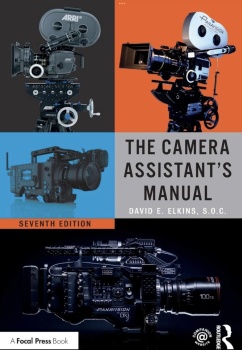
THE CAMERA ASSISTANT’S MANUAL 7TH. EDITION
The Camera Assistant's Manual. 7th Edition.
ON SALE NOW! CLICK IMAGE ABOVE TO ORDER.
Excel as a Cameraman in today’s evolving film industry with this updated classic.
Learn what to do – and what NOT to do – during production and get the job done right the first time.
This seventh edition covers the basics of cinematography and provides you with the multi-skill set needed to maintain and transport a camera, troubleshoot common problems on location, prepare for job interviews, and work with both film and digital technologies.
Illustrations, checklists, and tables accompany each chapter and highlight the daily workflow of an Assistant Cameraman (AC), with expanded sections on problems and troubleshooting, updated formulas, tables, and checklists, as well as new information on the differences between working in the United States and UK and additional information on working with digital technology.
This is a must-have for anyone looking to succeed in this highly technical and ever-changing profession. This book features a comprehensive companion web site that offers plenty of useful resources, including online tutorials that ACs can easily access while on location and supplementary downloadable forms and checklists.
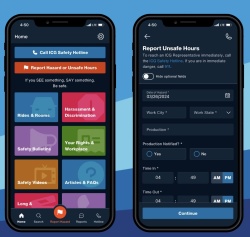
THE ICG SAFETY APP. ANDROID/IPHONE
The ICG Safety App update went live on Monday, April 8, 2024.
The updated app features a redesigned user experience, improved Hazard Report workflow, and much more. On April 8, the existing ICG Safety App should have automatically updated to the new version of the app, depending on your phone's settings. If automatic app updates are not turned on, you will need to manually update the app. For more information on updating apps, please refer to either the Apple or Android documents.
Submitting Through the App
Select the orange "Report Hazard or Unsafe Hours" button on the app to report your workplace safety issues. All submissions will be handled confidentially. Members from other Locals are also invited to submit a report (please include your Local in the comments section).
CLICK IMAGE TO DOWNLOAD APP
NEW! ANGENIEUX OPTIMO PRIME INTERNAL OPTICAL PALETTE (IOP)
⭐ The Angenieux Optimo Prime Internal Optical Palette (IOP) allows a cinematographer to add filtration inside each focal length, thus modifying the look of the lens. ---- This opens up a number of creative possibilities that weren't possible before! ---- Not only can filtration be added, but additional material could also be used, such as a net or cutout shape to create a unique bokeh. ---- The growing filtration options for these lenses currently includes the 1/8 Glimmer Glass, 1/8 Black Promist, and 1/8 Low Contrast. ——👉 AVAILABLE AT KESLOW CAMERA, click image above for more information.
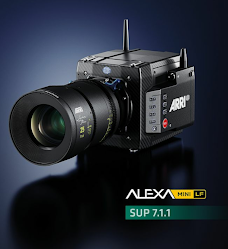
ARRI ALEXA MINI LF
⭐ ARRI released ALEXA Mini LF Software Update Package SUP 7.1.1. --- This update has the same features as the previous release, but additionally supports the new Codex Compact Drive 2TB, Codex Compact Drives 1TB that were updated for new firmware in ALEXA 35, and all Compact Drives 1TB that are shipped following the release of this SUP. ---- Click image above for more information ⭐
THE STEADICAM OPERATORS ASSOCIATION. SOA.
The Steadicam Operators Association (SOA) was formed by Garrett Brown, the inventor of the Steadicam, and Nicola Pecorini in 1988 to train skilled Steadicam Operators and connect them with motion picture Producers, Unit Production Managers, and Directors of Photography. —— Today, SOA continues to organize and conduct workshops, as well as provide service and support to operators everywhere. —— Their goal is to evolve and expand a global community of Steadicam Operators, connecting professionals across the entire spectrum of film, broadcast, video, and new media industry. ———— 👉 Click above image for info.
SONY VENICE 2
VENICE 2 Full-frame digital cinema camera with internal X-OCN recording and choice of 8K and 6K sensors
⭐ BSC EXPO @ BATTERSEA EVOLUTION, LONDON
⭐️ CINEMATOGRAPHY WORLD ⭐️ THE ART AND CRAFT BEHIND THE CAMERA
MY EXPERIENCES ON WOODY ALLEN'S "CAFE SOCIETY" BY VITTORIO STORARO ASC, AIC.
ARRI LIGHTING HANDBOOK
💡 The ARRI Lighting Handbook is designed to help you create the best possible images with your new ARRI Lighting Kit, whether you are using it on location or for studio productions. Click image. 🔆
⭐IBC AMSTERDAM. 11- 14 SEPTEMBER, 2026 ⭐
SONY VENICE 2 SPECIAL REPORT
CLICK IMAGE TO DOWNLOAD SPECIAL REPORT PDF.
FIND YOUR PERFECT STORY
PREMIUM FOOTAGE STORIES IN REDCODE RAW 4K+ FILES
WANT TO MAKE SIX FIGURES? TRY BEING A DRONE PILOT
Despite what some call an oversaturated market, these freelance drone pilots say they’re making more than $100,000 a year. - Click the image above to read the article. - By Sally French, Social Media Editor & Drone Reporter of Market Watch.
⭐️DONATE TO MEDECINS SANS FRONTIERES. HELP TO SAVE LIVES.
🎬CHOOSE FILM ⭐ SHOOT ON FILM
🎥 35MM & 16MM Format Choices for Your Next Independent Feature Film, Documentary or TV Spot Production.—— Choose the Most Desirable Format in Motion Picture Image Acquisition.
THE NEW ARRI SKYPANEL X.
SkyPanel X—the new all-weather LED luminaire and latest addition to the SkyPanel family. Introduced as a modular system and configurable into different sizes, SkyPanel X now offers native soft, native hard, and open-face lighting.
This state-of-the-art LED light sets new standards in terms of dimming, color rendition, output, and beam quality, making it the perfect lighting solution.
FUJIFILM DUVO 14-100 LENS IS A DOUBLE WINNER NABSHOW PRODUCT OF THE YEAR.
FUJIFILM DUVO HZK 14-100 PORTABLE ZOOM LENS IS A DOUBLE WINNER NABSHOW PRODUCT OF THE YEAR.
The Duvo HZK 14-100mm Portable Zoom Lens from Fujinon is a compact and lightweight, dual-format, PL-mount zoom lens that can cover both Super35 and full-frame sensors.
Boasting a maximum aperture of T2.9, when paired with select cinema-type sensors, this lens covers a widely used 14-100mm range and delivers desirable results with shallow depth-of-field and attractive bokeh. A built-in extender expands the image circle by 1.5x, shifting the focal length to 21-150mm.
The lens design allows its operation to be in line with that of broadcast lenses using zoom and focus demands, and at only 6.5 lb, the Duvo HZK 14-100mm is built for portability.
ROTOLIGHT NEO 3 & AEOS 2. A BI-COLOR LED AND HSS FLASH
Introducing the new Rotolight AEOS — a powerful, ultra-portable, all in one bi-colour LED light and HSS flash, that brings tremendous versatility to any shoot. Designed for portrait and location photographers and videographers on the move, AEOS is lightweight and portable thanks to its ‘ultra-thin’ design concept. Now includes integrated Elinchrom Skyport HSS flash receiver.
AMERICAN SOCIETY OF CINEMATOGRAPHERS
The American Society of Cinematographers is a non-profit association dedicated to advancing the art of filmmaking. Since its charter in 1919, the ASC has been committed to educating aspiring filmmakers and others about the art and craft of cinematography; it accomplishes this by publishing the internationally renowned magazine American Cinematographer and the venerable American Cinematographer Manual, through seminars at schools and industry events, and via one-on-one mentoring. ASC members volunteer their time for such activities.
SOCIETY OF CAMERA OPERATORS
The principal purpose of the SOC is to recognize and nurture excellence in the field of camera operation and, secondarily, in the allied camera crafts, and to encourage development of both technology and production methods which will help our members achieve that excellence
⭐️🎥- A COMPLETE UNKNOWN & YELLOWSTONE CAMERA OPERATORS TAKE TOP HONORS AT SOC AWARDS 2025
🎥 — The Society of Camera Operators revealed the recipients of Camera Operator of the Year in Film and Television during the 2025 SOC Lifetime Achievement Awards at the Loews Hollywood Hotel. ⭐️— P. Scott Sakamoto took Camera Operator of the Year in Film for A Complete Unknown. ⭐️ —Camera Operator of the Year in Television recipients were Scott Dropkin for the Yellowstone episode “Life is a Promise” with Abby Linne as “B” Camera Operator and Jed Seus as “C” Camera Operator. — 🎬
CANADIAN SOCIETY OF CINEMATOGRAPHERS
FOSTERING CINEMATOGRAPHY IN CANADA SINCE 1957
🎥 INTERNATIONAL CINEMATOGRAPHERS GUILD 🎥
⭐️ The International Cinematographers Guild Local 600, represents the most talented camera professionals in the world. The technicians and artisans in our union are the creators of the visual images on the big screen, the television screen. ⭐️ International Cinematographers Guild members are, Directors of Photography, Camera Operators & Assistants, Computer Graphics Specialists, Visual Effects Supervisors, Still Photographers and more.
READ HOW CLAUDIO MIRANDA, ASC, AND HIS LOCAL 600 CAMERA TEAM PUSHED THE LIMITS OF IN-CAMERA CAPTURE
CLICK IMAGE TO READ HOW CLAUDIO MIRANDA, ASC, AND HIS LOCAL 600 CAMERA TEAM PUSHED THE LIMITS OF IN-CAMERA CAPTURE FOR THIS YEAR'S SCORCHING RACING EPIC, F1.
BRITISH SOCIETY OF CINEMATOGRAPHY
IMAGO EUROPEAN FEDERATION OF CINEMATOGRAPHERS
⭐IMAGO is the European Federation of Cinematographers, a collaborative global umbrella for the world´s Cinematographers Societies.⭐ 📌AFC MICRO SALON April,13-14 2022, Paris, France @afcinema.com
SHOOT ONLINE
SHOOTONLINE provides a full range of creative and production news about the ever-changing landscape of advertising and TV spot production making.
KODAK CINEMATOGRAPHER'S FIELD GUIDE (pdf) ⭐ SHOOT FILM⭐
🎥 This pocket-sized publication provides up-to-date and easy-to- use information about all KODAK Motion Picture Camera Films and several related subjects. —— KODAK designed the book to help you choose and order the right films for your needs and to help you use the films most effectively. —— The guide is divided into five major sections for easy reference: —* Motion Picture Camera Films —* Filter Information —* Tips and Techniques —* Formats & Packaging —* & Ordering Raw Stock.
CINEMATOGRAPHY NEWS!!
What is ACES? The Academy Color Encoding System (ACES) is becoming the industry standard for managing color throughout the life cycle of a motion picture or television production. From image capture through editing, VFX, mastering, public presentation, archiving and future remastering, ACES insures a consistent color experience that preserves the filmmaker’s creative vision.
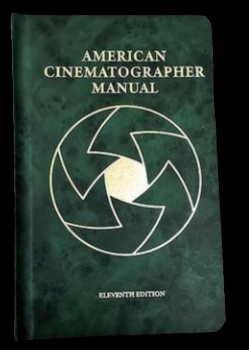
The revised 11th edition of this essential technical reference is now exclusively available for pre-order from the American Society of Cinematographers.
Containing entirely new chapters and substantial rewrites of entries from the previous edition, this hardback book designed for on-set use is a must-have for cinematographers and other motion-imaging professionals.
Topics covered in this new edition of our “Filmmaker’s Bible” include:
Evaluating digital cameras
Take ownership of your sensor
Measuring light
The color science behind modern lighting instruments
Virtual production/emissive screens
Digital versions of day-for-night and infrared cinematography
Imax/large-format cinematography
Specialty lenses
Variable frame rates
ASC Color-Decision List (ASC CDL)
Academy Color Encoding System (ACES)
$119.95. Click image above to order your copy at the ASC Store.
⭐CINE LENS MANUAL⭐ NEW!
CINE LENS MANUAL.- Co-authored by Jay Holben and Christopher Probst, ASC. ---The Cine Lens Manual is a journey through the world of cinema lenses investigating every possible aspect, from the formation of glass to today's top cinematographic optical tools.--- Since the proliferation of digital-cinema cameras, the demand for vintage and contemporary lenses has increased exponentially.--- 👉 $175. Order the book at the ASC store by clicking the picture above.🎬
Wratten-Conversion Filters for Color Films
These filters are intended for use whenever significant changes in the color temperature of the illumination are required (for example, daylight to artificial light). The filter may be positioned between the light source and other elements of the system or over the camera lens. *These values are approximate. Check critical work accurately, especially ifyou use more than one filter.
WRATTEN FILTER Filter Exposure Increase Conversion Color Number In Stops in Degrees K 80A 2 3200 to 5500 Blue 80B 1 2/3 3400 to 5500 80C 1 3800 to 5500 80D 1/3 4200 to 5500 85C 1/3 5500 to 3800 85 2/3 5500 to 3400 85N3 1 2/3 5500 to 3400 Amber 85N6 2 2/3 5500 to 3400 85N9 3 2/3 5500 to 3400 85B 2/3 5500 to 3200 85BN3 1 2/3 5500 to 3200 85BN6 2 2/3 5500 to 3200
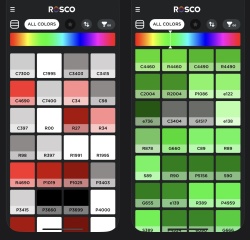
ROSCO FILTERS & DIFFUSIONS. MYCOLOR APP.
The MYCOLOR app provides easy access to Rosco’s color filters. Use the app to search, filter, sort, compare, and favorite all of Rosco’s color filters on your mobile device.
The app features all Rosco filter ranges:
● Roscolux
● Supergel
● e-colour+
● GamColor
● Cinegel
● OPTI-FLECS
● Roscolene
The free app also features a palette builder for users to create a collection of color filters for their projects or productions. MYCOLOR is available for iOS and Android devices. Download by clicking image.
⭐ LENS OF THE WEEK ⭐ COOKE 85-215 MM VAROTAL/I FULL FRAME ZOOM LENS
Cooke 85-215mm Varotal/i Full Frame Zoom Lens - It covers up to Full Frame Sensor Size - 9 Blade Iris, T2.9 to T22 Aperture -PL Mount with /i Technology. Color-Matched to S7/i Prime Range - 114mm Front Diameter, 4' Close Focus - Focus Marks in Feet. 0.8 MOD Cine Gears, M112.5 Filter Thread. --- Click image for more information..
🎬The International Film Festival of the Art of Cinematography. CAMERIMAGE is the greatest and most recognized festival dedicated to the art of cinematography and its creators - cinematographers.🎥
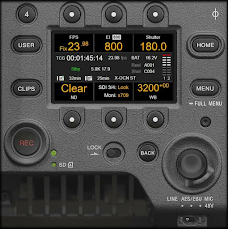
The Sony VENICE2 camera simulator is live with now the full menu operation! This interactive tool helps you getting familiar with the VENICE 2 while prepping for your next film and is available in two different versions in order to support the 6K and the 8K version. --- Try it here by clicking image above.
⭐ PRODUCTION EQUIPMENT OF THE WEEK ⚡ THRUVIEW STARGATE STUDIOS ⭐
THRUVIEW STARGATE STUDIOS --- Stargate offers COMPOSITING, 3D, MATTE PAINTING and EDITORIAL SERVICES as well as a REAL-TIME VFX system called THRUVIEW™ that enables Producers, Directors, DPs and Supervisors an easy-to-use tool to produce Photoreal, In Camera VFX while on set. Stargate offers also Real Time Unreal Engine Virtual Production.
DARIUS KHONDJI'S MASTERCLASS AT 75TH CANNES FILM FESTIVAL
⭐Darius Khondji's AFC, ASC Cinematography Masterclass in conversation with John Mintzer held at the 75th Cannes Film Festival, sponsored by Angênieux Lenses.⭐ --- Click image above for video link..

 Riffing on the blues, awards, gourmet delicacies and choice of
 Daryn Okada, ASC (Ghost of Girlfriend's Past)
 Shane Hurlbut, ASC (Terminator Salvation) and
 Richard Crudo, ASC (My Sexiest Year) and
 Nancy Scheiber, ASC (Every Day) and a guest.
 David Malhmann, SOC Events Chairman, Dan Kneece,
 Victoria Adams and David Grober, producers of the award winning