2025 Camera Surge: From Pocket Shooters to 8K Cinema
This year has delivered a remarkable wave of digital camera releases, catering to everyone from casual content creators to serious image-makers. The Fujifilm X-E5 is a featherweight mirrorless model, perfect for travel photographers who want vintage styling and Fujifilm’s celebrated color science in a small, discreet package. It’s the kind of camera that makes you want to sling it over your shoulder for everyday adventures.
Sony, meanwhile, continues to blur the lines between consumer and pro with the FX2. Technically a cinema camera, its compact body, tilting electronic viewfinder, and workflow-friendly codecs make it a natural crossover tool—ideal for hybrid shooters who want to grow into cinematic production without breaking the bank.
Full-frame SONY FX2 Exmor R™ CMOS 33MP1 sensor and BIONZ XR™ image processor engine,15+ stops dynamic range in Log mode with Dual base ISO (800/4000), Flexible Log shooting modes — Flexible ISO, Cine EI, and Cine EI Quick, Angle-adjustable EVF, "BIG6" interface, AI-based Real-time Recognition AF for various objects, Log shooting mode for stills shares the same video post-production workflow, Up to 16 LUT files can be imported by memory card or Creator's Cloud, Uninterrupted movie recording capability up to 4K 60p (59.94p), 12 Creative Look profiles for in-camera visual moods, Anamorphic de-squeeze display for easy anamorphic monitoring, FPS menu for frame-rate control: 2.5x slow motion11 at 4K / 5x slow motion in Full HD12 and much more. $2,699.99
For creators pushing boundaries in immersive media, the Insta360 X5 refines the 360-degree capture experience. Better low-light performance and enhanced stabilization promise a more seamless VR/AR pipeline, extending its appeal beyond social media into documentary and even pre-visualization for filmmakers.
Nikon has doubled down on accessibility with the Z5 II, its new entry-level full-frame camera. With strong autofocus, improved EVF resolution, and better video options, it offers a gateway for still photographers and aspiring filmmakers alike. Pair it with the expected Nikon Z6 III, widely tipped as the best all-around full-frame of 2025, and Nikon’s mirrorless ecosystem looks very strong.
Drone cinematography has its own crown jewel this year: the DJI Mavic 4 Pro. Its triple-camera system, including a telephoto module and improved dynamic range, raises the bar for aerial storytelling. For travel films, documentaries, or even indie narrative establishing shots, this drone promises near-cinema quality from the sky.
On the enthusiast tier, the Fujifilm X100VI remains the darling of the fixed-lens world, blending portability with a classic shooting experience, while Sony’s highly anticipated A7 V and Canon’s EOS R6 Mark III round out the year’s lineup with pro-grade full-frame options in portable bodies. Nikon’s Z8 continues to tempt high-resolution seekers with a package that bridges medium-format ambition and mirrorless agility.
Canon EOS C50 – Compact Cinema, Pro Ambitions
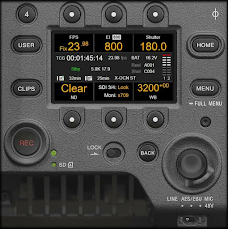
If the consumer market this year feels like a buffet of choice, the Canon EOS C50 is the main course for filmmakers. Positioned as Canon’s most compact Cinema EOS body to date, the C50 does not trade size for performance—it’s a fully fledged cinema tool in a body designed for both solo shooters and small crews.
Core Features
At its heart is a new 32-megapixel full-frame CMOS sensor capable of 7K up to 60fps in 12-bit Cinema RAW Light. The C50 also supports open-gate 3:2 recording, unlocking anamorphic workflows and creative reframing in post.
High frame rate shooters will appreciate 4K120fps and 2K180fps modes, making it suitable for commercials, sports, and music videos. Dual base ISOs (800/6400) ensure flexibility across bright exteriors and low-light interiors.
Lenses & Mount
The C50 features Canon’s RF mount, which means it’s immediately compatible with Canon’s growing line of RF cinema and still lenses. With adapters, filmmakers can also draw on decades of EF glass—from affordable zooms to L-series primes—and even specialty cinema optics like anamorphics. For indie productions, this flexibility is golden: you can shoot a corporate interview with a 24–105mm f/4 one day, then mount a vintage 50mm for narrative work the next.
Applications
The design makes it versatile for: Documentary & run-and-gun shooters benefit from its light weight (~670g), Dual Pixel CMOS AF II with advanced subject tracking, and detachable XLR top handle for professional audio capture. Narrative & indie filmmakers gain the latitude of 7K raw and the ability to crop multiple delivery formats from a single master frame. Commercial & event creators can exploit the slow-motion frame rates for stylish b-roll, while its compact form factor slips easily onto gimbals and drones.
Price & Availability
Canon has positioned the C50 aggressively at around £3,299 (UK)—a price point that makes it accessible to indie filmmakers and production houses alike. In global markets, that translates to roughly $3,499 USD body-only. Availability is expected by late November 2025, with demand already high as it competes head-on with Sony’s FX2 and Panasonic’s cinema compacts.
Nikon ZR 6K Cinema Camera
By combining RED color science and Nikon engineering, the Nikon ZR 6K Cinema Camera is a first-of-its-kind powerhouse designed to capture stunning cinematic images in one compact body. This tiny Z-mount cinema camera allows you to use a variety of lenses, and internal stabilization provides a smooth, steady image with 15+ stops of dynamic range. Features include 32-bit float audio, advanced autofocus, dual-base ISO, and up to 6K60 video capture in REDCODE, Z-RAW, or ProRes RAW.
Features
- Bright, large display - Built-in 4-inch Vari-angle display with touch control
32-bit float audio. Wide dynamic range audio recording built-in.
- Easily integrated into RED post-production workflow.
- Footage shot in RED CODE RAW (R3D NE) unlocks the same space (REDWideGamutRGB).
- Log curve (Log3G10) as RED cameras.
- Custom in-camera LUT support - Load up to 10 LUTs into the Z and preview the look in real-time via the built-in monitor.
- Dual base ISO - More options for base ISO sensitivity: 800/6400 for both Log3G10 and N-Log.
- Built-in stabilization - Powerful built-in stabilization with any lens - up to 7.5 stops.
FUJIFILM GFX ETERNA 55 8K Cinema Camera & Fujinon 32-90mm T3.5 PZ Lens
The GFX ETERNA 55 utilizes a massive 43.8 x 32.9mm 102MP CMOS II HS sensor and an X-Processor 5 to capture footage in five primary formats—GF, Premista, 35mm, Anamorphic 35mm, and Super35mm—in resolutions up to DCI 8K. Codecs include ProRes 422, H.265, and H.264. The camera also supports twenty different Film Simulation modes.
The GFX ETERNA 55 is FUJIFILM’s first-ever “filmmaking” camera, taking the large format sensor of the GFX100 II and adding in a ton of video-first features like an internal variable neutral density filter (ND0.6 – ND2.1), Adobe Frame.io Camera to Cloud support, an optical low-pass filter, and greatly expanded I/O.
The primary “Sensor Formats” are GF 4K 4:3 Open Gate at 48p, as well as GF 8K DCI, Premista 8K DCI, 35mm 8K DCI, Anamorphic 2x Squeeze 8K, and Super35mm 6.3K, all of which max out at 24p or 30p. Most can go up to 60p when dropped down to DCI 4K resolution, as well as 120p in FHD.
GFX ETERNA 55 codec supports Apple ProRes 422 in HQ, regular, or LT, with linear PCM 24-bit stereo audio. The camera also has HEVC/H.265 recording in 4:2:2 10-bit, as well as ProRes Proxy and H.264 proxy options. You can use the HDMI output to get a 4:2:2 10-bit uncompressed feed or 12-bit RAW with a compatible external recorder.
Features
Large-Format 8K Sensor, Variable ND
4K48 4:3 Open Gate, 6.3K24 Super 35
14.5-Stop Dynamic Range, Dual-Native ISO
Internal ProRes 422 HQ, H.265, Proxies
Ext HDMI 10-Bit Uncompressed, 12-Bit Raw
5" 16:9, 3" 3:2 Touchscreen LCD Screens
20 Film Simulations, F-Log2/C 3D LUTs
FUJIFILM G and ARRI PL Lens Mounts
Ethernet, BLE with TG-BT1/ATOMOS AirGlu
CFexpress and SD Card Slots, USB-C Port
The consumer and professional market in 2025 is brimming with tools that reward every kind of shooter—from the casual traveler to the YouTube documentarian to the consummated filmmaker. But for those looking to take the leap into serious motion picture production without the weight and complexity of larger rigs, the Canon EOS C50 and the Nikon ZR6 represents the year’s defining release. They’re not just compact cinema cameras—there are gateway into a truly professional workflow at a price that’s within reach. Fujifilm’s GFX ETERNA 55, represents the pinnacle of a perfectly designed tool for serious filmmakers.