SO, DO YOU WANT TO SHOT HIGH DEF VIDEO...

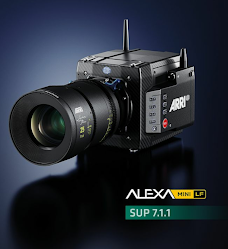
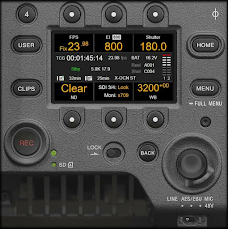
When you are ready to shoot your next feature, episodic TV, high profile music video or a TV spot in high definition video consider the outstanding qualities and performance of the ARRIFLEX D-21.

The Most Versatile Film Style Digital Camera.
The ARRIFLEX D-21 is a film style digital camera that combines familiar high-end film style functionality, handling and creative options with the immediacy and economy of digital acquisition. The camera’s bright optical viewfinder has zero delay, works without power and shows an image area outside the primary image, allowing operators to treat it as they would a 35 mm camera. The Super 35-sized 4:3 sensor accommodates all image formats, including Mscope anamorphic 2.40:1, and exhibits the same depth of field as 35 mm film.
MAIN FEATURES:
Optical viewfinder. ARRI Imaging Technology . Cinematic image quality ARRIRAW or Mscope™ anamorphic 4:3 format CMOS sensor. 35 format film lenses & depth of field. 35 format film accessories. Variable speed. Simple operation. Data and/or HD output modular 2K or standard HD architecture.

TYPICAL RENTAL PACKAGE:
Arriflex D-21 Package Includes:
Arri D-21 Camera, Arri D-21 Camera Body, Arri D-21 Wide Angle Eyepiece, Arri D-21 Extension Viewfinder, Arri D-21 Manual, Arri 24v Power Cable, x2 Bridge Plate 19mm, Arri D-21 Body Case.
SRW-1 HDCAM SR VTR Package. SRW-1 HDCAM SR Portable VTR. HKSR-101 Optic interface Board. HKSR-102 Picture Cache Board. SRPC1 Processor Unit. SRW-1 Control Panel. SRW Short Control Panel. Cable SRW-1 Operation Manual. Camera Shoulder Strap. AC-DN2 12v Power Supply. Shipping Case. Additional Accessories Available Fiber Box + Cable On-Board Monitor.

While the D-20 has already received accolades for its superb image quality, the D-21 images have an improved color saturation and increased sharpness. A higher MTF was achieved by re-writing the down sampling algorithm from scratch and by carefully fine tuning the interaction of the optical low pass filter to the down sampling algorithm. A cleaner signal path, improved internal power management, the correction of defect pixels through Defect Pixel Correction (DPC) and the elimination of various artifacts have also led to improved low light performance. Color Management Look Up Tables (LUTs) for 100, 200, 250, 320, 400, 500 and 640 & 800 ASA are now available.

Great strides have been made towards a feasible method for recording raw data. The newly minted ARRIRAW format contains the raw sensor information and can be used up to 30 fps. Frame rates other than the standard HD video frame rates of 23.976 PsF, 24 PsF, 25 PsF, 29.97 PsF, 30 PsF, 48 PsF, 50 PsF, 59.94 PsF and 60 PsF can be achieved with a recorder that can interpret the Variframe Flag. All frame rates are crystal controlled and can be set with 0.001 fps precision.

It can be transported via the HD-SDI link, embedded in the standard RGBA 4:4:4:4 transport protocol. Close cooperation with manufacturers of data recorders ensures a method of recording and previewing the ARRIRAW format. ARRI software tools that are currently in beta testing can process the ARRIRAW files through advanced debayering algorithms. The ARRI software can output either an HD image or a 2K data file. 2K data files are similar to the files created by a scanner, and so as easy to grade as scanned data. Thus the D-21 can supply image content for the existing 2K workflow.

Since the raw data format transports all pixels of the 4:3 aspect ratio D-21 sensor, the D-21 is the only digital camera that allows plug & play use of standard anamorphic lenses, expanding the creative choices of directors and cinematographers who choose to work with digital images.

A number of new hardware pieces complete the picture. A new shoulder set S-5 has been created specifically for the D-21, and new ground glasses for the 1.33, 1.78, 1.85 & 2.39 formats are now available. All D-21 cameras will come equipped with the FEM-2 addition, which provides a built-in radio for wireless lens and camera control. The FEM-2 also contains motor drive electronics, so the ARRI Controlled Lens Motors (CLM) can be plugged directly into the camera without any annoying extra boxes.
Manual download for more info:arriflex

TWITTER REVERED AT DIGITAL HOLLYWOOD 2009

By George Leon 
The Digital Hollywood Conference 2009 held in the Loews Hotel in Santa Monica is certainly the premier event of everything related with the Internet and new media technology. Produced by Victor Harwood since 1990, Digital Hollywood has continuously served as an open forum and a beacon for the digital industry, including film, video, music, and all facets of Internet and telecommunications.

Since the early days of its inception to today, Digital Hollywood has counted with a massive list of top speakers, moderators and guests, including the original mavericks that created the digital revolution to today's innovative CEOs, leading executives, movie and TV moguls, digital evangelists and many movers and shakers that drive this fast evolving industry.
Keynote Speaker and Wikipedia founder Jimmy Wales in a
featured conversation with Ronald Grover of Los Angeles Times

The topics covered at the conference are so specialized and numerous that the sessions are divided in several tracks through the day in order to cover the many facets of one component of the modern Internet industry. All topics were covered in a very educated and professional manner providing a complete understanding to the audience in how a particular Internet based business model could survive the harsh environment of this volatile industry.

Internet Video, Advertising & Marketing.
The Next Generation of Consumer Reach.
Eric Elia, Brightcove. Dan Rosen,KIT Digital,
Lon Otremba, 360 Media, Joy Marcus, DailyMotion,
Stephen Condon, PixelFish.Mark Rotblatt, TubeMogul
Mariana Danilovic, Hollywood Portfolio.

Bill Duke keeping up with the latest. Bill is in pre-production of
"We are Here to Help" a comedy directed by Alex Winter.

Branded Media Marketing Across Platforms
Neil Guiness, Weekly World News, Simon Kelly, Story Worldwide.
R.David Kupieck, Cinema Media. Brian Murphy, TBA Global,
Paul Santello, Moxie Interactive, Brian Marin , Retail Int.

Chelsea Mc Lennan, Site Systems (center).
Jen Hentzel, Omelet Creative

Among the many topics discussed in depth were, original content creation vs. content aggregation, citizen journalism, viral video, branded entertainment, mobile platforms and delivery, social media, marketing strategies, digital on-line advertising vs. network TV advertising including radio, print, billboard and other conservative mass media, monetization and e-commerce, VOD, TV, cable, broadband and mobile platforms, advertising based business model vs. subscription vs. sponsorship, cable, TV and broadband, viral campaigns, advertising accountability and metrics, downloads, interactivity and widgets, streaming and live broadband and others. Click here for more photos and coverage.

SIGN OF THE TIMES?

The new digital skilled unemployed. Sign of the times?
Certainly an eye catching gimmick. Wilshire Blvd at Beverly Hills.
©georgeleonfilms 2009

NAB SHOW 2009- THE HOTTEST SHOW IN LAS VEGAS

I arrived Monday to Las Vegas doubting about of the success of the NAB Show 2009 and reflecting on the speculation of the decline or possible lack of attendance to the show this year due to the down turn of the national economy. Another reason I had in consideration, was the withdraw of three powerful crowd "pleasers", Quantel, Thomson Broadcasting and Apple, surprising us always with revolutionary products during the last several years.

Jon Fauer, ASC and Dedotec, USA top executives

After checking my credentials and walk into the the massive Las Vegas Convention Center, my fears were immediately dissipated after encountering an enormous amount of exhibitors with a variety of booths and colorful displays. From the local midsized service to the international manufacturer to the big names such as Panasonic, Canon, Avid, Harris and Grass Valley, all of them ready to answer any question I may have had about their services or products.

The NAB show covers the whole gamut of broadcasting services, manufacturers and new digital media from Acquisition, Production to Post-production, from Distribution to Systems. As the classification narrows down, the NAB Show also covers Digital Cinematography, Lghting and Grip, Pro Audio, Display Systems, Outdoor Media Equipment, Radio Satellite and Telecommunications.

As per the slogan goes, It Brings Content To Life, the NAB presents a large amount of interesting conferences, industry panels and workshops about a variety of disciplines and skills such as,"From IPTV Solutions to High Definition Encoding "to "Advertising Innovations Summit" to "Director of Photography Workshop" to "Podcasting Workshop" to "Technologies for Worship" to the "Telecom Conferences".

Telecom 2009 Conference

The workshops and conferences enlighten the attending audience with the experience, technical advise and how-to-tips of the presenters and guest speakers. Some of the seminars and presenters this year are, "Virtual Worlds", a conversation with Second Life Founder Philip Rosedale, held past Tuesday. The Digital Cinema Summit "3D Cinema & Beyond: Lens to Living Room" presented by Patrick Lussier, helmer of Bloody Valentine: 3D" held Saturday and Sunday and "Classic and Digital Techniques for a Timeless Experience" with Henry Selick director of such films as "The Nightmare Before Christmas," "James and the Giant Peach" and, most recently, "Coraline," who described his stop-motion animated filmmaking style in term. The director, screening clips from "Coraline," explained that his technology-enabled brand of stop-motion animation takes advantage of new technologies such as facial animation, motion-controlled camera rigs with 4K digital motion picture cameras and rapid-prototyping 3D printers, resulting in "a spectacle that seems modern, not a quaint, old approach to filmmaking."

Henry Selick, Director

To dispel any unfounded rumors, the NAB is sailing up wind at full mast, keeping busy many vendors, responding inquires and filling out orders from national and international prospective buyers and maintaining an optimistic outlook in the broadcast industry. For instance, I witness the potential purchase of a 35 mm film camera at the Aaton booth, the intense interest displayed by foreign senior buyers at the Sony super booth, the swarming of users of Adobe products at its mega booth and the hypnotized stare at the 3D presentation at the Oscar Award winning Silicon Imaging 3D digital cinema booth. With two days remaining, the NAB Show has been a phenomenal success by any measure in an otherwise challenging economy," said NAB Executive Vice President Dennis Wharton. "We appreciate the strong support of both exhibitors and attendees who continue to make the NAB Show the most important annual event for the electronic media marketplace."

The number of registered attendees to date was 83,842, international attendees was 23,232 and news media was 1,246. International and news media attendance figures are included in the overall registration number. The figures are based on pre-show and onsite registration. Final registration data will be available following the NAB Show.

WHY DO WE NEED CAMERA OPERATORS?

By Roy H. Wagner ASC
Courtesy SOC Magazine

Several months ago I accepted a small independent feature from a director I had worked with before. On that previous film I chose to operate because I couldn’t find a qualified operator who would work for the rate. Little did I know what conflict this would bring to my relationship with that director in future projects. It had been years since I had operated and so when he suggested that he liked my operating and would really like for me to do it once again, I thought it might be fun to try my hand at being a director of photography/operator. The experience was extraordinary but in the midst of production I discovered a bone chilling reason why a cinematographer should never operate.

In my thirteen-year struggle to get into the Union, I had not only learned to survive as a director of photography, but as an operator. Throughout those years I never had the luxury of an operator. Much like today’s geniuses that guide our Industry and decide our future, I began to wonder why a cinematographer needed an operator.

Prominent cinematographers would visit my set and question, “How can you do both jobs?” “How can you judge lighting, or an actor’s make up through a ground glass while constantly chasing the frame line for compositional changes?” “How could you judge the density of smoke through the camera?” Alas, I didn’t understand what I was missing. The one question I was not asked was, “how does it affect your relationship with the director?”

When I finally was able to hire an operator, I didn’t know what to do with myself. I stood behind the camera like an umpire at a baseball game. I had become a very good operator with very specific ideas about composition and movement. I had learned to supervise the lighting and operate while trying to collaborate with the directors who had hired me. It all seemed to be working well. How naïve I was. more...

Tea Leoni and Camera Operator.

THE KODACHROME LOOK. THE MARKER OF AN ERA

These photos came from the Library of Congress and were posted in the latest PDN website (Photos District News) by Daryl Lang under the title 14 Rare Color Photos from the FSA-OWI. Coincidentally, I lived and worked in the heart of the old Manhattan photo district, (hence the magazine name), place where I shared a busy photo/motion studio with other photographers for several years. (21th street next to the original Duggal Lab). My experience in photography predates the digital camera and retouching revolution. All my early photography work was emulsion based and usually developed using any of these processes E-6, C-41, K-14,D76, TMAX and others.

Crane operator at the TVA’s Douglas Dam, Tennessee, 1942
Photo by Alfred T. Palmer.
Double click photo for detail.

In the PDN commentary posting below the aforementioned photos, a barrage of controversy was ensued by the titles and content. But overall, the responses were mostly plain ignorant of any photographic process, rather emphasizing in the moral impact of the photographic message. In response to one of the blatant postings who stated..."My father had a color camera that he bought in 1941, he used it till the 60’s". I advised the following:

Member of a construction crew. Fort Knox, Kentucky, 1942.
Photo by Alfred T. Palmer.
Double click photo for detail.

To Old Photo Buff et all:
Certain is that these photos were not “colorized”. All these photos were most likely shot on Kodachrome 25ASA-ISO color transparency film sheet (no roll) using a 4×5 Graflex Press or a medium format Graflex Century or Speed Graphic. The dye couplers and emulsions used to imprint the polyester base “slide” Kodachrome were the sharpest, more color stable and fade resistant to date than any newer slide film made by Kodak, Agfa or Fujichrome. Kodak used a process called K-14, a predecessor of the common E-6 slide processing rendering a unique look, deep contrast, salmon hued colors. Beautiful Stuff. They are the Markers of an Era. (eg:Life Magazine covers). The drawback was their narrow latitude as any reversal emulsion (easy to underexpose-One Fstop of forgiveness). But remember, they never were color cameras, only Color or B/W film stock. The view or reflex camera is just a mechanical “Camera Obscura” that gathers light through a shutter/iris/lens. The film stock holds the color or the grayscale (B/W) emulsion that converts your Point of View (POV) into a memorable image.

Sharecroppers chop cotton near White Plains, Greene County, Georgia, 1941.
Photo by Jack Delano.

Daryl Lang the PDN researcher, introduces the photos with the following paragraph:
Even today, many documentary photographers will tell you they are influenced by the works of the Farm Security Administration in the 1930s and 40s. Under the direction of Roy Emerson Stryker, the FSA sent photographers to document the plight of the rural farmer during the Great Depression and the progress of New Deal programs. When the U.S. entered World War II, the photography program continued under the Office of War Information (OWI). The best-known FSA photographs are in black and white. Less commonly seen are the color photos by FSA and OWI photographers, shot between 1939 and 1945.

The question to my readers are:
1-Do you have any comments about the origination and processing of these photographs?
2-Is the crisp and saturated Kodachrome look cleanly achievable in a HD cinematography output grading LUT without any highlights clipping in a similar outdoor situation to these photos?
3- There is any recent film or HD originated feature film you have noticed the Kodachrome look?
4- Did you ever shot any Kodachrome film,(ISO25-ISO64-ISO200) on sheet pre-cut film, large or medium format, or on 35mm slide?

Jack Whinery and his family, homesteaders, Pie Town, New Mexico, 1940.
Photo by Russell Lee. Double click photo for detail.
for more photos...

iPHONE APPS FOR THE CINEMATOGRAPHER - Part 2

The Next Swiss Army Knife for the Cinematographer

As per my prior post about the iPhone, (click here) I called it "the Next Swiss Army Knife for the Cinematographer" due to the fantastic "APPS" developed for the camera department. Now, I am pleased to introduce to you few more practical iPhone's applications for the cinematographer, ready to be used on studio or location. The iPhone has now become an integral part of the cinematographer's camera bag. At least it is in mine. It was a great surprise to find it available for purchase at the Apple's App Store and I immediately loaded it in into my iPhone using my iTunes account.The simplicity, elegance and speed of the graphical interface of the applications is stunning and stylish at the same time. I have divided the iPhone/iPod Touch applications into two groups. The Camera Department apps and the Lighting Department apps.

In the Camera Department, we count with the Depth of Field (DOF) Calculator, the Footage Calculator, the Aspect Ratio Calculator, the Lens Angle Calculator, and a gaffer's delight, the Power Load Calculator. All these calculators are rolled into one sleek hand held device and are instantly available at the touch of the your fingertip. For instance, while you are ordering camera lenses from your favorite rental house or after a playback of your test footage or considering the right lens for a given actor's blocking, you can glance for a whole array of info that otherwise it had to come from many different sources. For the camera assistant these graphical calculators are very handy for those prep camera days. No longer need to carry laminated printouts or juggling different PDA's with quirky programs sold at exclusive places at exorbitant prices. The calculators are reliable and are preset to fit your camera sensor type or film stock. From 16mm, to S16mm, to 35mm and a to variety of HD video sensors, starting from the prosumer 1/3 sensor chip (DVX100) to the professional 2/3 sensor chip (Varicam/F900).

For the Lighting Department, I bring to you the new iPhone/iPod Touch applications developed by Wybron Inc, a company nestled at the foot of Pikes Peak in Colorado. Wybron invents, manufactures, and markets cutting-edge lighting products that have transformed the entertainment, church, and architectural industries. Wybron invented the scrolling color changer in 1980, forever changing the way lighting designers execute their visions. Wybron's Coloram color changer continues to dominate stages worldwide as designers demand it for its unmatched range of features, easy utility, and dependable performance. The CXI offers a nearly infinite color palette and real-time color adjustment, all from the comfort of your console. Autopilot II, the industry's only 3-D follow spot tracking system, gives performers new freedom to move, matching light movement to performer movement in real time. And Eclipse and Eclipse II, our popular DMX-controlled dowsers, do mechanically what can't be done electronically: They give lighting directors and lighting designers real control over their HMI and other non-dimmable lights. Tying all our equipment and other RDM-capable gear together is the Infotrace Control and Management System. Never before have fixture options and operating information been so readily available from the desk via standard wiring and equipment. Now you can operate portion of the system wireless, via iPhone or iPod Touch.

CXI Color Calculator for iPhone/iPod Touch
Mix the perfect color for your
CXI IT dual-gelstring color changer with Wybron’s CXI Color Calculator for the iPhone and iPod Touch.Using the Color Calculator’s simple interface, scroll through two overlapping gelstrings of cyan, magenta, and yellow to find the perfect color out of nearly 500 different shades. Then plug its numerical values – either decimals or percentages – into your control console to create the color on stage. Or find the values necessary to replicate popular GAM, Lee, and Rosco gels. The Color Calculator replaces the plastic color wheel lighting pros have carried since the CXI came into existence in 1998. But now, with all that information on your iPhone or iPod, you can fit a wealth of knowledge in your pocket. And the devices’ illuminated screens let you mix and match colors even in the darkest theater. The Color Calculator runs on any iPhone and iPod Touch and can be purchased through Apple’s App Store. Just click on the App Store icon from the main screen of your computer, or access the App Store through iTunes. To buy an iPhone or iPod touch, visit the Apple online store.

Gel Swatch Library for the iPhone/iPod
WINNER OF 2008 ESTA MEMBER'S CHOICE AWARD!

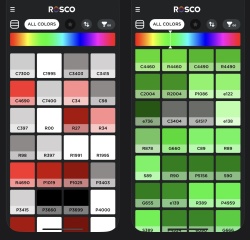
Browse, search, and compare nearly 1,000 GAM, Lee, and Rosco gel colors with Wybron’s Gel Swatch Library for the iPhone and iPod touch.The Gel Swatch Library gives you multiple ways to find the perfect color for your production. Scroll through lists of gels made by each manufacturer, or search for a specific gel name. Spectral Energy Distribution curves and CMY/RGB percentages listed for each color provide the vital data you need to create breathtaking scenes on stage. Examine any two shades with the Gel Swatch Library’s side-by-side comparison window, where you can also compare 12 other similar and complementary colors to find different shades that go together perfectly. The library’s easy-to-use interface condenses the swatch books that lighting pros have used for years – putting a wealth of knowledge onto a device that fits in your pocket.

The latest version of the application, released Dec. 17, 2008, adds several new features: Sort gels by how they’re organized in the physical swatchbook. E-mail comments directly to Wybron with the feedback button. Maintain a list of recently viewed gels even when using other applications. View gels by manufacturer line for example, GAM Fusion, Rosco E-Colour and Lee HT and new gels from each manufacturer


Color Calculator for the iPhone/iPhone Touch

THE CINEMATOGRAPHER & 3D. STREAMING VIDEO

American Cinematographer One-On-One Conversation: The Cinematographer and 3D.

Held on October 30, 2008 at the Burbank Marriott, Burbank, CA. American Cinematographer magazine takes you behind the viewfinder with a leading cinematographer to discuss the art and technology of cinematography and 3D with Doug Bankston from American Cinematographer and Peter Anderson, ASC. The show is divided in 9 Flash & Quicktime format clips. Available here are clip1 to clip 4. To watch all other clips must be a Createasphere member. Courtesy of HD EXPO.

To watch using Flash Video with full screen options - click here.


The Cinematographer and 3D - Part 1
Runtime: 07:49 - Watch Quicktime
Kristin Petrovich, President of HD EXPO introduces the panel.
Doug Bankston of American Cinematographer begins the panel.
Peter Anderson, ASC gives a brief history of 3D and 4DD


The Cinematographer and 3D
- Part 2

Runtime: 07:09 - Watch Quicktime
Question: Are new 3D projects riding the digital wave?
Peter gives a breakdown of how 3D projection works
It is getting easier to show 3D


The Cinematographer and 3D - Part 3
Runtime: 06:45 - Watch Quicktime
Question: How is the rhythm of 3D films different
from traditional films?
To make 3D work, filmmakers must adjust shots to
make cuts pleasant to the viewers' eyes

THE LUT GAME

Dan Mulligan of Rogue Element Films gives his advice on the use and abuse of Look Up Tables (LUTs) in digital cinematography

LUTs are an increasingly integral part of any film project, be it digital or film cinematography. For on-set work, software is now in place to aid DPs using 16 or 35mm film with their colour decision choices (Kodak LMS, G&D 3cP). We shall look at how LUTs can be used from a DP or camera operators viewpoint. This includes the benefits that LUTs bring to the production, the equipment needed to implement LUTs on the set and the differing ways of using LUTs through to post-production.

A basic view on LUTs

It’s important to understand that firstly this is not grading on-set. The grading is done in the post facility with something like a Baselight/Pogle. What we are doing is interpreting the colour intention of the photography as it is shot to give the grading and post team a good base from which to start from. We are creating a continuous colour pipeline from on-set colour decisions all the way through post, and thus keeping the intents of the DP from the set through into post. Important colour decisions made on-set can now be visually interpreted by post with a clear understanding of the DP’s intentions.

Essentially colour management

Things may change further down the line, but the DP’s decisions made on-set are now clear to all. Although talented graders need only a few seconds to correct an image, at least they have the DP’s colour ideas with which to start from – and it helps. Post houses can also help set LUTs before photography begins, leaving no doubt about how digital dailies and reference DVDs will look – this again helps DPs and post work together to achieve the same colour path. Digital Cinematography should try to retain the correct colour intention from acquisition, to on-set displays and through post production to final print release. continues..

SLUMDOG MILLIONAIRE SHOT IN SI2K DIGITAL CINEMA CAMERA

Slumdog Millionaire, which already swept 4 Golden Globes and BAFTA awards continues its own rags-to-riches story with a total of 10 Academy Award nominations including Best Cinematography for Anthony Dod Mantle, BSC who already earned February 15, the ASC top award for Best Cinematography in the feature film category.

The challenge of shooting of one of the densest and fasting moving cities in the world fell upon Director of Photography Anthony Dod Mantle,BSC who most recently shot Last King of Scotland and had previously worked with Boyle on both 28 Days Later and Millions. The plan was to shoot in the heart of the city’s infamous but rarely explored slums, capturing their energy and urgency on-the-fly, with an unforced realism.Danny Boyle was adamant that he did not want to take large, cumbersome 35mm cameras into the slums. He wanted to use smaller, more flexible, digital cameras to enable them to shoot quickly with minimal disturbance to the natural flow and communities.

"I had to find a camera set up that would be ergonomic enough for me to throw myself around the slums chasing the children whilst, at the same time, withhold as much detail in the shadows and highlights” says Anthony Dod Mantle. Our producer, Chris Colson, had hoped for Danny and Anthony to repeat the efforts on Mini-DV”. This was all well and good, except for the monumental difference between shooting multi camera fiction on sets where I could light, sometimes quite heavily. We needed a digital camera with enough latitude to hold highlights and something very small so we could enter the children’s world at their level. “Slumdog Millionaire” needed a completely different tactical approach.”
 
They found the right combination in the innovative IT-centric Silicon Imaging SI-2K Digital Cinema camera. It delivered over 11 stops of dynamic range, flexible connectivity and film-like digital content, which could be easily inter-cut with traditional film footage.

Unlike modern HD cameras, which develop and compress colorized imagery inside the camera, the Silicon Imaging SI-2K streams 2K (2048x1152) data as uncompressed raw “digital negatives” over a standard gigabit Ethernet connection. An Intel Core 2 Duo processor-based computer embedded in the camera or tethered to a laptop up to 100 feet away, processes the digital negatives, where they are non-destructively developed and colorized for preview using the cinematographer's desired "look" for the scene.

The digital negatives and "look" metadata are simultaneously recorded to hard drive or solid state disk where up to 4-hours of continuous footage are captured on a single 160GB notebook drive; this is the equivalent of 14-reels of 35mm film which has an associated cost exceeding $25,000 for materials and processing. The recorded files, can be immediately played with the target color look at full resolution, without the need for film scanning, tape ingest, format conversions or off-line proxies.
A customized camera support and recording package had to be built to meet the unique form factor demands of the Slumdog shoot. They enlisted Pille Film, of Wiesbaden Germany, to create a custom solution which included a gyro stabilizer for the base of the SI-2K Mini. Instead of using the traditional film-style camera body, they elected to use Apple Mac book Pro notebook running Windows XP, for the recorders, and built them into ruggedized backpacks, to be worn inconspicuously. Stefan Ciupek, the show’s technical supervisor and additional camera operator, coordinated the design and modifications of the camera system with Wolfgang Damm of Pille, whose team worked around the clock to get the 2K Mini rigs built.

Pille assembled four units for the production, and by testing them in a sauna, determined that the laptops would have to be packed in dry ice so they wouldn’t fail in India’s intense heat. Once shooting began, the dry ice had to be reloaded hourly; the production required up to 45 pounds of dry ice daily. "I've done some odd things, but this was the oddest," Mantle says. "It was unknown territory and unknown technology, which was exciting.

Attaching a gyro to the base of the hand-held unit enabled me to move the camera in a very unusual way, somewhere between hand held and immaculate Steadicam,” says the cinematographer. I could make fast movements, throw the camera a certain way, swipe it up and sideways, and make a brake just before the gyro kicked in so it came to an abrupt stop. Boyle loved the results.

“It’s not like jiggery-pokery handheld,” says director Boyle. “When you work hand-held with a film camera, it’s always connected to the body mass, but Anthony separated the camera from his body weight, so his body weight could be on the left and the camera on the right. It was extraordinary what he could accomplish. He’s the greatest operator I’ve ever seen.”

“The SI-2K’s handled the highlights amazingly well.” stated Mantle. “I have since shot on the Red camera and found I had to be more wary of clipping the highlights in Scandinavia than I had to be with the SI2K in scorching India. Its weight factor obviously allowed me to operate more intuitively and emotionally instantaneously than I can with the normal weight of even a modern celluloid camera.” The filmmakers originally planned to shoot specific scenes digitally and the rest on 3-perf Super 35mm, but Boyle was so pleased with the SI-2K performance that he gradually decided to shoot more and more with it. The SI-2K digital cameras also allowed me to shoot more content than I would have done, for a similar budget, on pure film stock.

“During the final grading of Slumdog Millionaire both Danny and myself used words such as magnificent, regarding some of the SI-2K scenes.” Stated Dod Mantle. Along the way I shot up to 5 different film stocks which were interwoven into the digitally captured material at the grade in London with the MPC team with the colorist Jean Clement

The conditions were tough for any camera including the heat, dust and rapid camera movement. I am deeply happy and excited about the final sheen this film will have and I think the SI-2K helped to bring out the vibrancy and the immediacy to what was always an amazing script.”
"This was not a conventional piece of cinematography, not one where I was able to start a shot and complete it and orchestrate it," he says. "I had to work my pants off shooting in the slums, with the unforeseeable rampant running. We shot crowd scenes, like the chase through Juhu slum at the beginning of the film, using the people who happened to be passing by on the street for added realism. The hyper-kinetic chase sequence involving the young Jamal and Salim at the beginning of the film was filmed incrementally, built up, like a montage over a period of time.
more info at Silicon Imaging Digital Cinema

THE CAMERA CREW PANEL

Why shouldn't cinematographers be required to operate their own cameras? This seminar answers that question by exploring the unique role that each member of the camera crew plays in the collaborative art and craft of telling stories with moving images. The slightest nuance in light and darkness, colors, composition, camera movement and angles, focus and other countless variables can change both the meanings of and the emotions evoked by individual shots, scenes and stories.
Clip# 1 - Click here to watch streaming video
Kristin Petrovich begins the panel
Bob Fisher introduces the panel
Allen Daviau, ASC
Paul Babin, SOC
Steven Bernstein, ASC
Steve Turner, Post Production Producer
Steven Poster, ASC
Michael Ferris, Operator
Runtime 21:21

Clip# 2 - Click here to watch streaming video
Who makes up our audience?
What is the interaction like regarding lens choice & composition?
How do you pick your operator?
- Steven Poster, ASC
If there is no operator, can you make up for the absence in post?
- Steve Turner, Post Production Producer
How much does the director participate in the selection of the lenses?
- Steven Bernstein, ASC & Allen Daviau, ASC
How do you pick your camera operator?
-Allen Daviau, ASC
Runtime 15:49

Clip# 3 - Click here to watch streaming video
History of the camera operator - Allen Daviau, ASC
Paul Babin, SOC & Allen Daviau, ASC
- an example of the operator/cinematographer relationship
How is collaboration affected by technology?
- Steven Poster, ASC
Empire of the Sun in China with Steven Spielberg
- Allen Daviau, ASC
Van Helsing in Prague, Czech Republic
- Allen Daviau, ASC
How involved typically are cinematographers in post production?
- Steve Turner, Post Production Producer
Runtime 17:55

Clip# 4 - Click here to watch streaming video
How do you know what the director & cinematographer wants?
- Michael Ferris, Operator
Advances in display technology will force a more critical eye on set
- Steven Poster, ASC
How do you know what the director & cinematographer wants?
- Paul Babin, SOC & Mike Ferris, Operator
Orsen Welles' unfinished epic The Other Side of the Wind
- Michael Ferris, Operator
Runtime 13:03

Clip# 5 - Click here to watch streaming video
Can you recall an instance where something spontaneous worked because of collaboration?
- Allen Daviau, ASC & Paul Babin, SOC
Fearless - Directed by Peter Weir
- Allen Daviau, ASC & Paul Babin, SOC
Interaction between operator & actor triggers unexpected inspiration
- Allen Daviau, ASC & Paul Babin, SOC
Can you recall an instance where something spontaneous worked because of collaboration?
- Steven Bernstein, ASC & Michael Ferris, Operator
One Night with the King - Directed by Michael O. Sajbel
- Steven Bernstein, ASC
Runtime 10:50

Clip# 6 - Click here to watch streaming video
What is changing in the International Cinematographers Guild?
- Steven Poster, ASC
An announcement concerning low-budget negotiations
- Steven Poster, ASC
Steve Turner, as a producer, have you learned anything you did not know?
- Steve Turner, Post Production Producer & Steven Poster, ASC
Runtime 5:42

Clip 7 - Click here to watch streaming video
Question: What is the role of the focus puller?
- Allen Daviau, ASC & Steven Poster, ASC
Monster - Directed by Patty Jenkins, starring Charlize Theron
- Steven Bernstein, ASC & Michael Ferris, Operator
Role & perspective of the camera operator
- Paul Babin, SOC
Question: What will be the effect & role of digital?
- Allen Daviau, ASC & Steven Poster, ASC
Question: As an operator, when should you voice concern?
Runtime 19:22

Remember to click back in your browser to return to our page for the next clip
video stream courtesy of HD EXPO

SAVE THE DATES - 2009
March 5, 2009-Universal Hilton, Universal City, CA
June 11, 2009-Navy Pier, Chicago, IL
September 17, 2009-New York, NY
November 4-5, 2009-Los Angeles, CA